
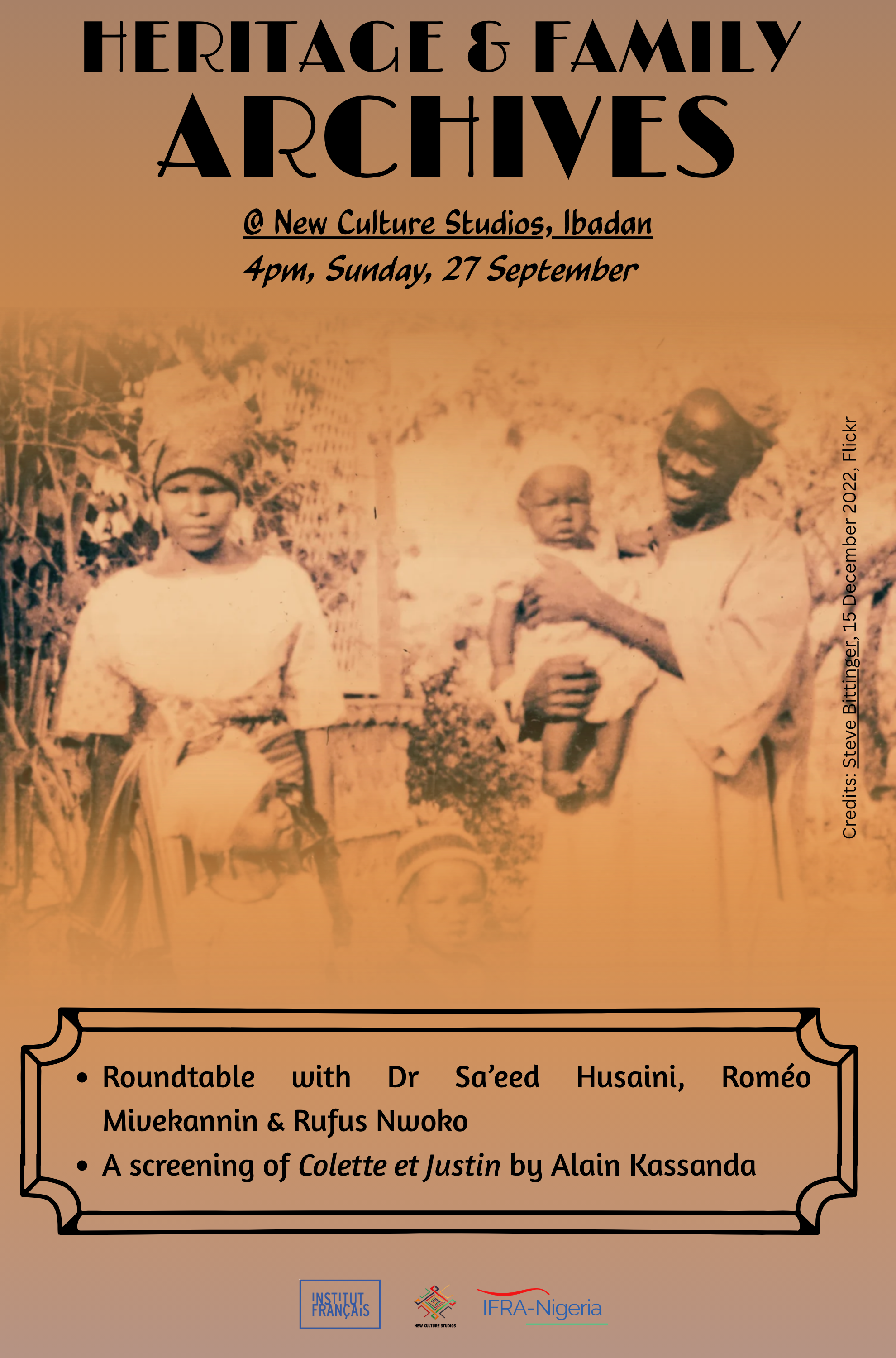
On Sunday 27 September 2026, New Culture Studios and IFRA-Nigeria organized a roundtable & screening on the theme "Heritage & Family Archives". In a roundtable moderated by Dr Delphine Manetta, IFRA-Nigeria's Deputy Director, Dr Sa'eed Husaini, researcher at the Centre for Democracy and Development in Abuja, Rosy Ngouma Noah of Cecile Fakhoury gallery representing Roméo Mivekannin, an internationally recognized multidisciplinary artist, and Rufus Nwoko, creative director of New Culture Studios offered their vision on the role and meaning of archives.
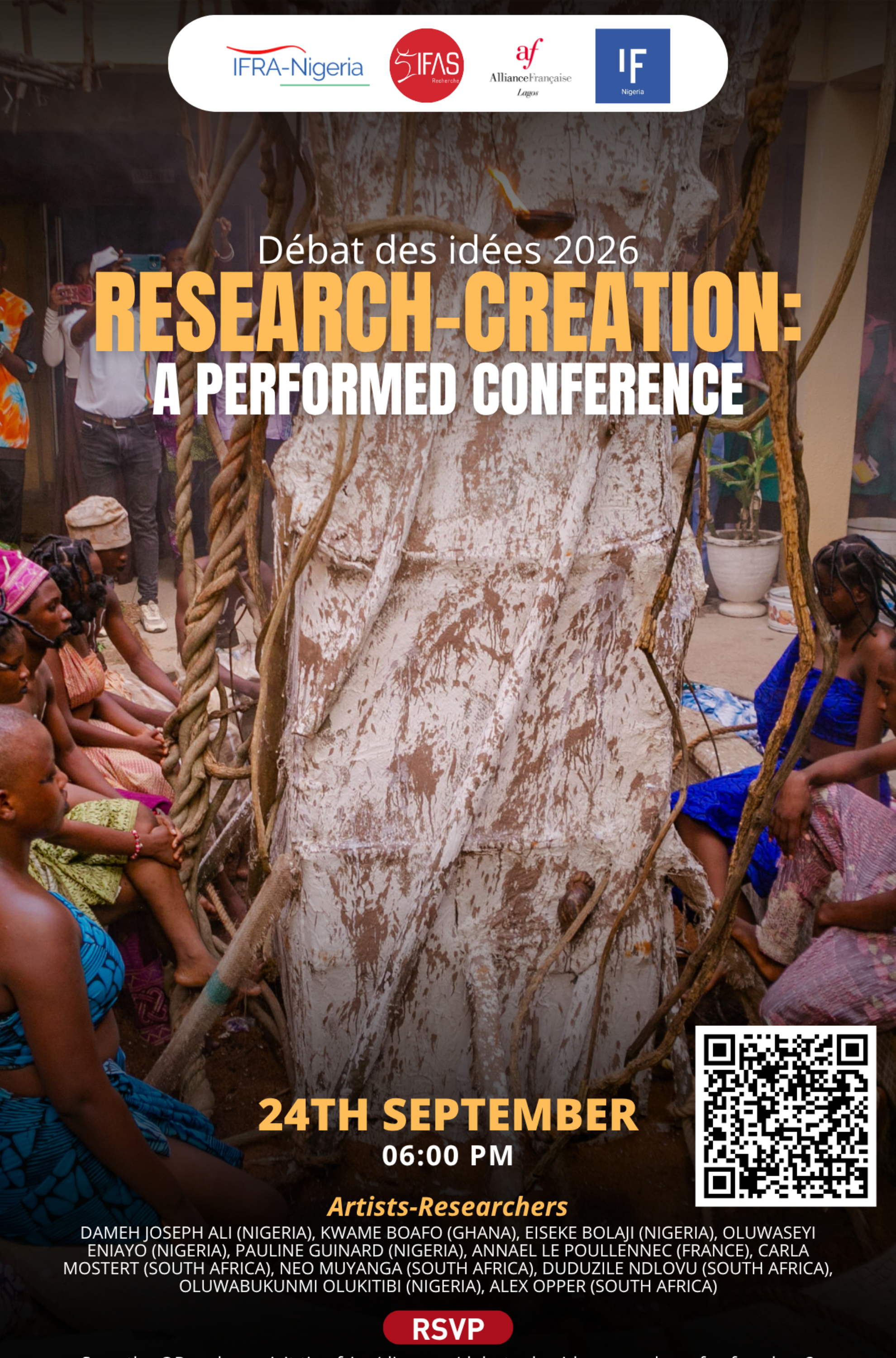
Between 21 and 23 September 2026, the participants of the virtual "Research as creation, creation as research" workshops, organised by IFAS-Research and IFRA-Nigeria, met in-person in Ibadan. During three days, the participants, both researchers and artists, from Nigeria, South Africa, Ghana, Zimbabwe and France, worked together to build a way to showcase their work mixing academic research and artistic creation.
Finally, on 24 September, they presented "Research-Creation: A Performed Conference" at the Alliance Française of Lagos. In this show, the participants blended sound, dance, spoken word and literature in an interactive performance. Their goal: to illustrate how art can open new ways of thinking about a research subject, or offer new avenues of expressing truth. In particular, they endeavoured to illustrate the concept of positionality in research.
This event is part of the Débats des Idées (Debate of Ideas) programme, on the theme “Écouter les voix sensibles et alternatives pour ouvrir la voie” (“Listen to sensitive and alternative voices to pave the way”), supported by the Institut Français and the Institut Français of Nigeria. It was photographed by Andrew Esiebo.
The participants were: Dameh Joseph Ali, Kwame Boafo, Eiseke Bolaji, Oluwaseyi Eniayo, Pauline Guinard, Annael Le Poullennec, Carla Mostert, Neo Muyanga (in absentia), Duduzile Ndlovu, Oluwabukunmi Olukitibi and Alexander Opper.
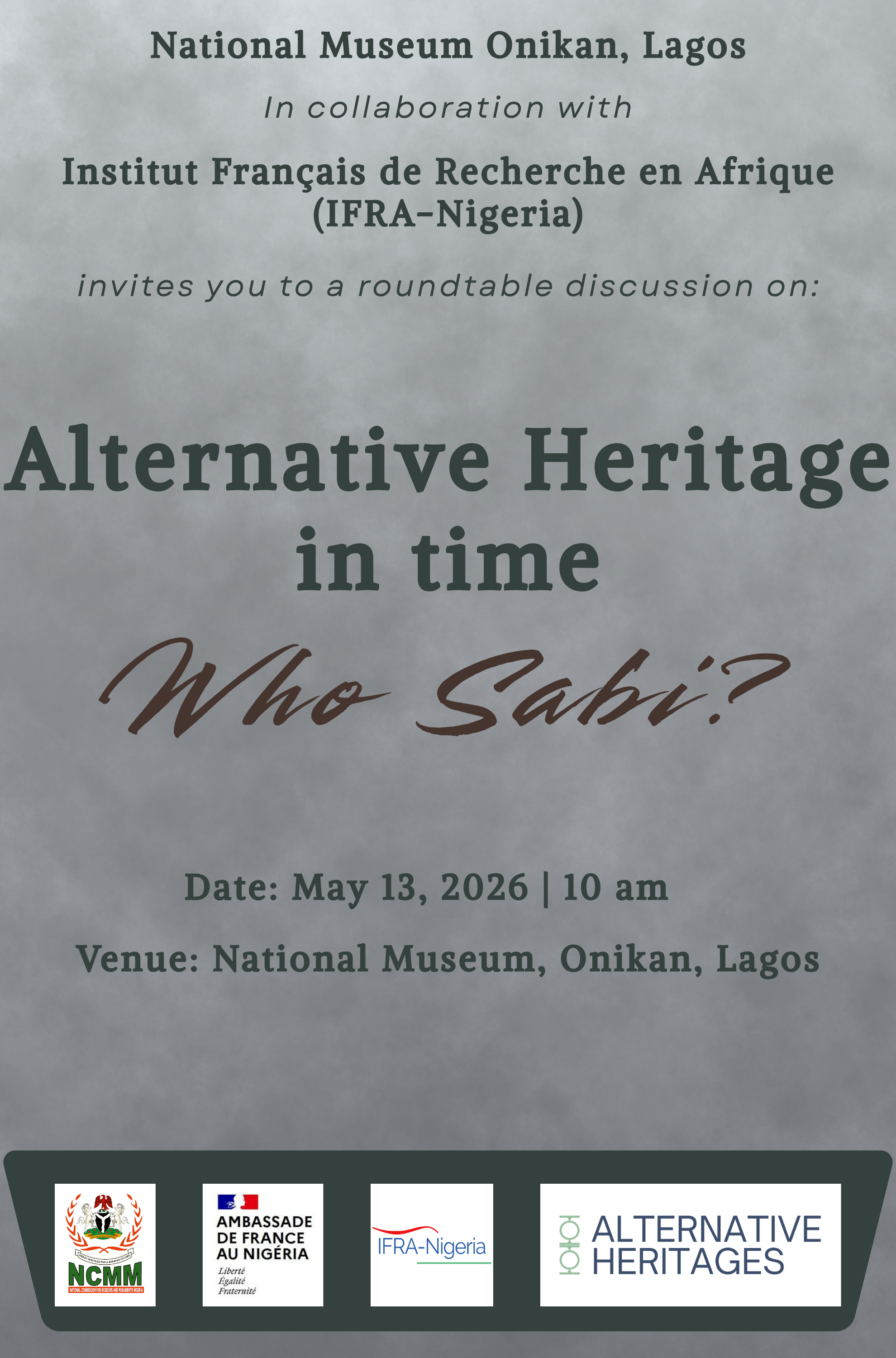
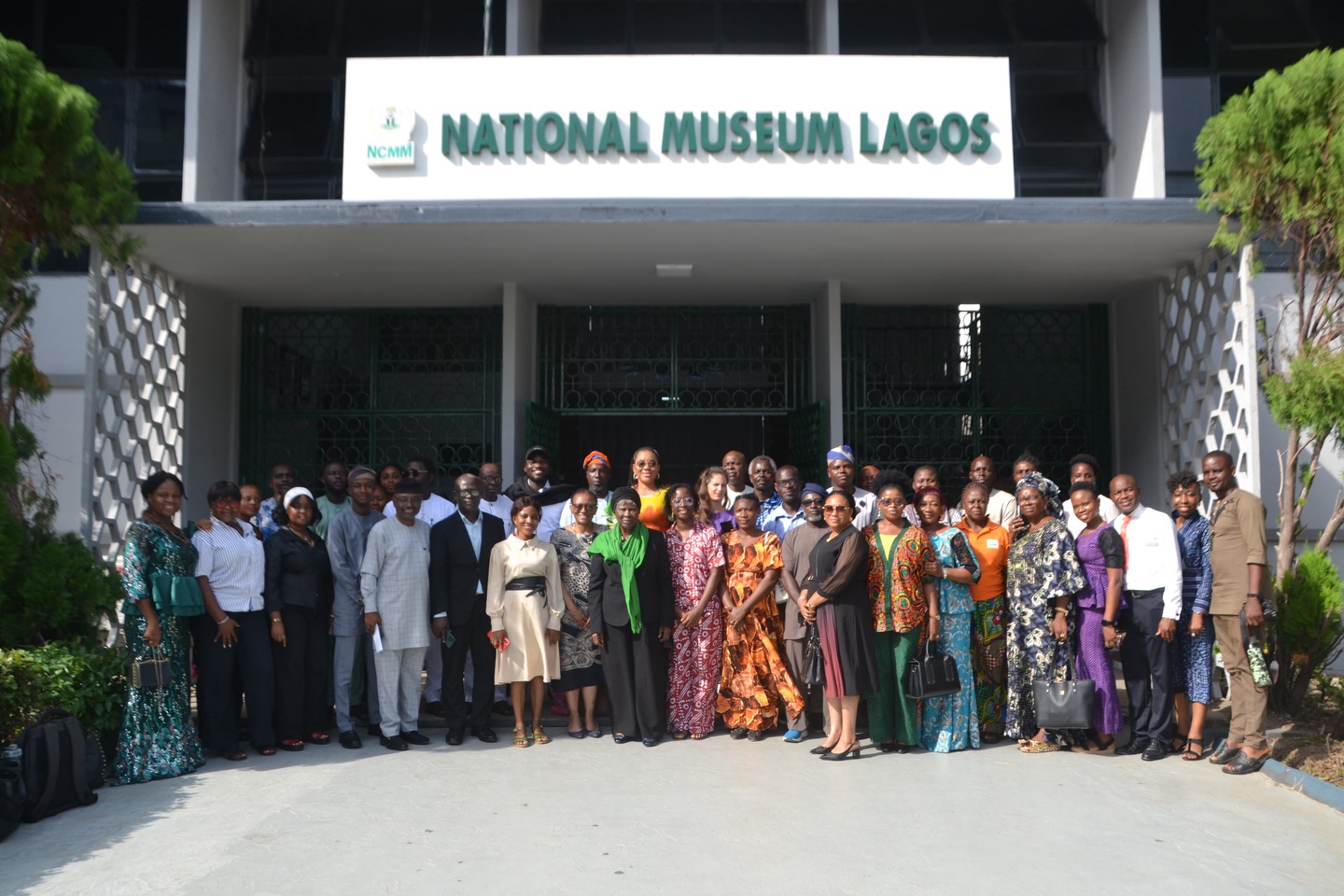
On 13 May, the National Museum of Lagos and IFRA-Nigeria organised the colloquium "Alternative Heritage in Time: Who Sabi?" who concluded our two-year partnership as part of the French Embassy Fund project "Nigerian Alternative Heritages." The four researchers who received a grant as part of the project presented their work in a session moderated by Dr Pauline Guinard, IFRA-Nigeria Director, and Dr Toluwalope Fajobi.
The papers presented were:
- Ecological heritage and the Ikom monoliths: environmental sustainability through indigenous heritage practices in Cross River State, Nigeria by Glory Chika Kanu
- Reimagining Alternative Heritage: embodied memory and mental health narratives in Nigerian museum artworks by Bernard Ogini, Edeyan Omoweh, Daniella Baroywe and E. O. Robyn.
- Unmapped Lagos: mapping alternative urban heritage by Sharon Nworgu and Kelechi A. Ujagbor.
- Reconstructing women' scientific lineages in Nigeria heritage: an archive-led study from the National Museum Lagos by Edemawan Dorothy Ossai.
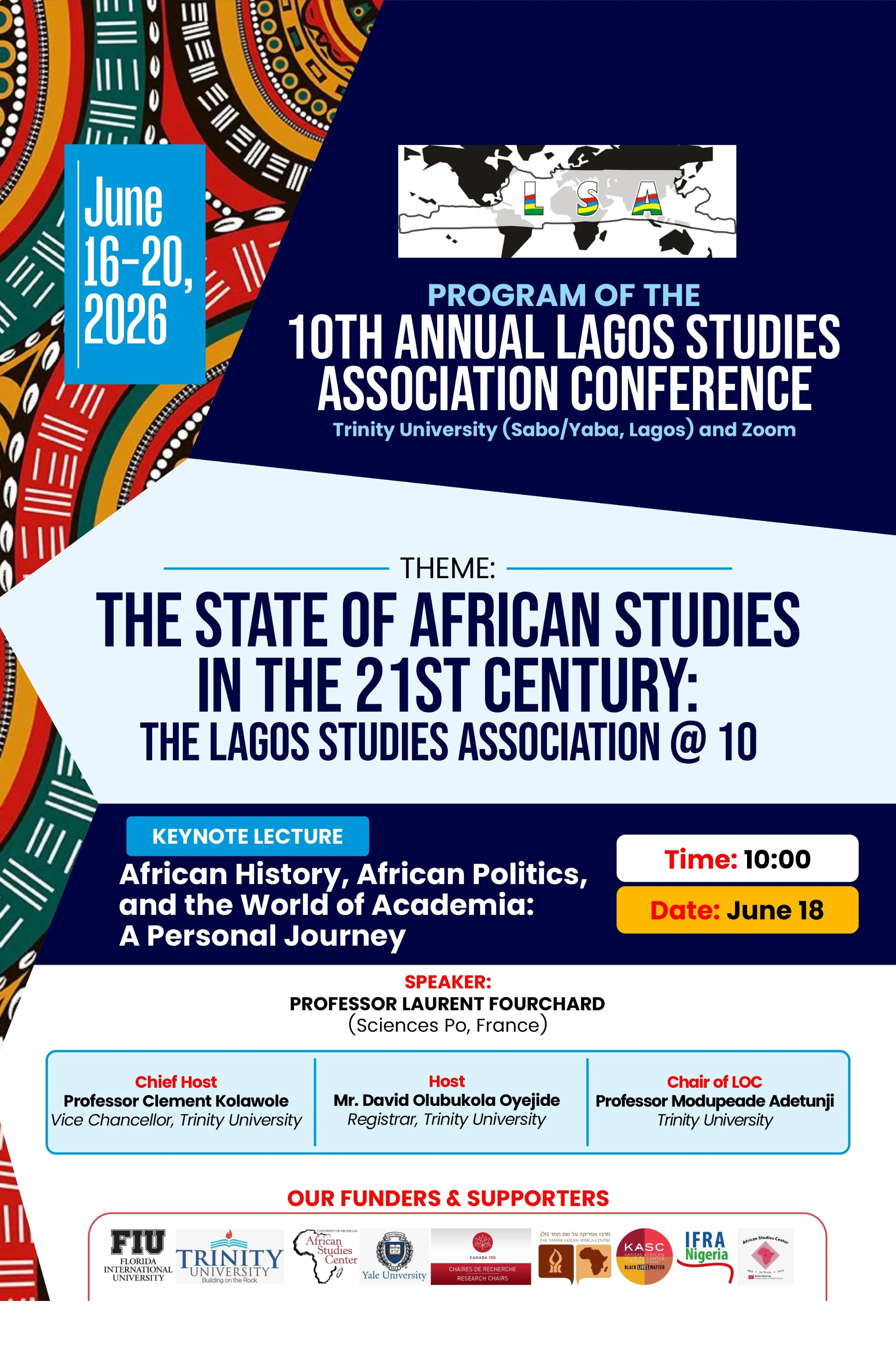
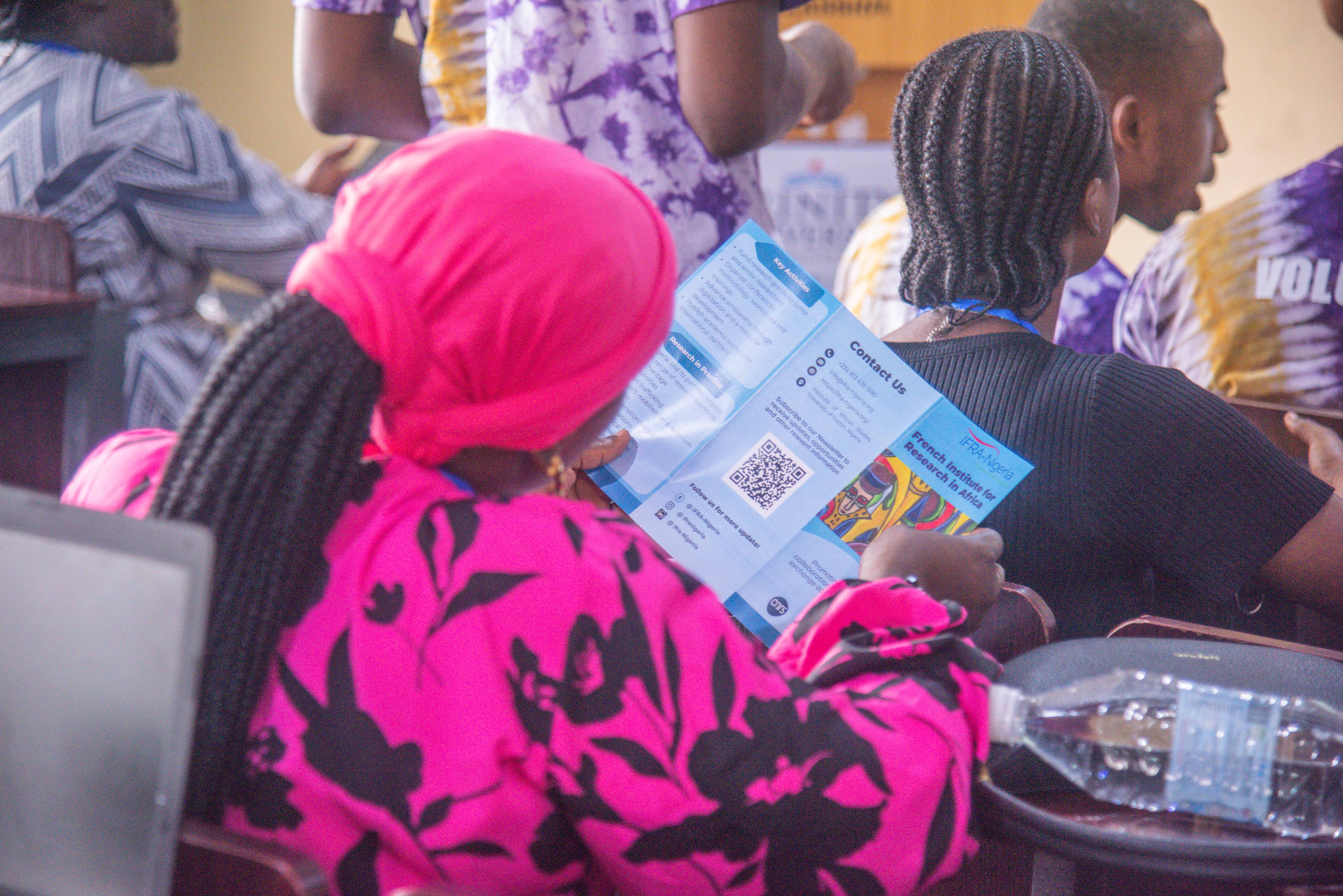
Between 16 and 20 June 2026, the IFRA-Nigeria team was present at the Lagos Studies Association (LSA) Conference. This 2026 edition marked the tenth anniversary of the Conference and its theme was "The state of African Studies in the 21st century". Once again this year IFRA-Nigeria supported the organisation of the conference itself, and offered several grants for participants in our own panels.
This year, IFRA-Nigeria organised four panels:
- "Introducing the French Institute for Research in Africa", on 16 June, with Pauline Guinard, Marie Lureau, Delphine Manetta and Olushola Patrick Babalola.
- "Exploring 'non-religion' in Africa", on 17 June, organised and chaired by Marie Lureau, with panelists Boluwatife Joseph Ogungbemi, Charles E. Ekpo and Yahuza Rabiu Garba.
- "Caring Masculinities in Africa: Beyond Western-Centered Research and Approach" part 1 and part 2, on 20 June, chaired and organised by Delphine Manetta with panelists
(part 1) Mofeyisara O. Omobowale, Oloruntomiwa I. Oyetunde, Olajide Ogunmakinju, Albert Oluwole Uzodimma Authority, Thompson Olakunle Olasupo.
(part 2 ) Oluwasegun Ajetunmobi, Janet Ogundairo, Oyebanke Wura Oyelaja and Solomon Adewole.
- "Defining, Accessing and Performing Alternative Heritages", 20 June, organised by the coordinators of our Nigerian Alternative Heritages project Adéjọkẹ Rafiat Adétòrò, Joseph Ayodokun, Sa'eed Husaini, Femi Olanrewaju and Michael Ayomide Awoyemi. Sa'eed Husaini chaired the panel.
IFRA-Nigeria members also participated in several panels:
- Delphine Manetta was a panelist in "Academic Journal Publishing", on 16 June, where she represented the journal Sources: Materials & Fieldwork in African Studies.
- Marie Lureau was a panelist in "Socio-history of Women's Mobility Between Nigeria and Europe since the 1960s (SOMOFEM): A Roundtable Discussion", on 17 June. The panel was organised and chaired by Elodie Apard (IRD), former IFRA-Nigeria Director.
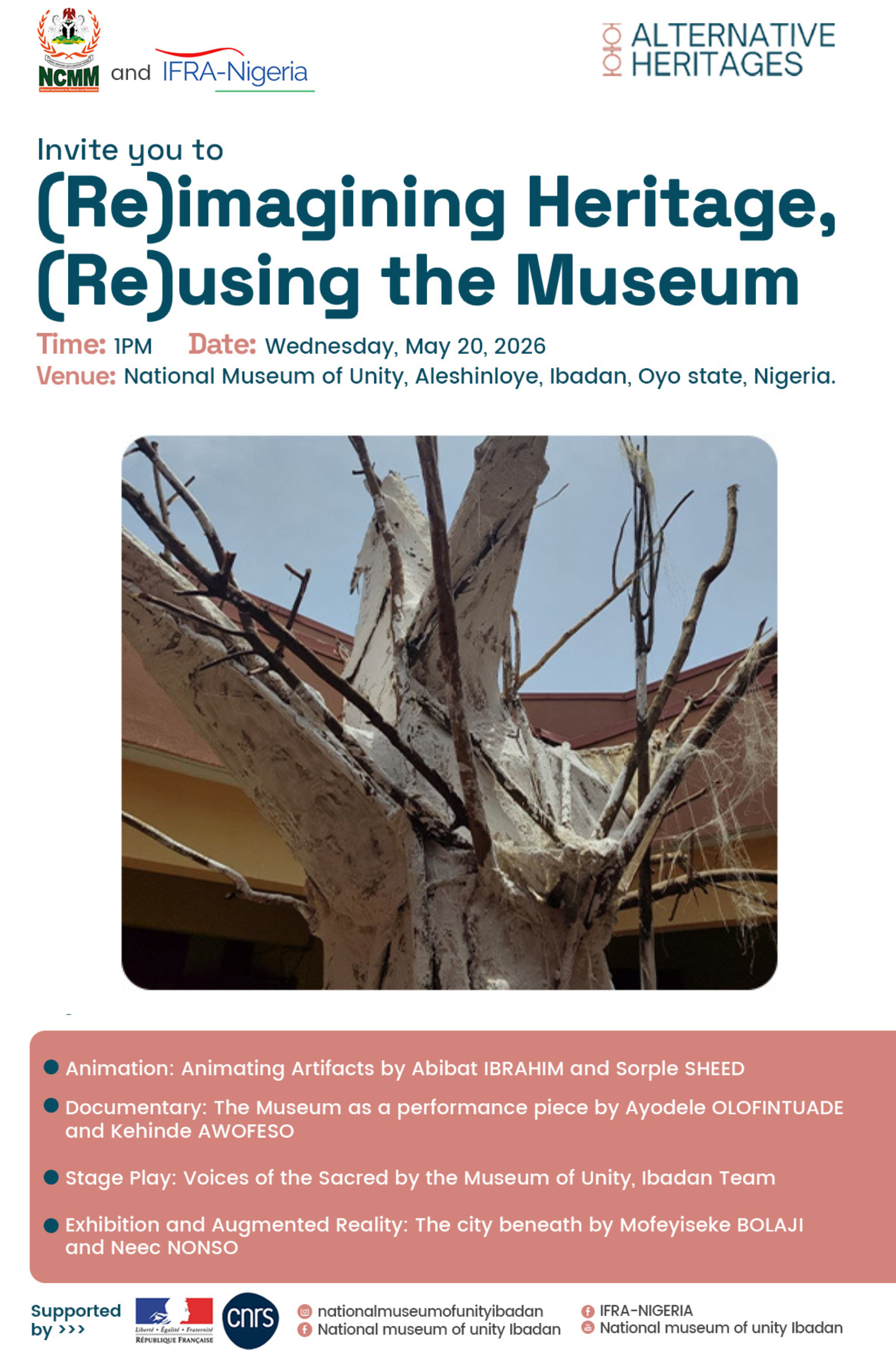
On 20 May 2026, IFRA-Nigeria, in partnership with the National Museum of Unity in Ibadan, hosted the public presentation of projects conducted as part of the research and artistic creation initiative ‘(Re)imagining Heritage, (Re)using the Museum’. The initiative aimed to explore innovative ways of engaging with heritage, culture, and museum spaces through research and artistic creativity. This event took place under the Nigerian Alternative Heritages project, made possible by the French Embassy Fund.
You can watch a highlight of this event on our YouTube channel: https://youtu.be/de5PV_7WhKg.
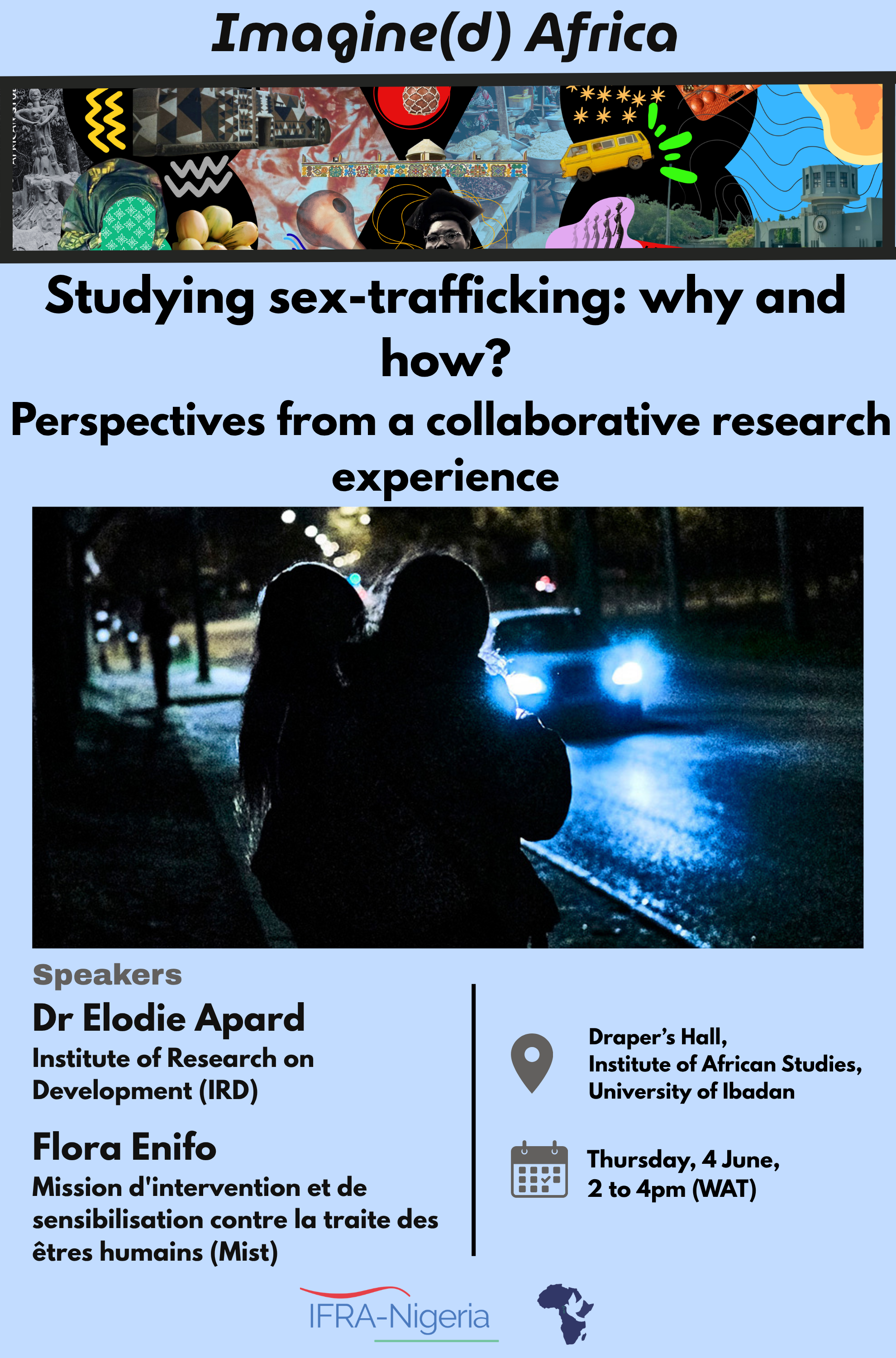
On 4 June 2026, the Institute of African Studies (IAS) of the University of Ibadan (UI) and IFRA-Nigeria, held the latest conference in the “Imagine(d) Africa” series. Their guests were Dr Elodie Apard, researcher at the Institut de Recherche sur le Développement and Unité de Recherche Migrations et Société, and Flora Enifo, project manager and co-founder of the Mission d’Intervention et de Sensibilisation contre la Traite des êtres humains (MIST). Together, they introduced their collaborative work at the crossroads of scientific research and social engagement in a presentation titled “Studying sex trafficking: why and how? Perspectives from a collaborative research experience.”
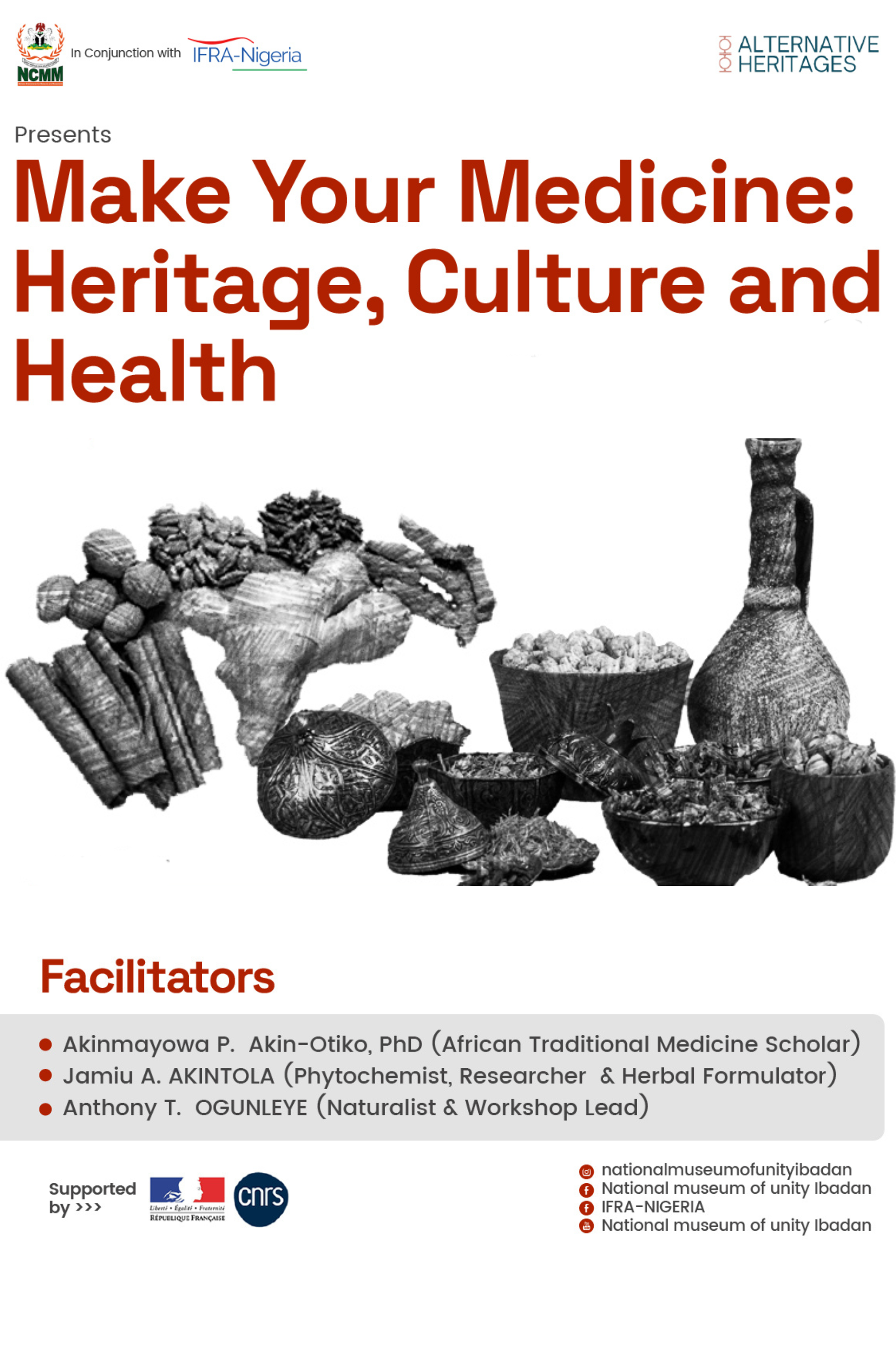
On Wednesday, 6 May 2026, IFRA-Nigeria, in collaboration with the National Museum of Unity in Ibadan, hosted a guest lecture and practical workshop under the theme “Make Your Medicine: Heritage, Culture, and Health.” The event sought to foster public engagement with traditional medical knowledge, healing practices, and the interplay between culture, heritage, and health. The programme was part of the Nigerian Alternative Heritages Project, supported by the French Embassy Fund.
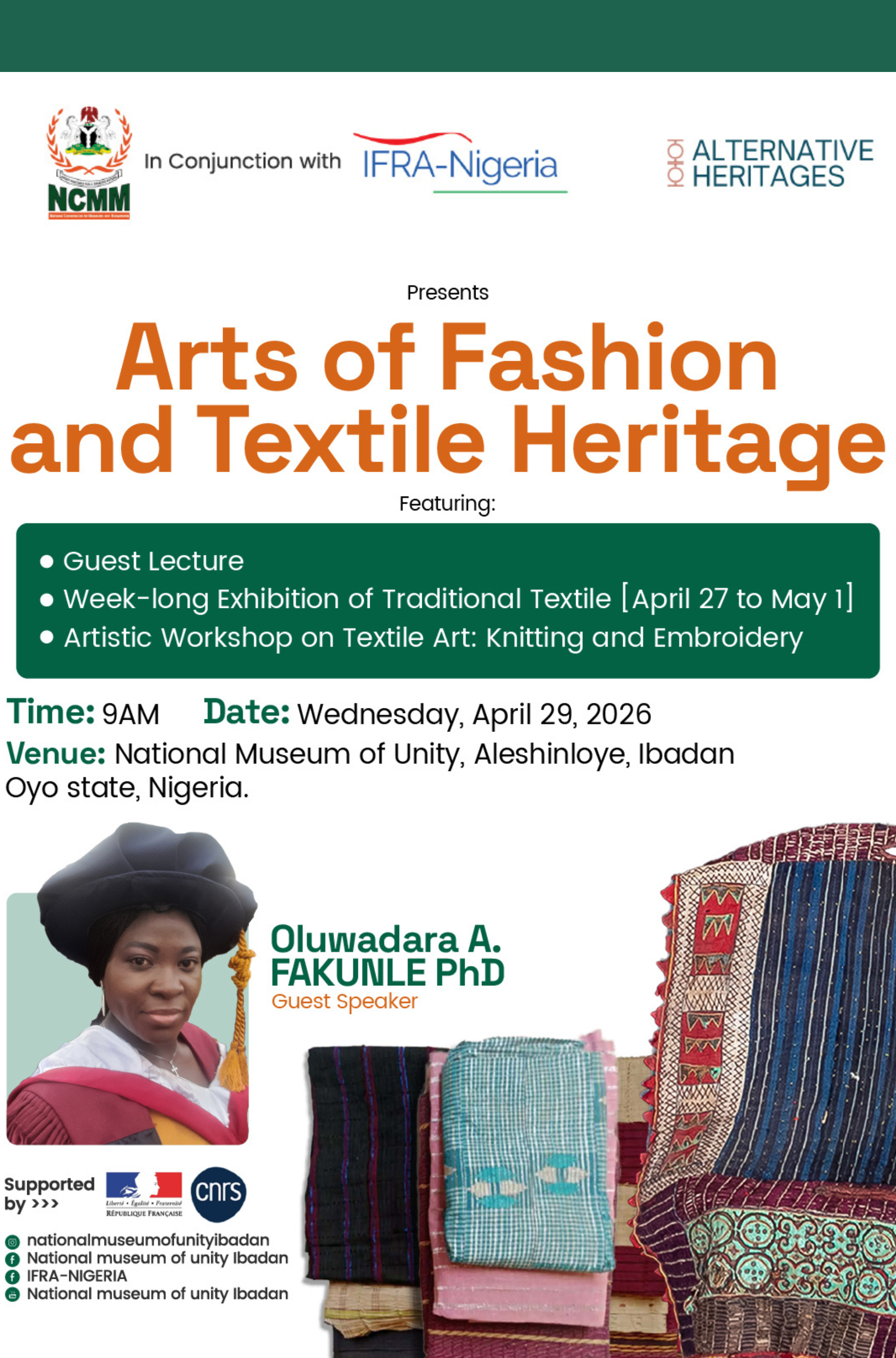
On 29 April 2026, IFRA-Nigeria, in collaboration with the National Museum of Unity in Ibadan, hosted a week-long exhibition, guest lecture, and hands-on workshop. The event focused on the theme "Arts of Fashion and Textile Heritage" and aimed to highlight the cultural significance of Nigerian textile traditions as vital components of heritage and identity. This programme was part of the Nigerian Alternative Heritages project, supported by funding from the French Embassy. A total of 124 participants attended, including 58 students and 66 others.
The exhibition showcased carefully selected pieces, including fabrics such as Sanyan, Alaari, and Etu from the "Five Decades of Aso-Oke Collection" by Professor Felicia Adetowun Ogunsheye at the museum. The display also featured textile items created through crocheting, knitting, and embroidery, as well as works combining multiple textile art techniques on Aso-Ofi.
You can watch highlights of the event on our Youtube channel: https://www.youtube.com/watch?v=NgOKKhEMwMo
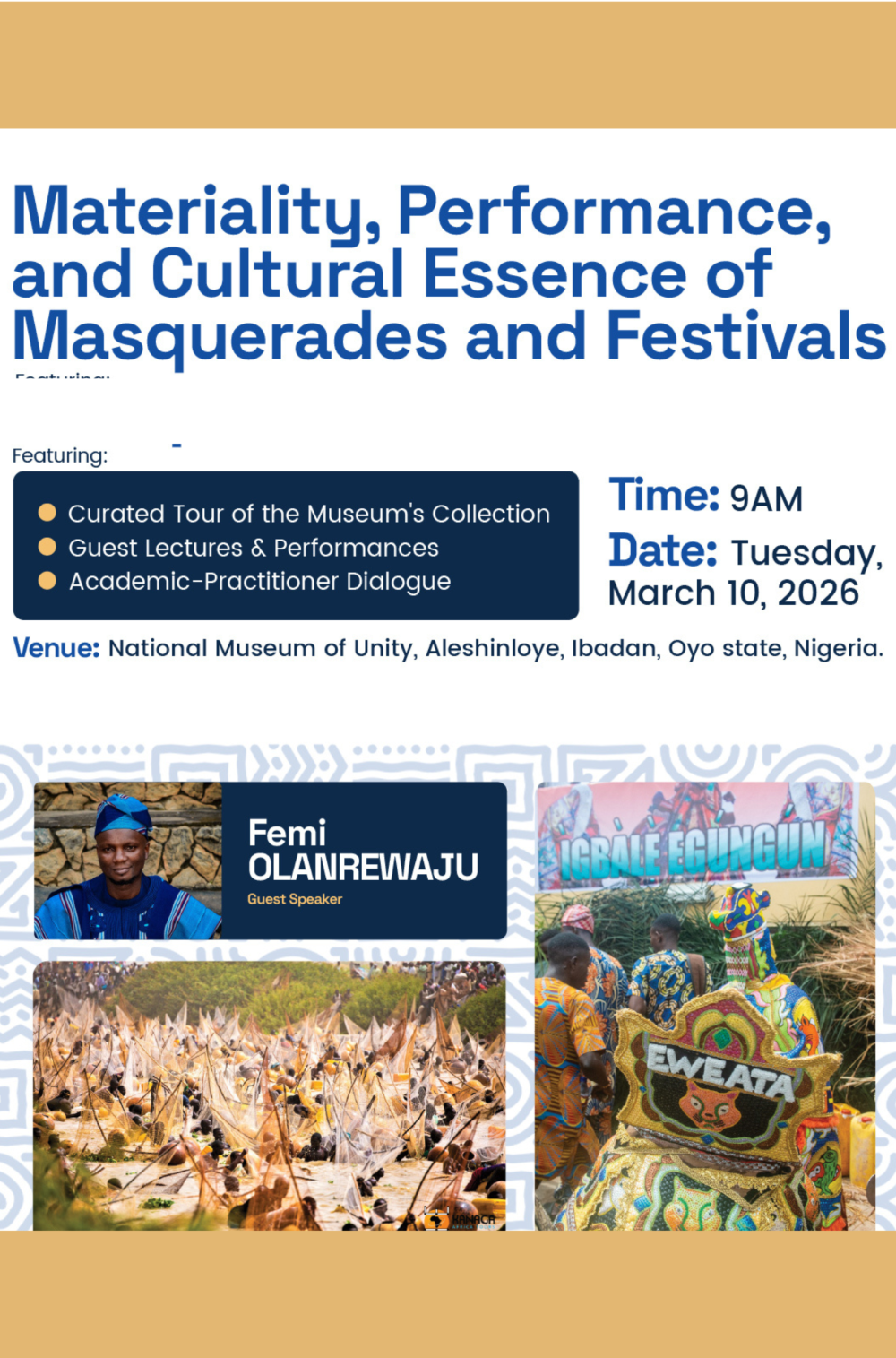
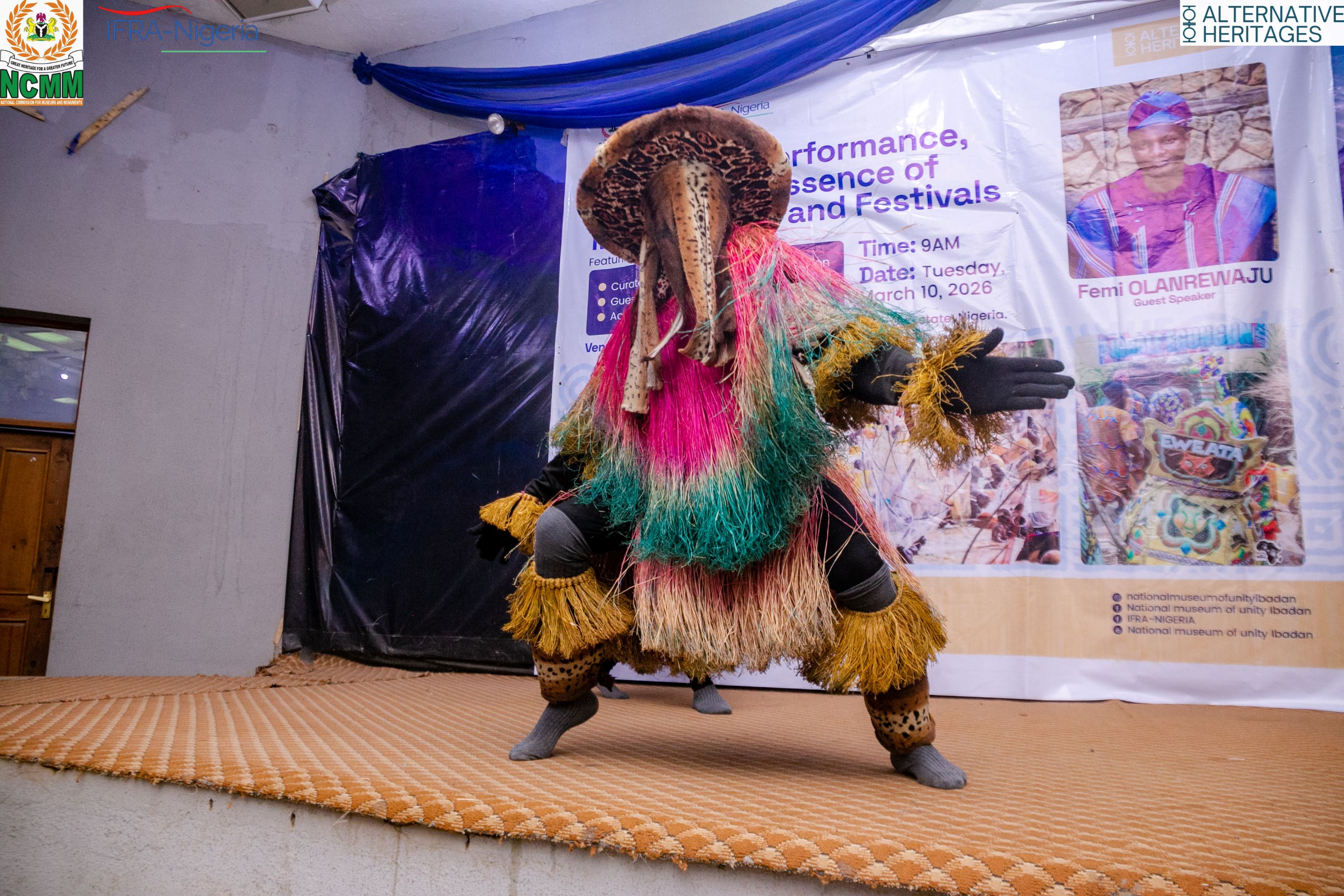
On 10 March 2026, the National Museum of Unity in Ibadan and IFRA-Nigeria hosted their latest event “Materiality, Performance, and Cultural Essence of Masquerades and Festivals” as part of the Nigerian Alternative Heritages project. It featured talks, performances and dialogue that centres on tangible and intangible of Nigerian cultures, fostering a deeper understanding of their significance and impact. There were over 140 people in attendance, including about 70 students and pupils.
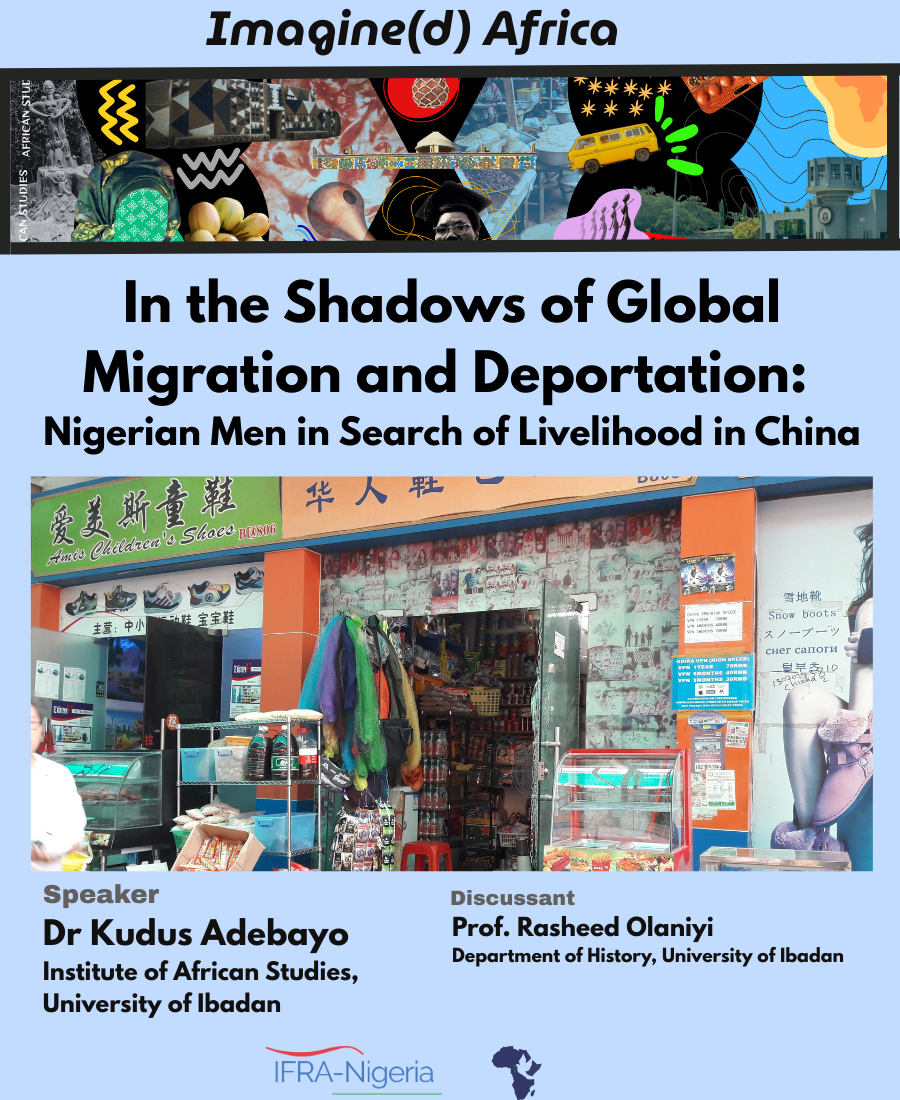
On 26 February 2026, IFRA-Nigeria and the Institute of African Studies (IAS) of the University of Ibadan, co-hosted the newest conference in our “Imagine(d) Africa” series. Dr Kudus Adebayo, from the IAS, held a presentation titled “In the Shadows of Global Migration and Deportation: Nigerian men in search of livelihood in China”. Prof. Rasheed Olaniyi, from the Department of History of the University of Ibadan, was his discussant.
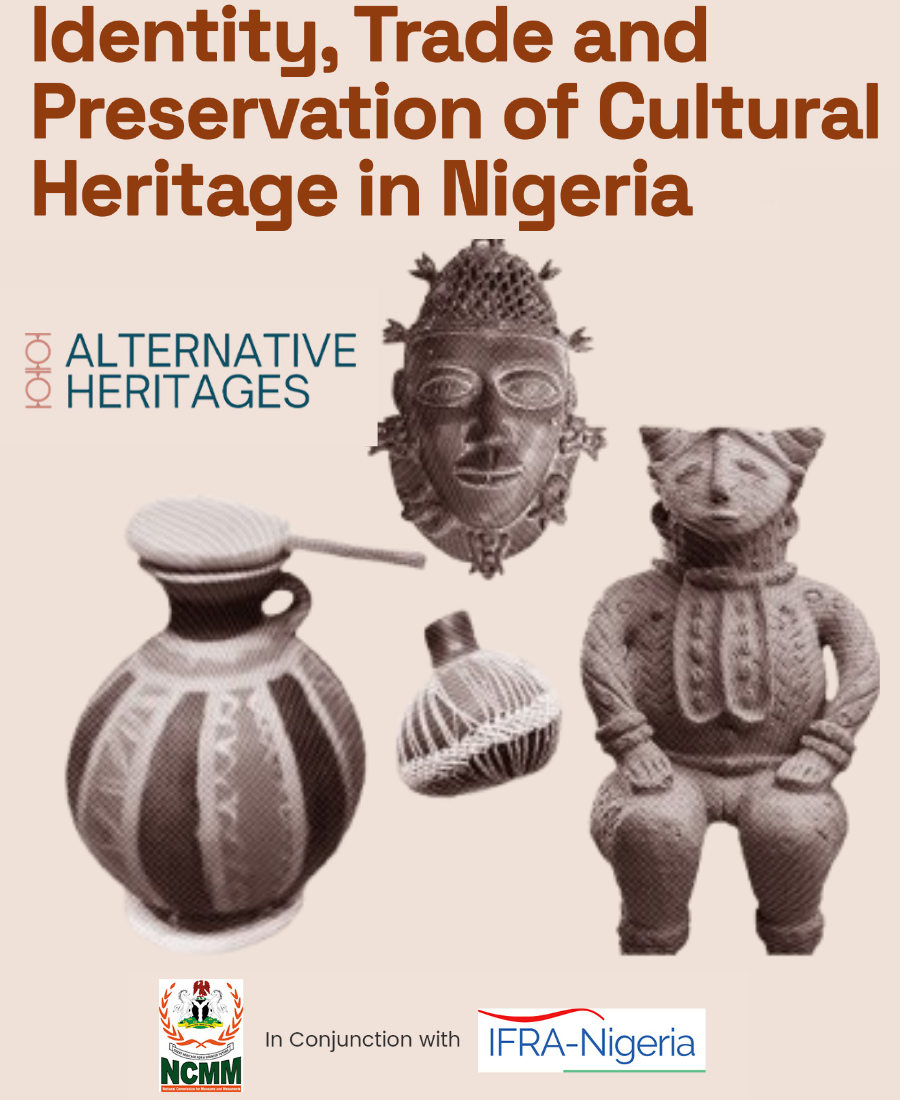
On 25 February 2026, IFRA-Nigeria organised an event, themed "Identity, Trade and Preservation of Cultural Heritage in Nigeria," which was held in collaboration with the National Museum of Unity as part of the FEF-financed Nigerian Alternative Heritages project. It was comprised of three parts: an academic lecture, a roundtable discussion, and an exhibition tour.
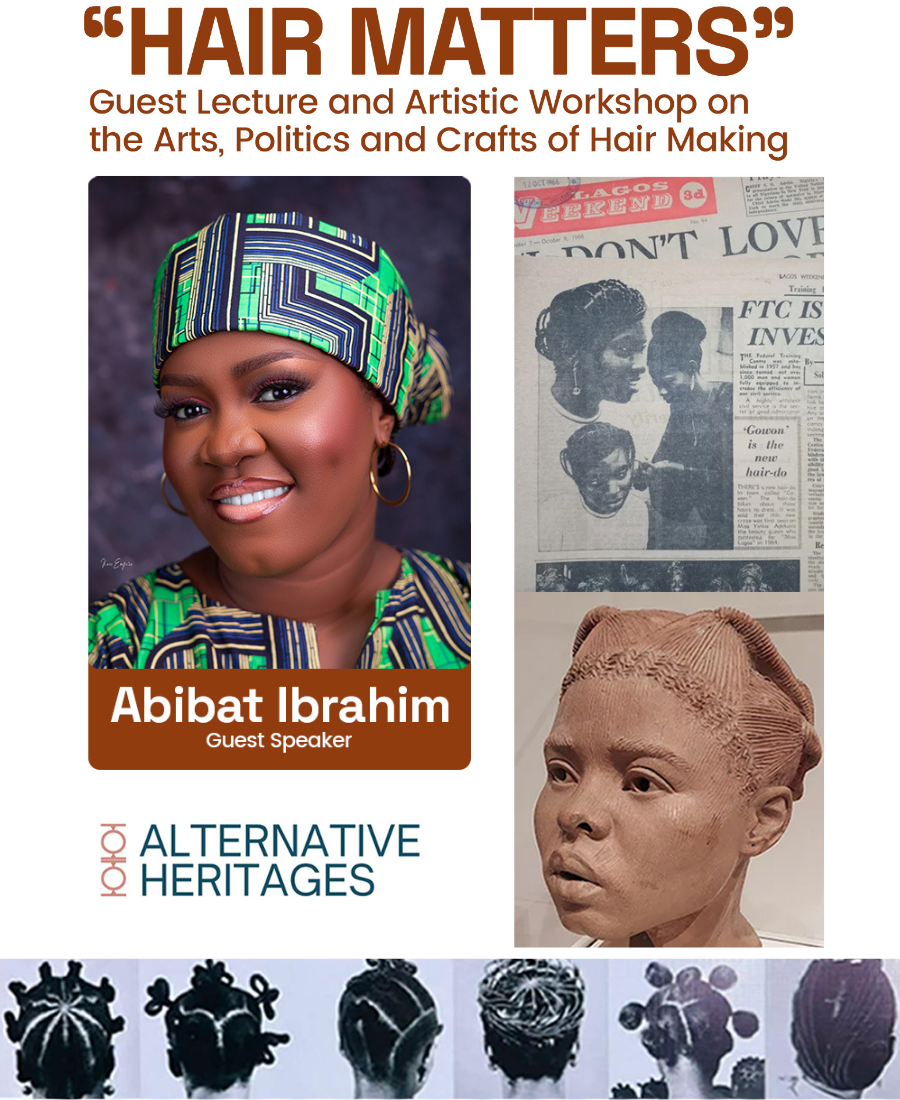
On 3 February 2026, IFRA-Nigeria in collaboration with the National Museum of Unity, Ibadan hosted an event as part of the French Embassy Fund-financed Nigeria Alternative Heritages programme. The event, with the theme "Hair Matters", was aimed at exploring the arts, crafts and politics of hair.
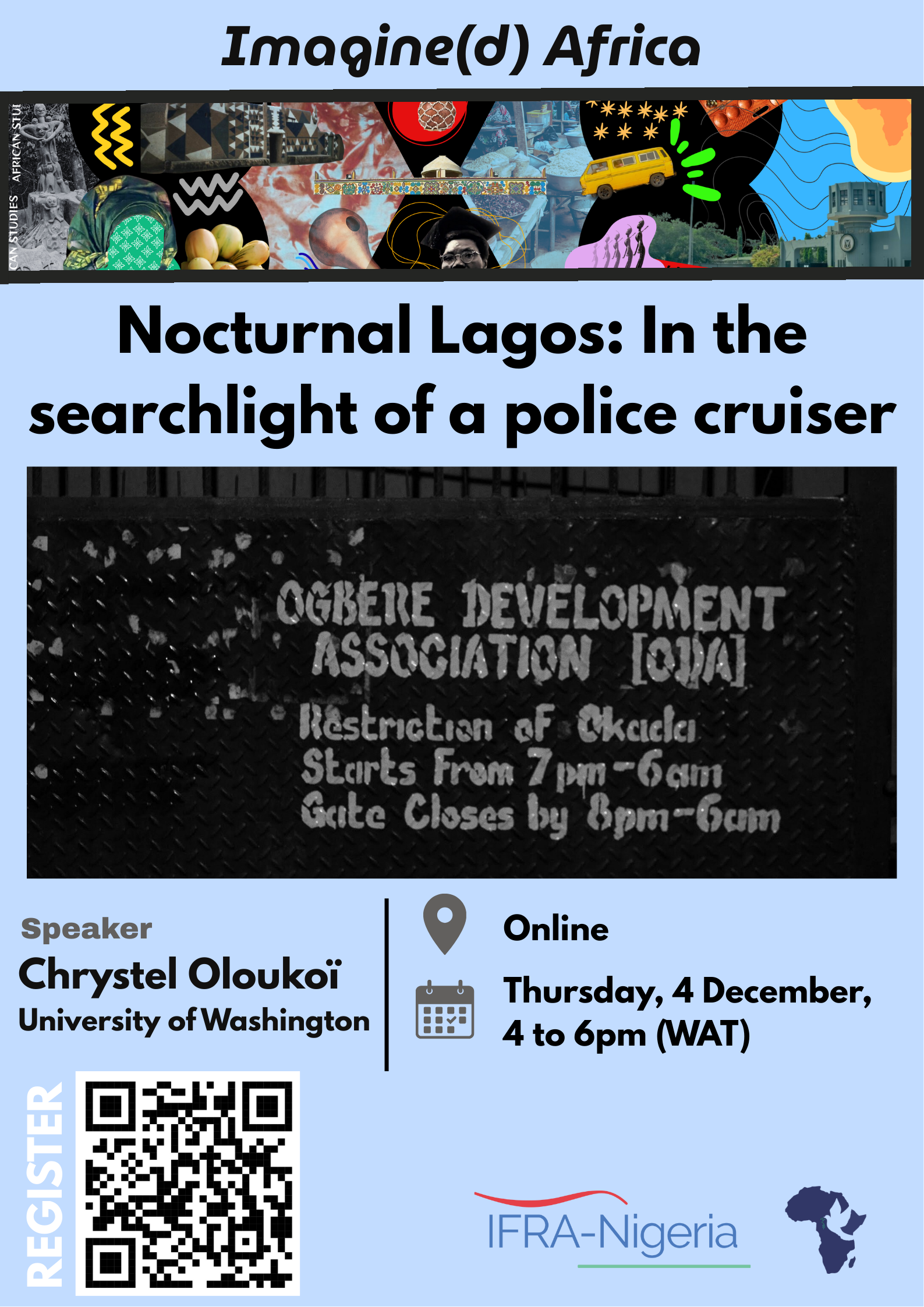
For the first session of our “Imagine(d) Africa” Conference Series on 4 December 2025, the Institute of African Studies (IAS) at the University of Ibadan and IFRA-Nigeria welcomed Chrystel Oloukoï, assistant professor of geography at the University of Washington. They presented their upcoming book building on the PhD fieldwork they carried out in 2020 in Lagos during which they witnessed both the Covid curfews and the #endSARS protests. Their focus is on nighttime in the city, and the many ways in which it is policed.
Their work challenges the vision of Africa as a "night continent", "dark", or "benighted" which is prevalent in the West. It also relies on the concept of “condemnation of the night” which they define as a “naturalized set of assumptions, often animated by a racialized and feminized surplus of meaning, which produces specific “geographies of imagination” and “geographies of management”.”
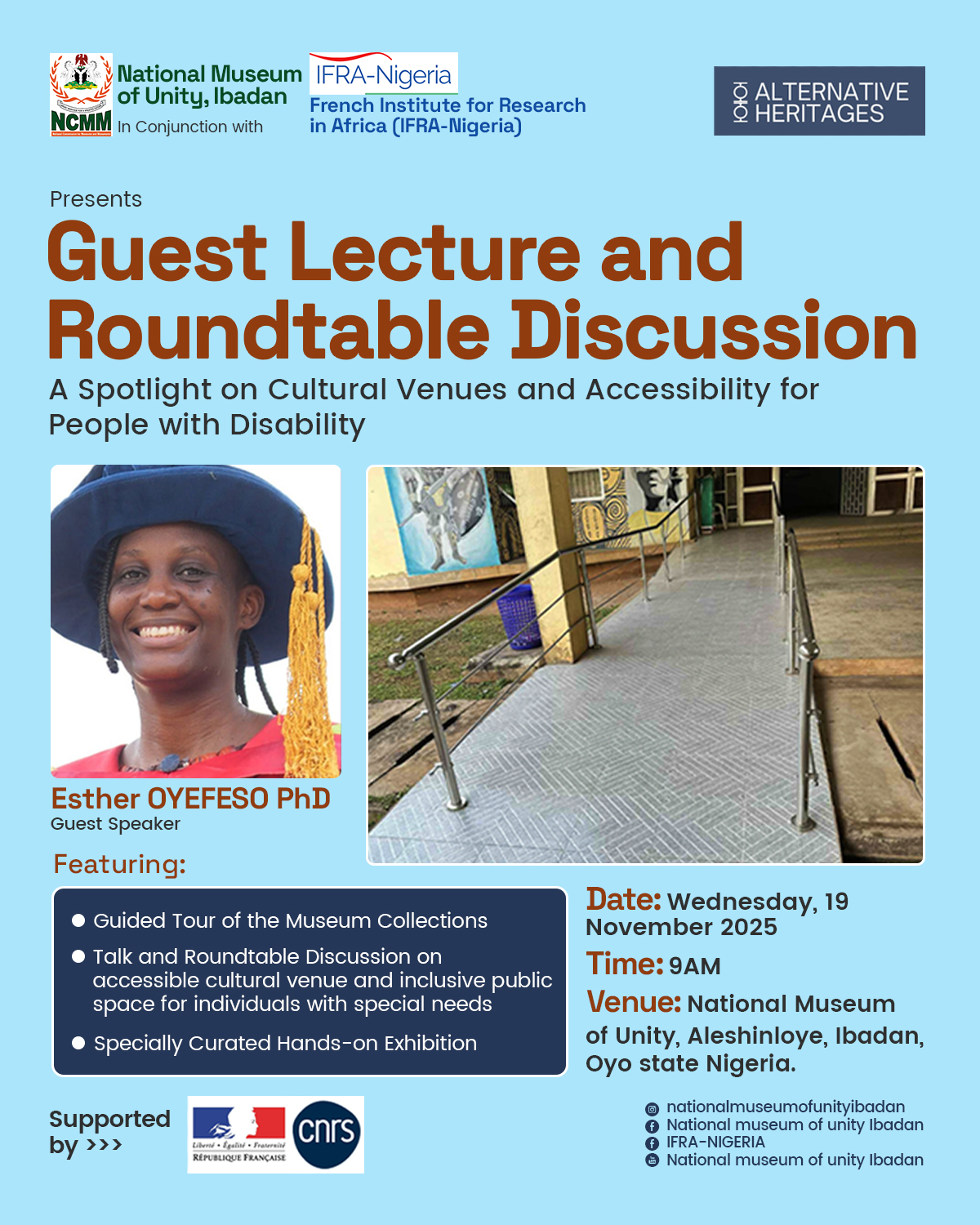
On Wednesday, November 19, 2025, we proudly hosted our inaugural event of the second year in partnership with the National Museum of Unity in Ibadan. This 3-in-1 event featured a guest lecture, a roundtable discussion, and a hands-on exhibition, all centred around the theme "Accessible and Inclusive Public Spaces." Our goal was to spotlight the significance of cultural venues and the specific needs of individuals with disabilities in participating in cultural experiences.
This event is part of our Nigerian Alternative Archives project, made possible by the French Embassy Fund.
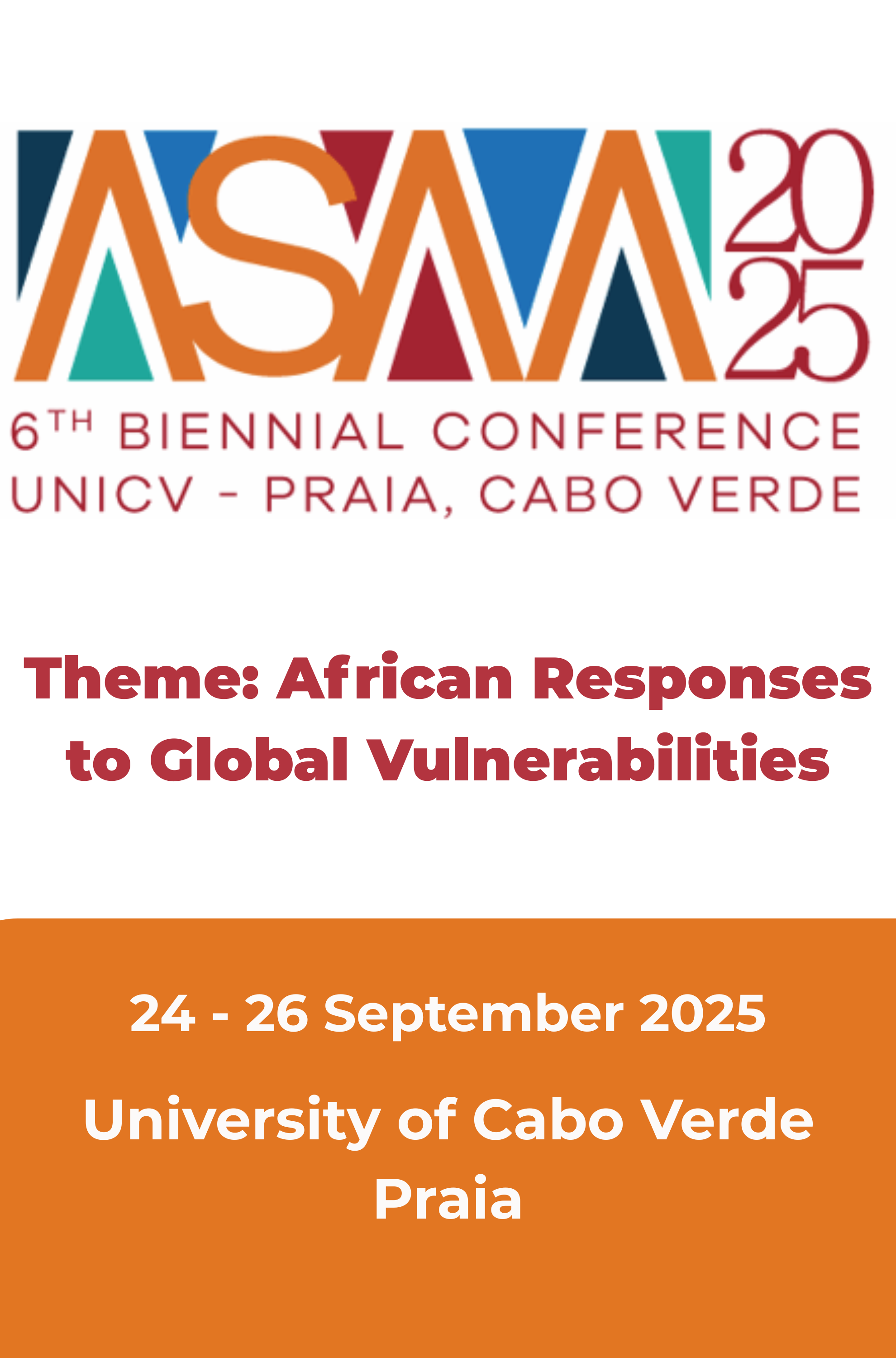

Between 24 and 26 September, Pauline Guinard, IFRA-Nigeria Director, and Marie Lureau, Research Project Manager, attended the 2025 Biennial conference of the African Studies Association in Africa (ASAA). Set at the University of Cabo Verde, in Praia, this event regrouped scholars from all over the continent and beyond, for numerous panels under the theme "African Responses to Global Vulnerabilities".
Dr Guinard presented her own work on the destruction of Bar Beach and the geography of emotions, in the panel "Contesting Power: Political Agency and Resistance in Africa".
IFRA-Nigeria has also become a member of the ASAA, as we are proud to share its mission to promote and celebrate Africa’s unique contributions to the study and understanding of the peoples and cultures of Africa and the Diaspora.
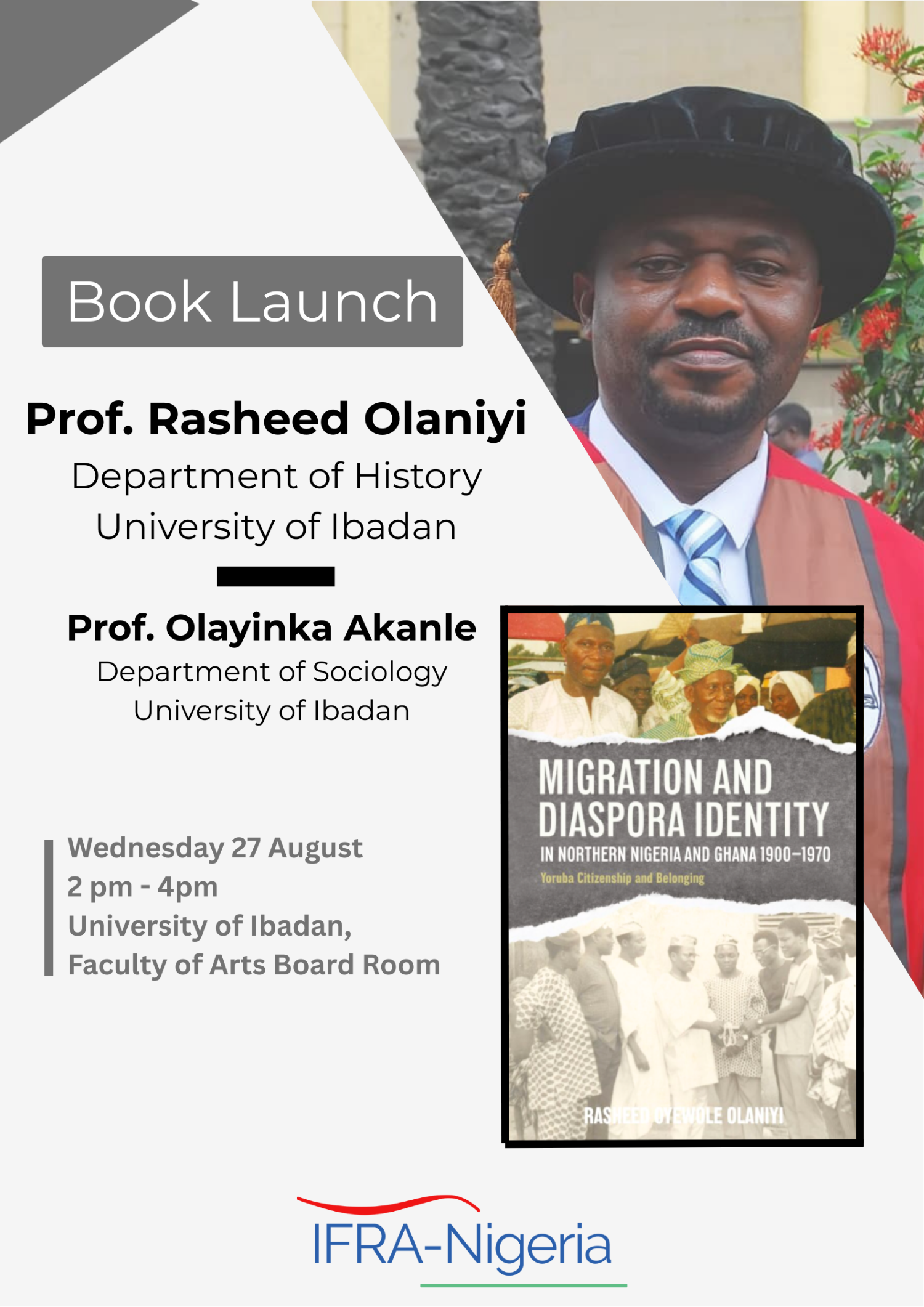
On 27 August, IFRA-Nigeria organised a conference at the Faculty of Arts, University of Ibadan, to celebrate the publication of Migration and Diaspora Identity in Northern Nigeria and Ghana, 1900–1970. The book, written by Professor Rasheed Olaniyi (department of history), was published by Boydell & Brewer in association with IFRA-Nigeria. It provides a unique exploration of the complex socio-economic and political dynamics between Yoruba diaspora and their host communities.
After an introduction by Professor Barbara Morovich, IFRA-Nigeria Director, Professor Olaniyi started by explaining the intricate process of creating a book concept and carrying it all the way to publishing. Next, he detailed his original methodological approach, which included both historical and anthropological methods, and studied both archival materials and oral sources. He took a multi-site and comparative approach in order to better understand this transnational history. Finally, he briefly looked at each chapter of his book to highlight their main findings on the driving forces behind the formation of diaspora identities in Yoruba communities of north Ghana and Nigeria.
Professor Akanle (department of sociology), as discussant, responded to the presentation highlighting the innovative and comprehensive approach of Professor Olaniyi's work.

Scroll to see more pictures of this event
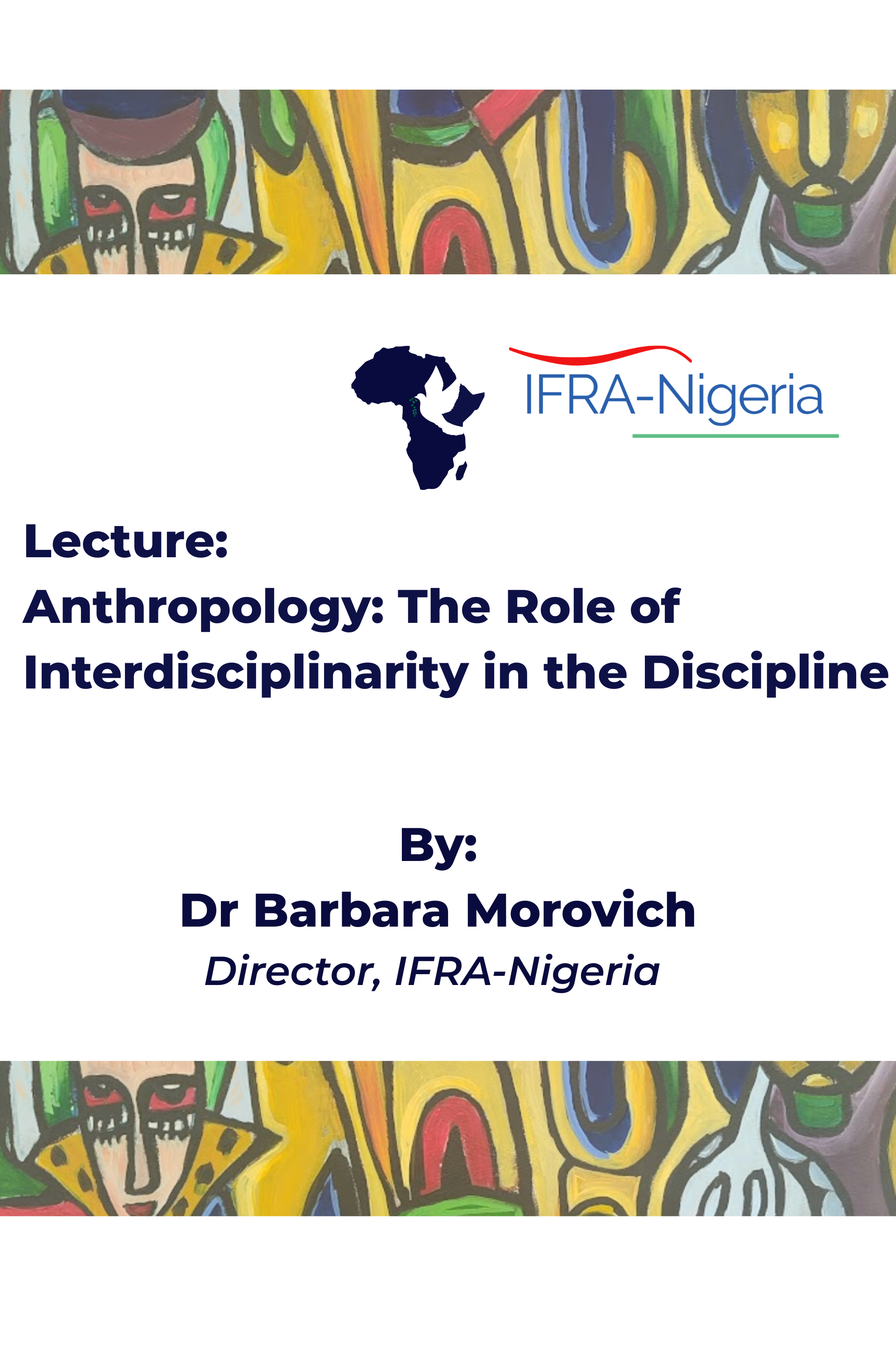
 On 5 August 2025, IFRA-Nigeria Director Dr Barbara Morovich held a lecture in the media studies class of Professor Sola Olorunyomi, to present her anthropological work, and the role of interdisciplinarity in the discipline. Going back to the initial source of interest in anthropology, her time in Nairobi (Kenya), she traced her international research path, including her initial research on Akurinu churches and Nairobi slums.
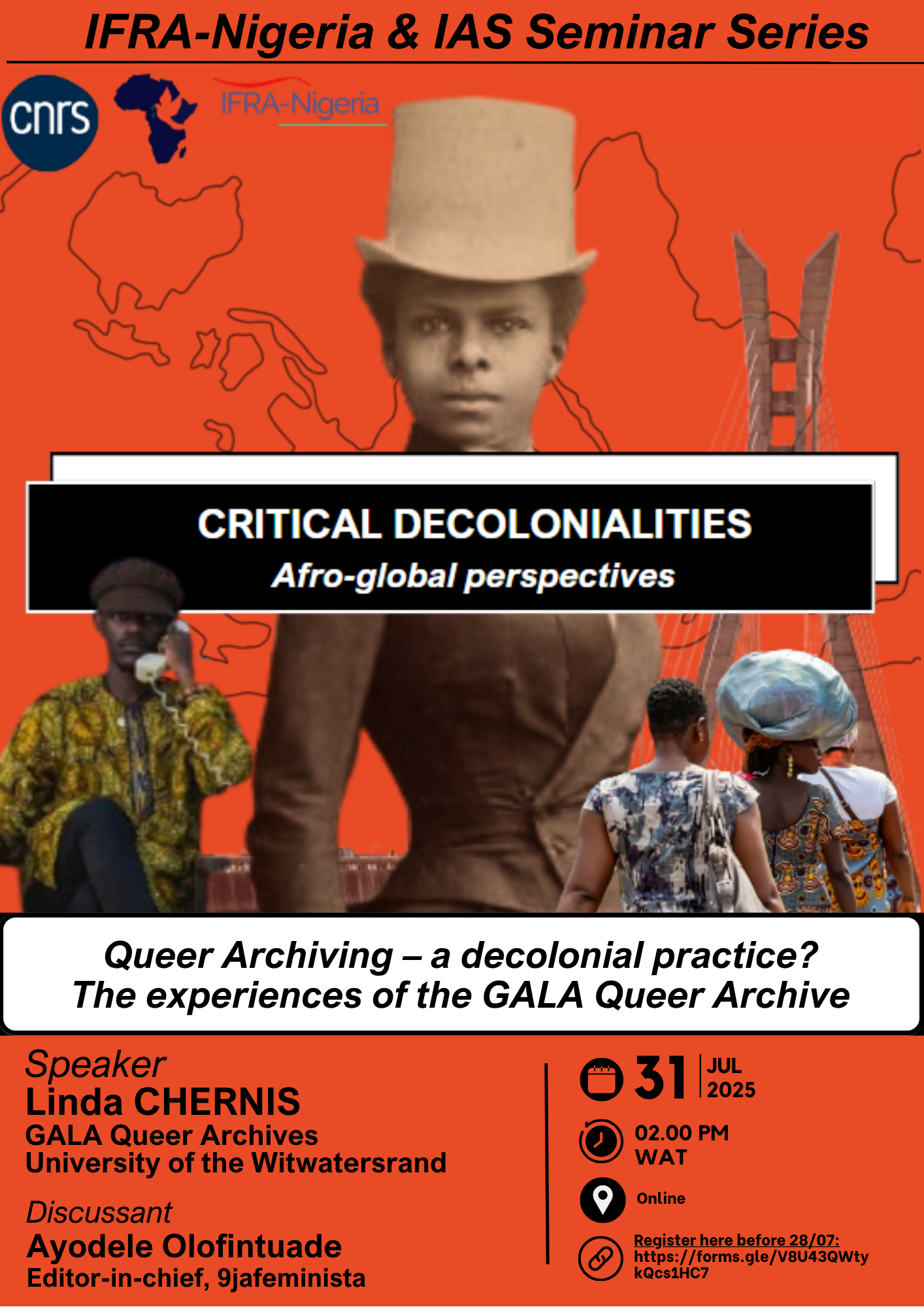
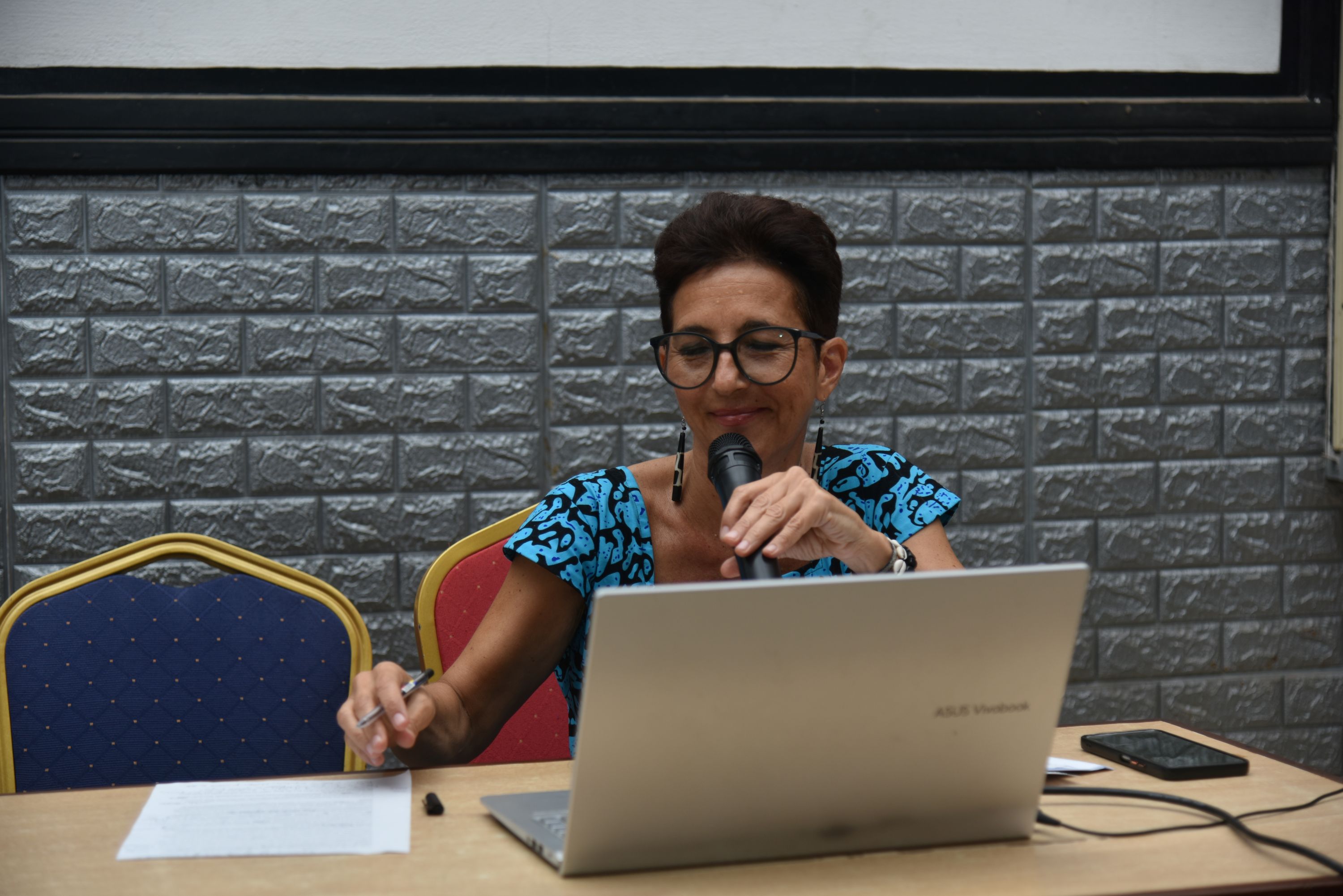
On 31 July, the Institute of African Studies (IAS) of the University of Ibadan and IFRA-Nigeria organized the fourth session of the Critical Decolonialities Seminar on the topic of “Queer Archiving – a decolonial practice? The experiences of the GALA Queer Archive”. Professor Sola Olorunyomi, director of IAS, and Dr Barbara Morovich, Director of IFRA-Nigeria, introduced the two speakers. Linda Chernis is an archivist at the GALA Queer Archive, an organization dedicated to the preservation, production and dissemination of LGBTQIA+ people in South Africa. Ayodele Olofintuade is a writer and editor-in-chief of 9jafeminista an online blog focusing on feminist and queer issues in Nigeria.
Watch the full seminar on YouTube: https://youtu.be/OeaYsbKJt-4
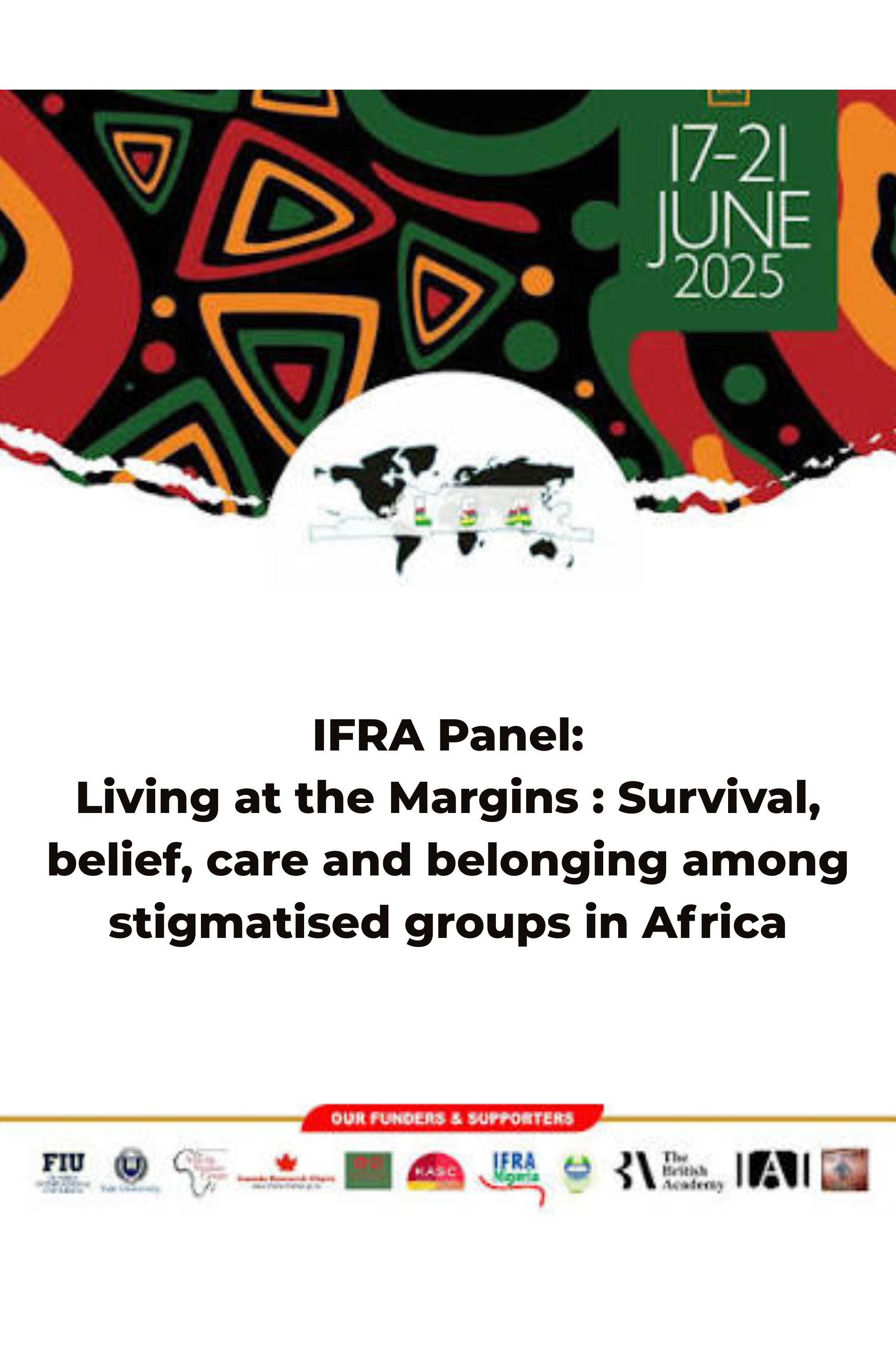
On 18 June, Janet Ogundairo, assisted by Director Barbara Morovich and Deputy-Director Delphine Manetta, organized a panel on "Living at the Margins : Survival, belief, care and belonging among stigmatised groups in Africa".
Following a call for abstracts, Janet Ogundairo selected five papers on the subject of stigmatised groups in Nigeria to be presented at this session. She started by introducing her own work and the panel, before giving the floor to the panellists.
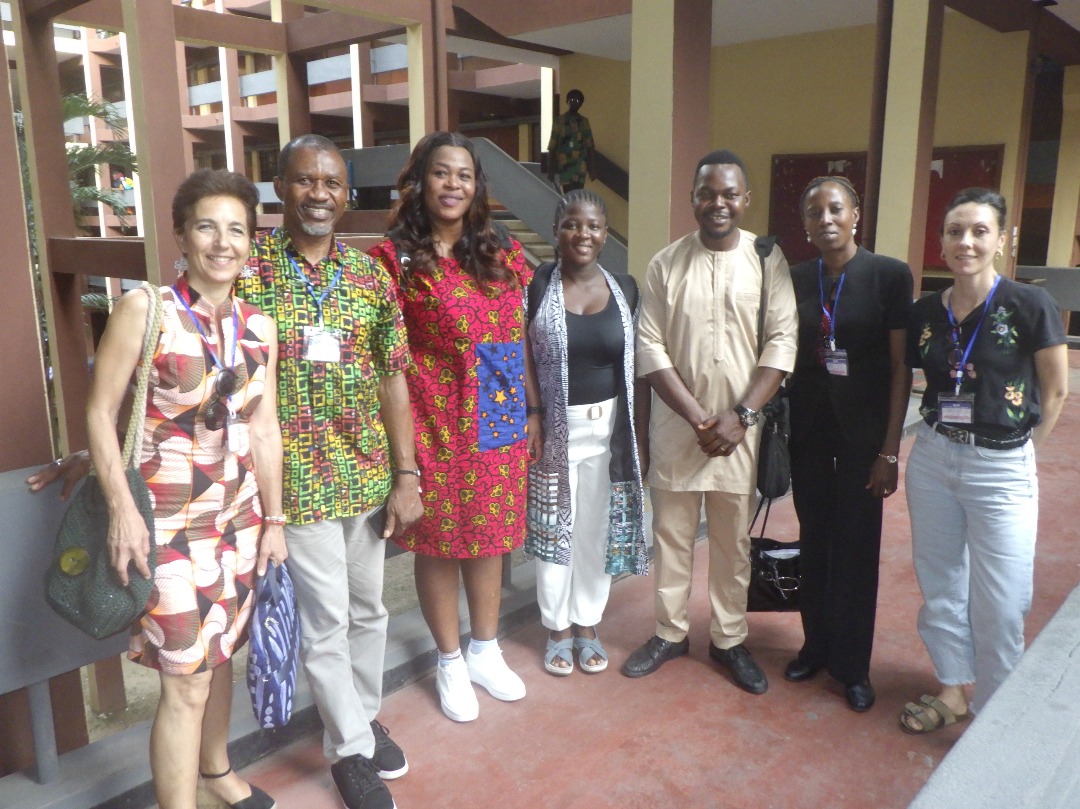
From left to right: Dr Barbara Morovich, Feyisitan Ijimakinwa, Cynthia Olufade, Janet Ogundairo, Joel Abah, Dr Bolarinwa Ogundeji and Dr Delphine Manetta.
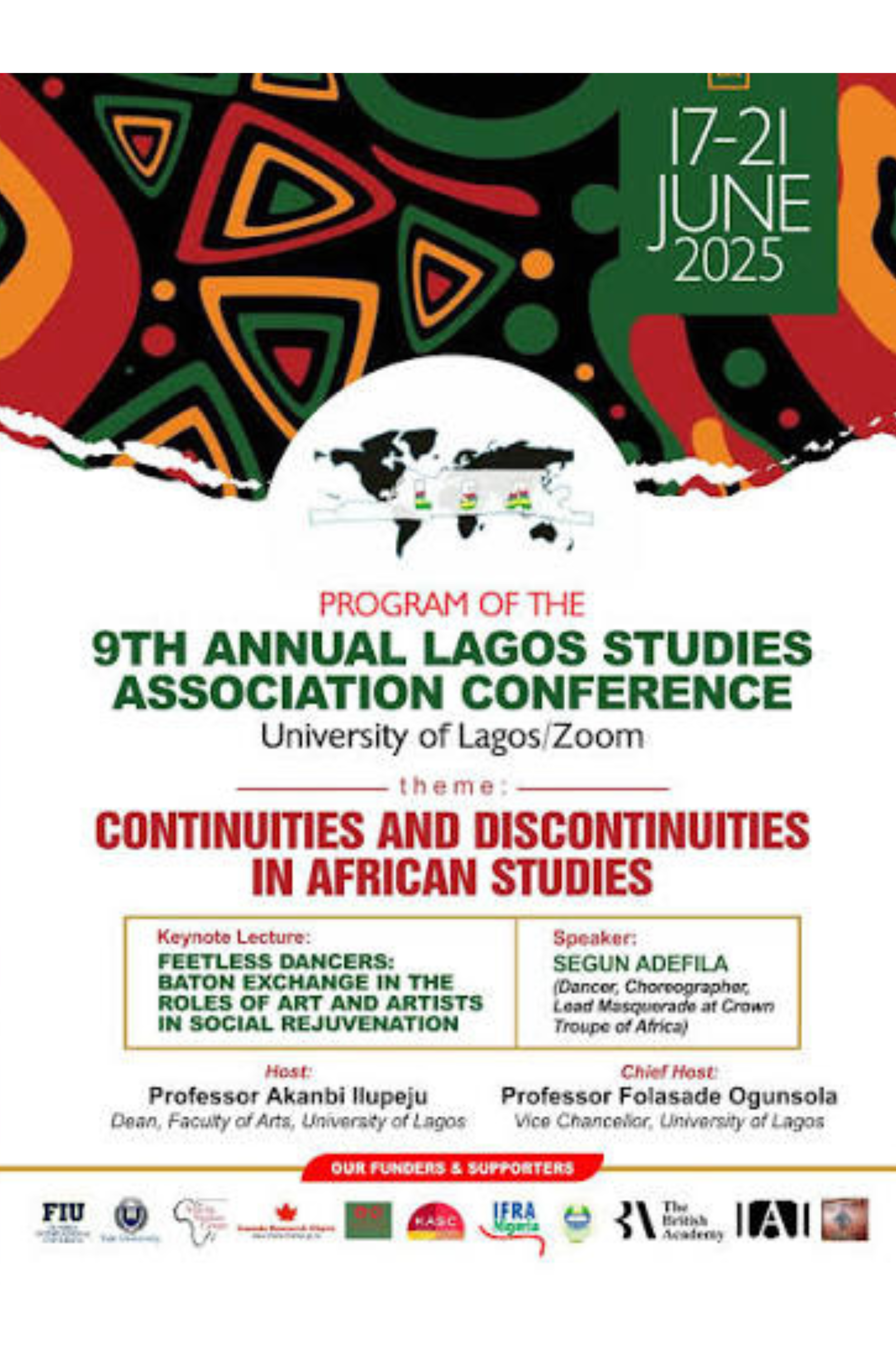
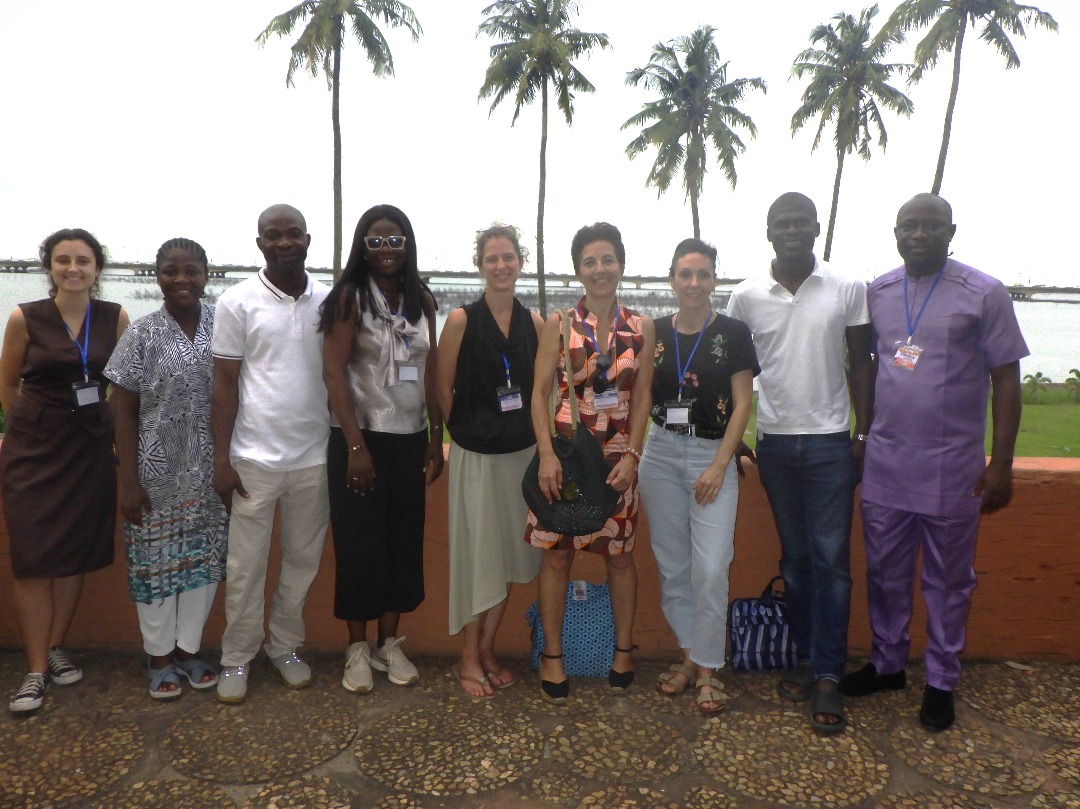 On 17 June, 2025, IFRA-Nigeria had the chance to present a panel at the 2025 Lagos Studies Association (LSA) Conference "Continuities and Discontinuities in African Studies", to present our activities, opportunities for researchers, publications, our resource centre and the work of our colleagues at Nigeria-Watch.
The panel included Director Barbara Morovich, Research Project Manager Marie Lureau, Deputy-director Delphine Manetta, Documentalist Olushola Babaola, and Nigeria Watch Information Retrieval Specialist Abiola Victoria Ayodokun.
The IFRA-Nigeria, as a partner of LSA, sent a delegation from 17 to 19 June, who had the opportunity to attend several panels, and the keynote lecture by Segun Adefila.
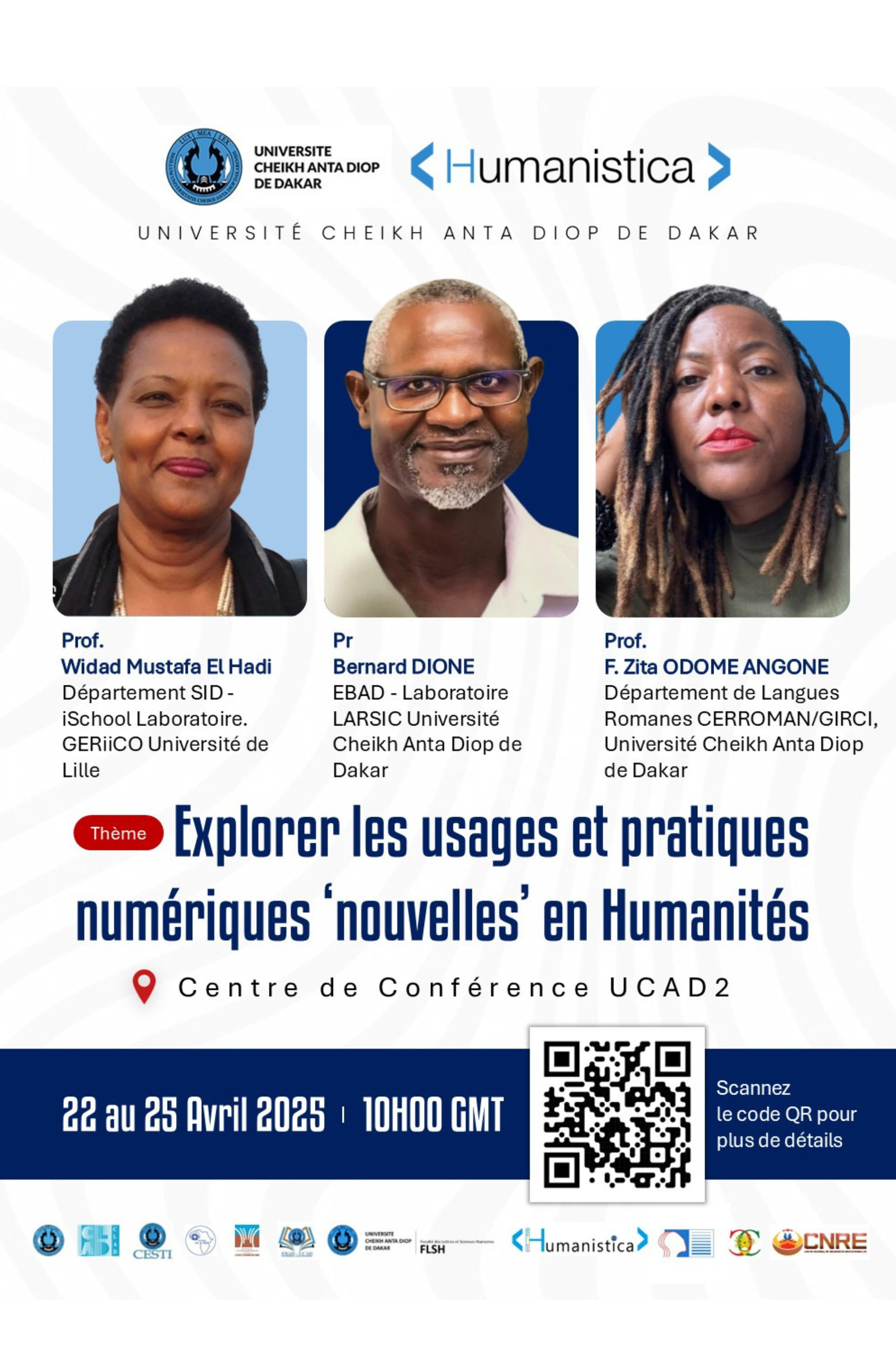
 From 22 to 25 April, IFRA-Nigeria’s director, Barbara Morovich, will be in Dakar, Senegal for the Humanistica symposium on “Explorer les usages et pratiques “nouvelles” en Humanités”. This edition of the yearly symposium of the francophone association for digital humanities will question the “new” to address the tools, questions and constraints that are concretely moving the lines of research in the humanities.
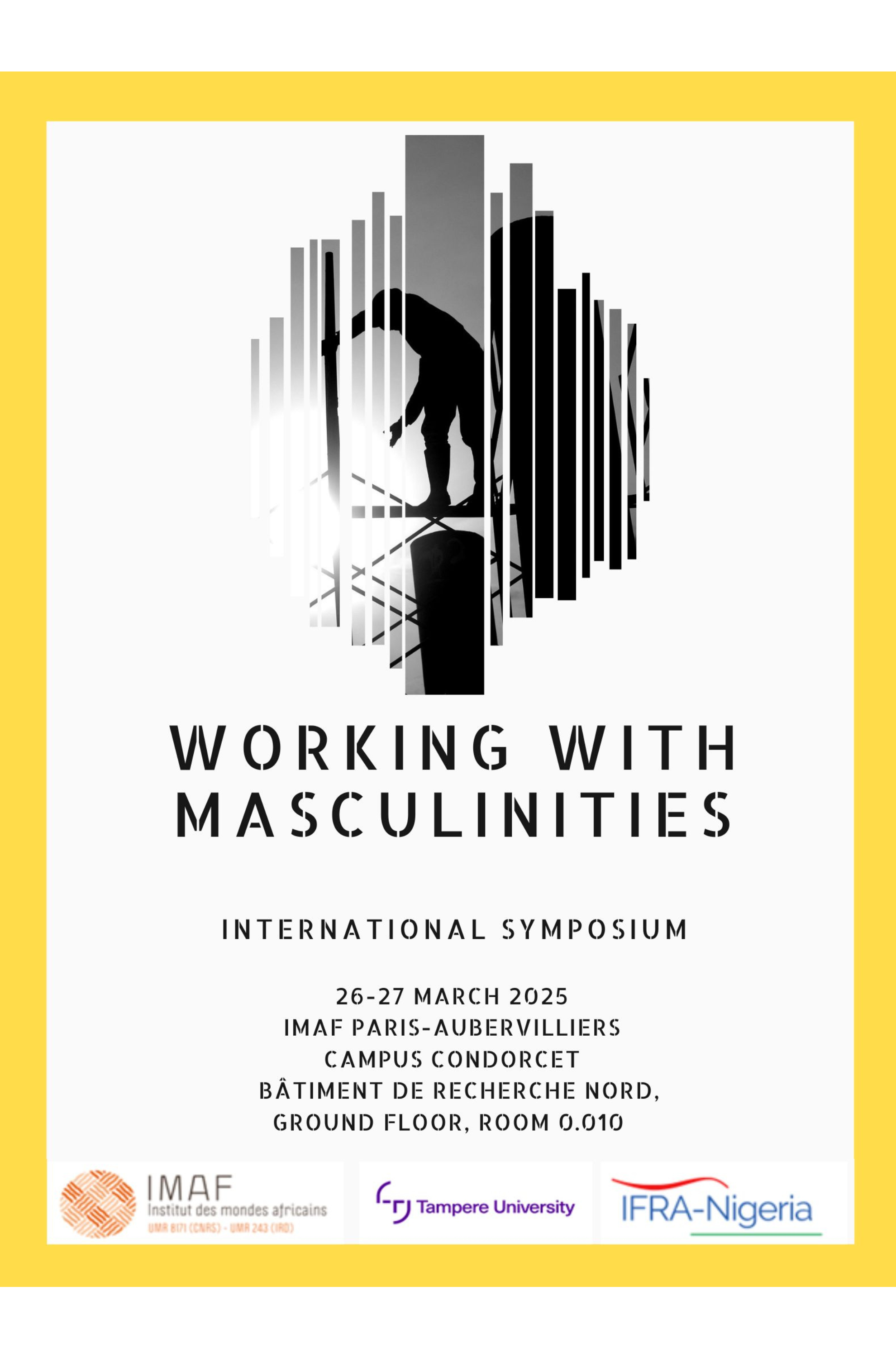
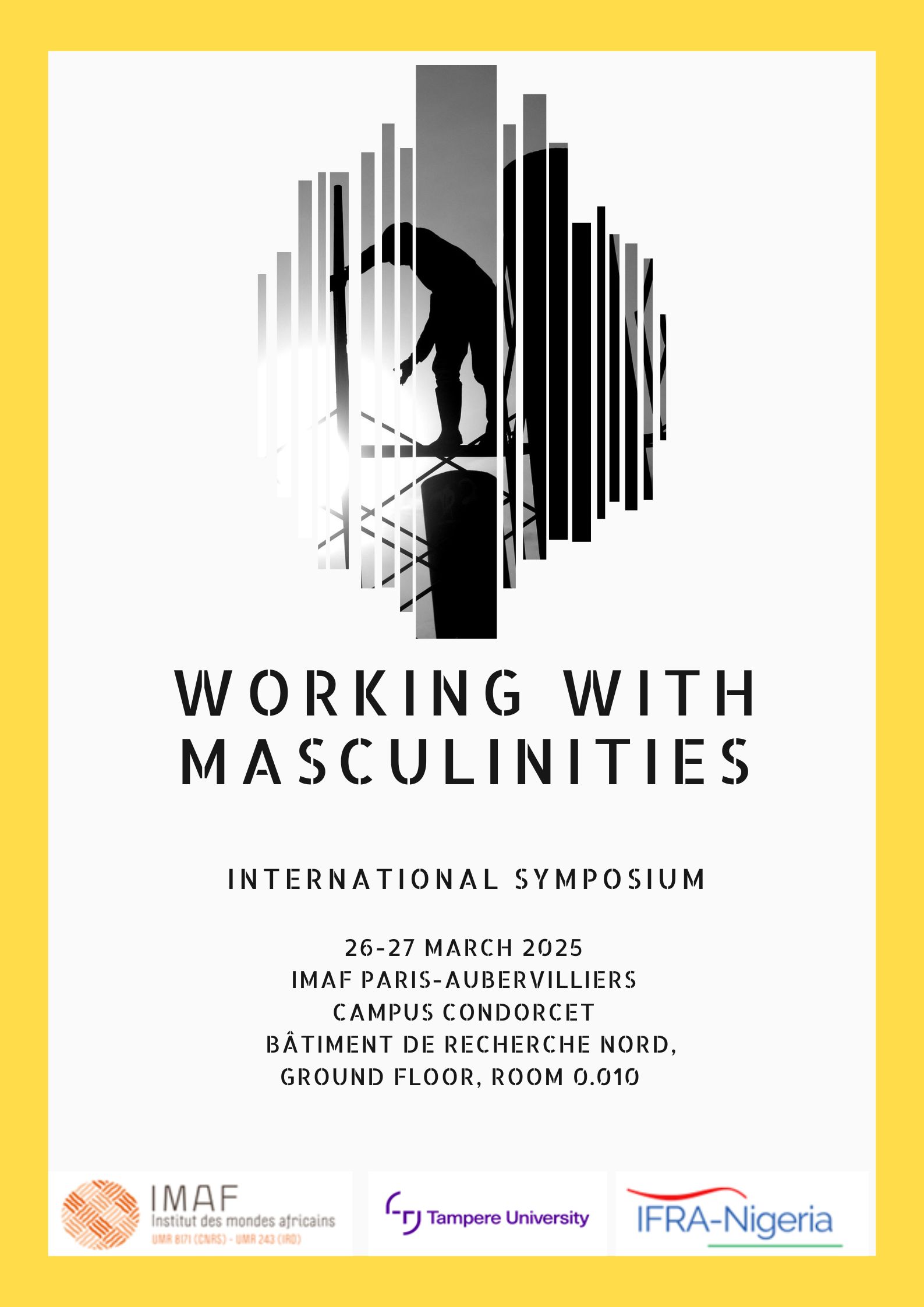 IFRA is proud to announce that we are co-organizing the International Symposium "Working with Masculinities" in collaboration with the Institut des Mondes Africains (IMAF) and Tampere University. This exceptional event is taking place on 26-27 March 2025, at IMAF in Aubervilliers.
IFRA’s own deputy director, Delphine Manetta, will be the moderator for the “Workers, Spaces, Cultures and (Post)Colonial Orders” panel!
Open to researchers with sound field experience, this symposium aims to reassess the place of masculinities in contemporary economies, whether through a reflection on work, on men's participation in household-making, or on the lifestyles associated with conceptions of masculinity. By taking a cross-disciplinary approach, this symposium will shed light on the entangled material and symbolic dynamics that shape contemporary masculinities in postcolonial contexts.
You can scroll below to see the full program, or to download it!
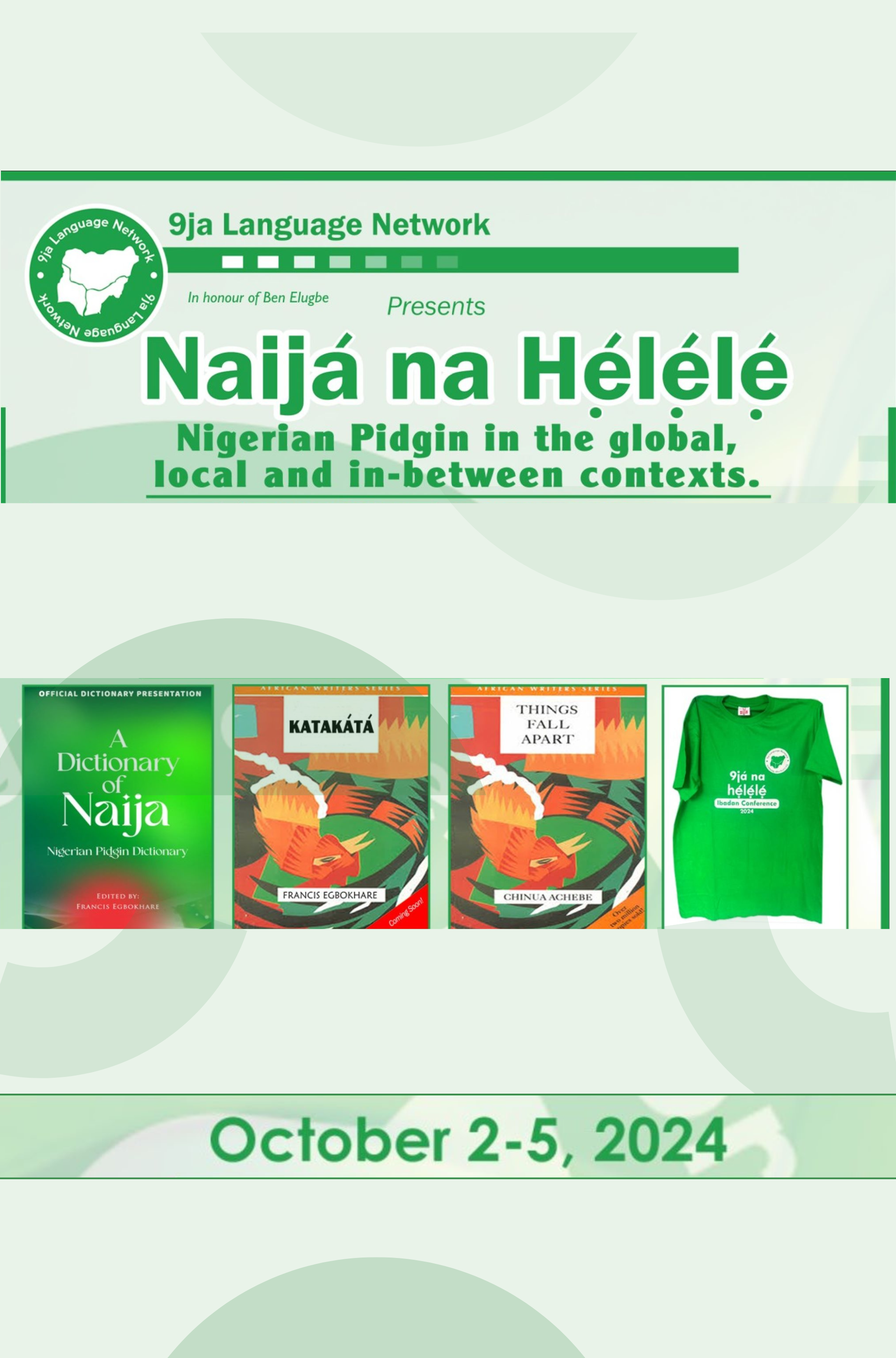
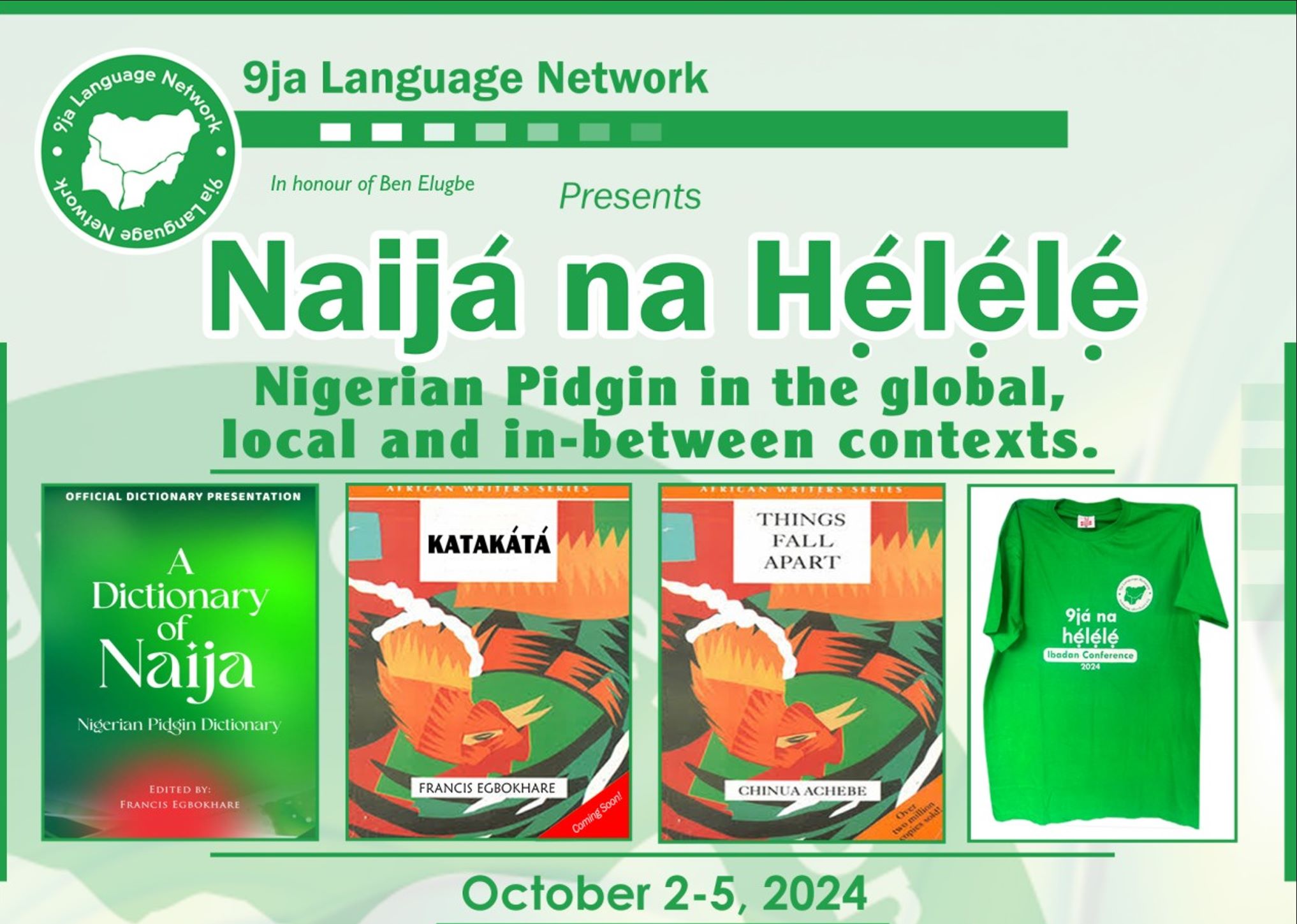 Between the 2nd and 5th of October the 9ja Language Network Conference took place at the Institute of African Studies of the University of Ibadan, IFRA-Nigeria is a sponsor of the event since many years. This conference was essential as Naijá (a.k.a. Nigerian Pidgin) has evolved over the last few decades to become the largest spoken and perhaps the most influential language in Nigeria. The current estimate of its speakers and users is placed at about 150 million with distribution across various continents.
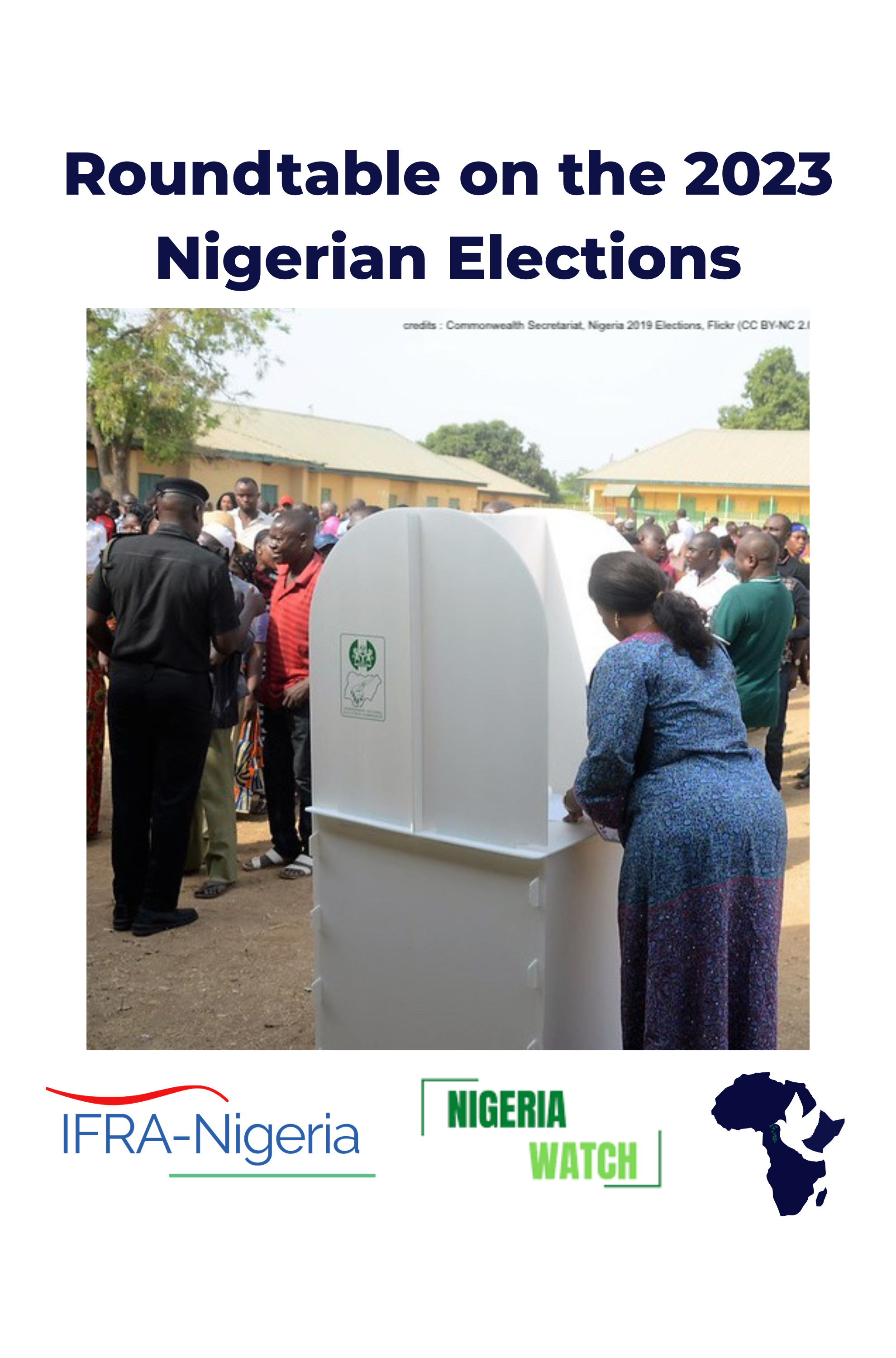
 On the 25th of February and the 11th of March 2023, Nigerians are called to the polls for the sixth time since the return to a multi-party system in the country twenty-three years ago. These elections will take place in a tense context and expectations are running high regarding the growing insecurity and the economic crisis Nigeria is facing. To understand better what is at stakes, IFRA-Nigeria organised a roundtable on the 8th of December 2022 gathering researchers working on various issues related to the 2023 elections at the Institute of African Studies, University of Ibadan.

Wednesday 7th December, 6PM (WAT)
Nigeria's Fourth Republic, 1999-2021. A Militarised Democracy by Dr Michael Nwankpa published by Routledge in 2022.
This book reflects on Nigeria’s Fourth Republic, the country’s longest democratic period since it gained independence. It argues that although constitutional or political democracy has lasted for over two decades, Nigeria’s democracy remains largely militarized. This book makes a compelling argument for considering the distinct character of the Nigerian nation state’s path to militarization over the last 20 years of experimentation with democracy. Its fresh insights into the fourth republic’s path to militarization will be of interest to researchers of African politics, security and development.
Discussion: Dr Oliver Coates (University of Cambridge)
Online Book Launch on Zoom. RSVP : https://forms.gle/5E1tgJApLiZN5yTC9