
On 25 February 2026, IFRA-Nigeria organised an event, themed "Identity, Trade and Preservation of Cultural Heritage in Nigeria," which was held in collaboration with the National Museum of Unity as part of the FEF-financed Nigerian Alternative Heritages project. It was comprised of three parts: an academic lecture, a roundtable discussion, and an exhibition tour.
Dr Afolasade Adewumi, a scholar of cultural property law and lecturer in the Faculty of Law at the University of Ibadan, delivered a lecture titled “Cultural Heritage, Law and Identity in Nigeria: Protection, Trade and Restitution.” She presented a customary law approach wherein heritage belongs to the people, emphasising the different perceptions and attitudes towards cultural heritage throughout pre-colonial, colonial, and contemporary periods. Dr Adewumi highlighted how the colonial era witnessed the movement of objects from their provenance, which influenced ownership claims and, in some cases, led to desacralization. She noted that restitution is occurring in certain instances due to moral pressure placed on Europeans and other nations alike. The lecture also addressed the various domains of legal protection for cultural heritage, including international approaches and regional frameworks under the African Union. Whilst the Nigerian government has accepted these conventions, they remain to be domesticated into national law.
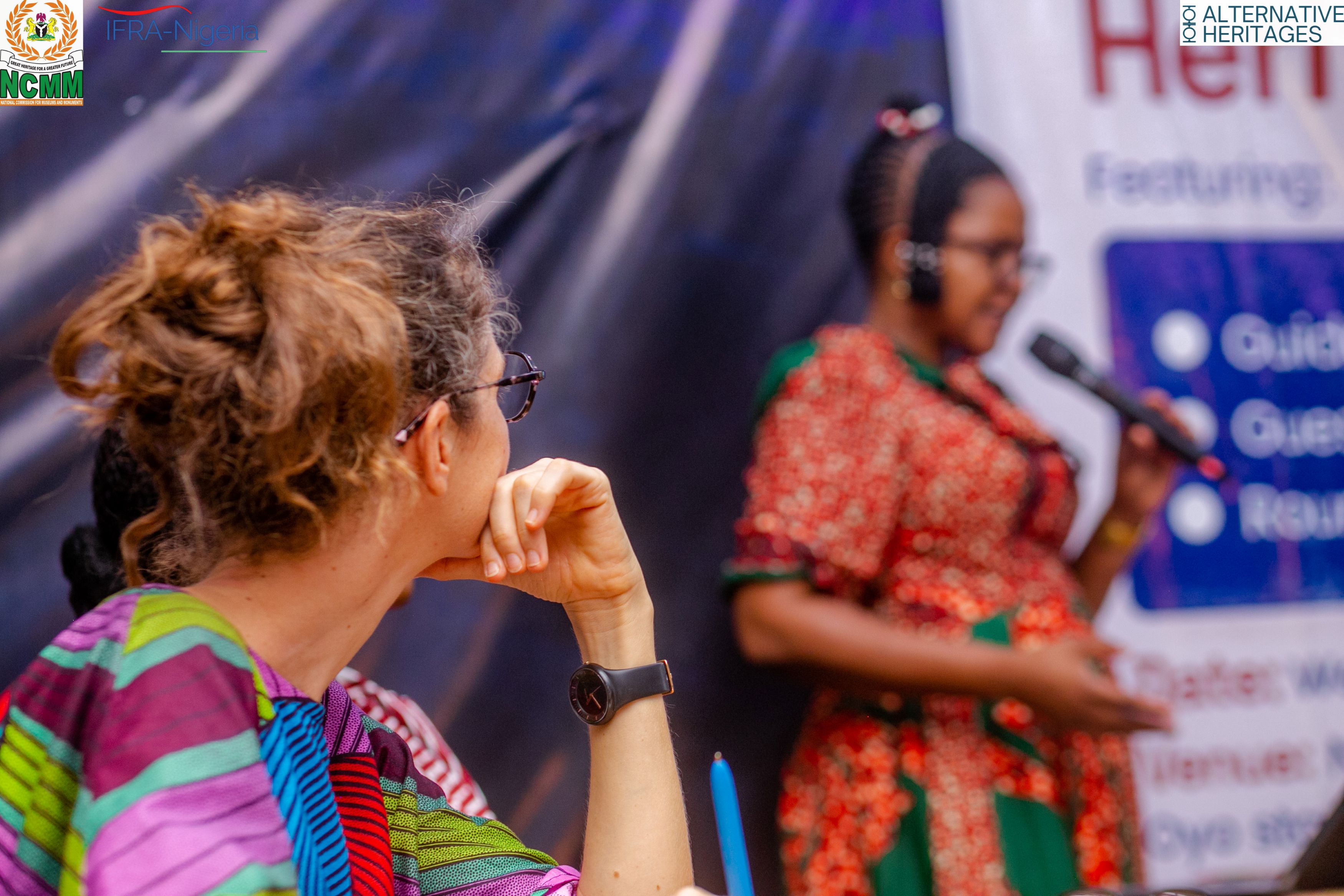
Dr Afolasade Adewumi's lecture
The interactive session that followed engaged students from secondary schools and tertiary institutions, members of the general public, and museum staff. Discussion centered on the role of individuals in protecting heritage, the necessity for cultural consciousness through education to awaken and orient people to understand the value of varying heritages, and the imperative for their protection.
The roundtable discussion, moderated by Adéjọkẹ́ Rafiat Adétòrò, featured Mr Olalere Marufu Babatunde, a merchant of objects of cultural heritage and member of the Artefacts’ Rescuer Association of Nigeria (ARAN), and Mr Paul Jayeola, Head of the Department of Heritage at the National Museum of Unity, Ibadan. The panelists discussed how, in their respective roles as individuals and institutions dealing with cultural heritage, they value and trade objects of heritage. The NCMM finds objects through purchase from merchants such as ARAN, community presentations, loans from individuals, and some repatriated objects. Merchants, by contrast, source them through invitations from families willing to sell their heirlooms and from traditional craftspeople. The audience engaged the panellists on the entrepreneurial potential of being a merchant of cultural artefacts and the ways in which the NCMM facilitates antiquity protection, generating a stimulating and productive exchange of ideas.
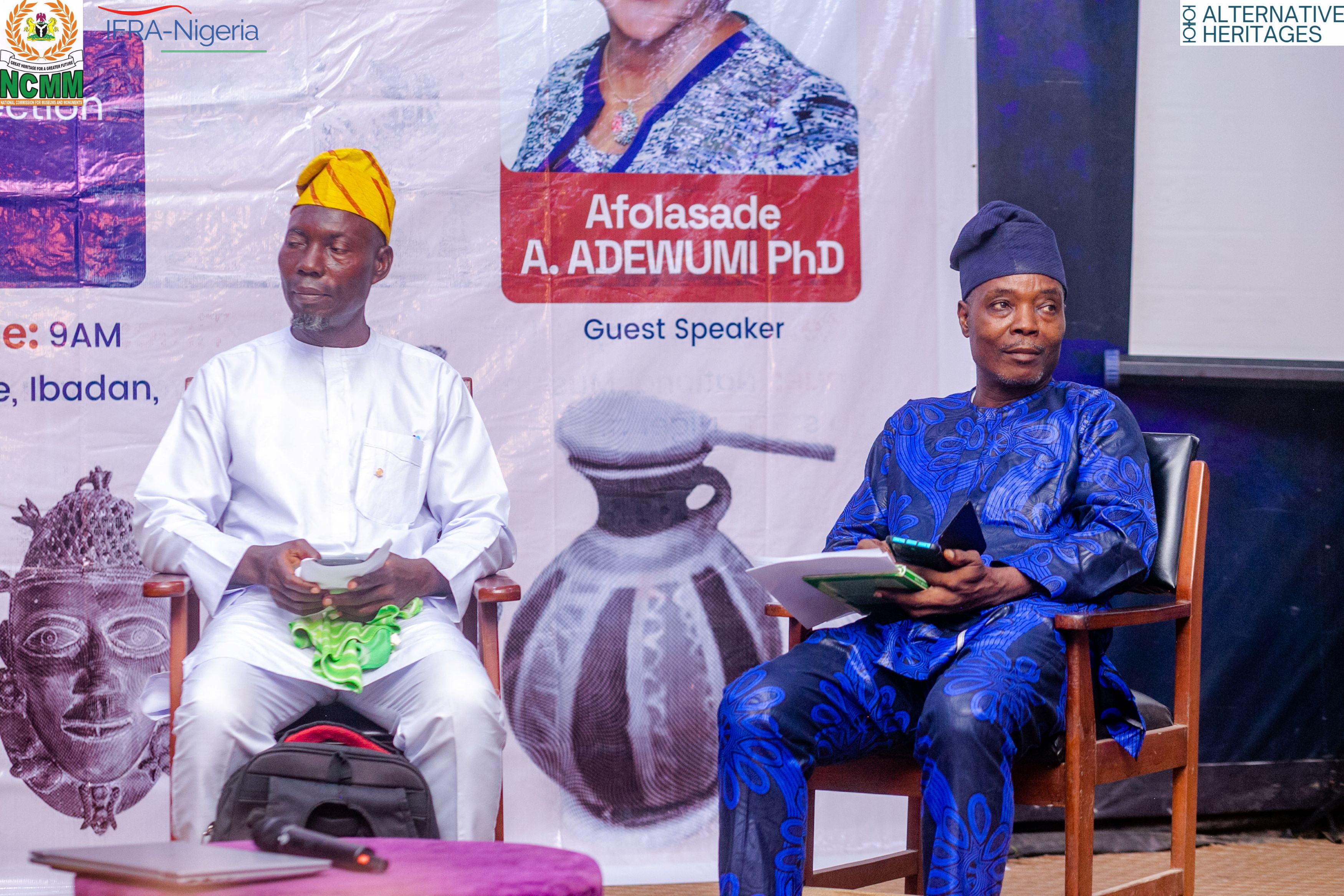
Mr Olalere Marufu Babatunde and Mr Paul Jayeola
The event concluded with a tour of the exhibition, which showcased the diversity of cultural and artistic production across Nigeria. The exhibition aimed to educate the public on identifying authentic, contemporary, and legally tradable items, encourage ethical sourcing and documentation of artefacts, and provide a structured interface between traders and heritage regulators.
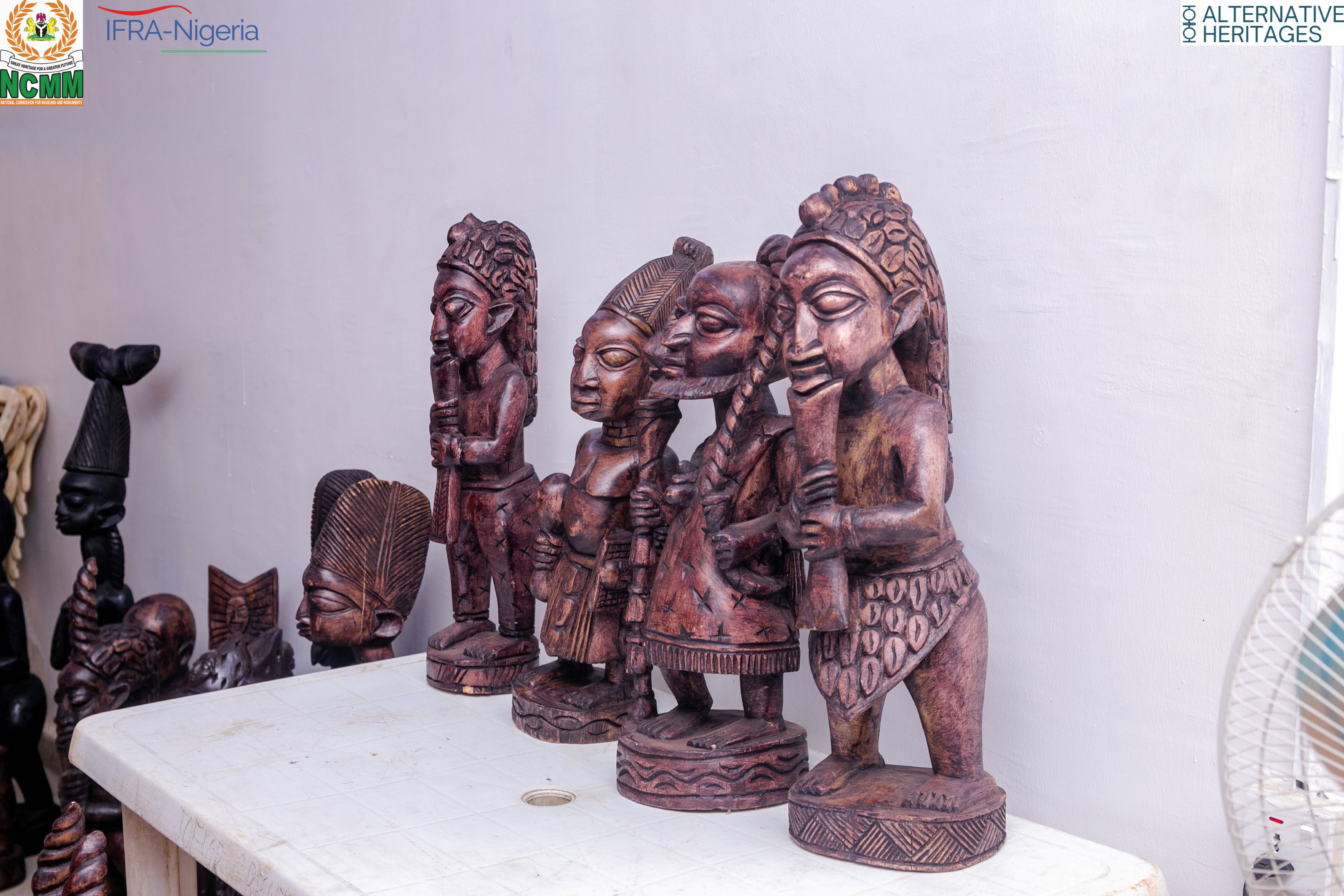
An excerpt from the exhibition