
On Wednesday, 6 May 2026, IFRA-Nigeria, in collaboration with the National Museum of Unity in Ibadan, hosted a guest lecture and practical workshop under the theme “Make Your Medicine: Heritage, Culture, and Health.” The event sought to foster public engagement with traditional medical knowledge, healing practices, and the interplay between culture, heritage, and health. The programme was part of the Nigerian Alternative Heritages Project, supported by the French Embassy Fund.
The event began with a special exhibition and guided tour of the Museum’s galleries, where participants were introduced to heritage materials and cultural objects linked to indigenous wellbeing and daily life. Traditional items on display included Ajere (a sieve for sifting shaft), Isaasun (used in food preparation), Oru (a wooden mortar for preparing leaves and herbal mixtures), Awo (a traditional plate, including Awo Aseje), and Ife (cups traditionally used for drinking herbal remedies such as agbo).
Two guest speakers delivered insightful lectures; The Narratives Around Traditional Medicine in Nigeria Today” – Dr Akinmayowa P. Akin-Otiko, University of Lagos and “Nature’s Pharmacy: Bridging Traditional Heritage and Modern Scientific Practice” – Mr Jamiu A. Akintola, Emmanuel Alayande University of Education, Oyo, and founder of ‘Detoro Naturals Limited, Ibadan. The first, an academic scholar and practitioner of African traditional medicine, and the second, a phytochemist specialising in natural products research and herbal formulation, explored the scientific basis of plant-based medicinal practices and the distinctions between methods used in deriving indigenous and western plant-based remedies.
In his lecture, Dr Akinmayowa P. Akin-Otiko examined the role and relevance of traditional medicine in Nigeria today. He defined traditional medicine as the sum of knowledge and practices used in diagnosing, preventing, and treating physical, mental, and social ailments, often passed down through generations via oral or written transmission. Dr Akin-Otiko highlighted Nigeria’s policy framework on traditional medicine, noting that the Federal Government first introduced the ‘Traditional Medicine Policy for Nigeria’ in 2007, with a revised version published in 2023. The policy aims to expand healthcare access, mitigate risks from improper use of traditional remedies, and harness the economic and health benefits of indigenous medicine. It established a three-tier regulatory system: the ‘Traditional Medicine Practitioners’ Council’ at the federal level, ‘Practitioners’ Boards’ at the state level, and ‘Committees’ at the local government level, tasked with regulating, registering, promoting, and funding traditional medicine practice.
He observed that while traditional medicine enjoys widespread patronage, regulation remains weak. Practitioners of traditional and orthodox medicine often operate in isolation, with limited collaboration and lingering mistrust, largely due to insufficient education and information exchange. Dr Akin-Otiko encouraged participants to familiarise themselves with medicinal herbs, cultivate them, and use them. He introduced several commonly used plants, including scent leaf (Ocimum gratissimum), miracle leaf Kalanchoe pinnata), bitter leaf (Vernonia amygdalina), and onion (Allium cepa), detailing their medicinal applications in digestion, wound healing, immune support, and respiratory care.
Mr Jamiu A. Akintola’s lecture, “Nature’s Pharmacy: Bridging Traditional Heritage and Modern Scientific Practice,” explored the intersection of traditional knowledge and modern science. He described phytochemistry as the scientific process of identifying bioactive compounds in medicinal plants, emphasising that applying scientific methods to traditional medicine does not diminish its cultural value but instead complements and strengthens it for wider application. He outlined the phytochemical process, which involves ethnobotanical surveys, authentication, collection, extraction, isolation, characterisation, and formulation, fostering community involvement at each stage.
Mr Akintola illustrated the medicinal properties of several plants, including scent leaf, neem, turmeric, garlic, bitter kola, and lemongrass. He outlined the active compounds in each and their therapeutic applications, such as aiding digestion, alleviating respiratory infections, reducing inflammation, managing hypertension, combating bacterial infections, supporting liver health, easing anxiety, reducing fever, and addressing malaria symptoms. He further contextualised traditional medicine within broader global health challenges, including antimicrobial resistance, equitable healthcare access, and climate change. Indigenous medicinal knowledge, he asserted, holds significant potential for advancing local drug development, improving healthcare accessibility, and promoting biodiversity conservation.
A lively question-and-answer session followed, moderated by Ms Adejoke Rafiat Adetoro, the project coordinator. Participants, including schoolchildren, university students, and other attendees, engaged actively. One university student inquired about herbal remedies for dysmenorrhoea, to which the speakers advised seeking a medical diagnosis first and suggested herbs with muscle-relaxing properties. Schoolchildren asked whether herbal medicines expire and whether incantations are required before use. University students sought guidance on integrating phytochemistry into their chemistry studies, while others raised questions about dosage in herbal medicine and how to determine safe consumption levels. A student also questioned whether traditional methods could remain effective against emerging diseases, prompting a broader discussion on balancing indigenous practices with scientific innovation.
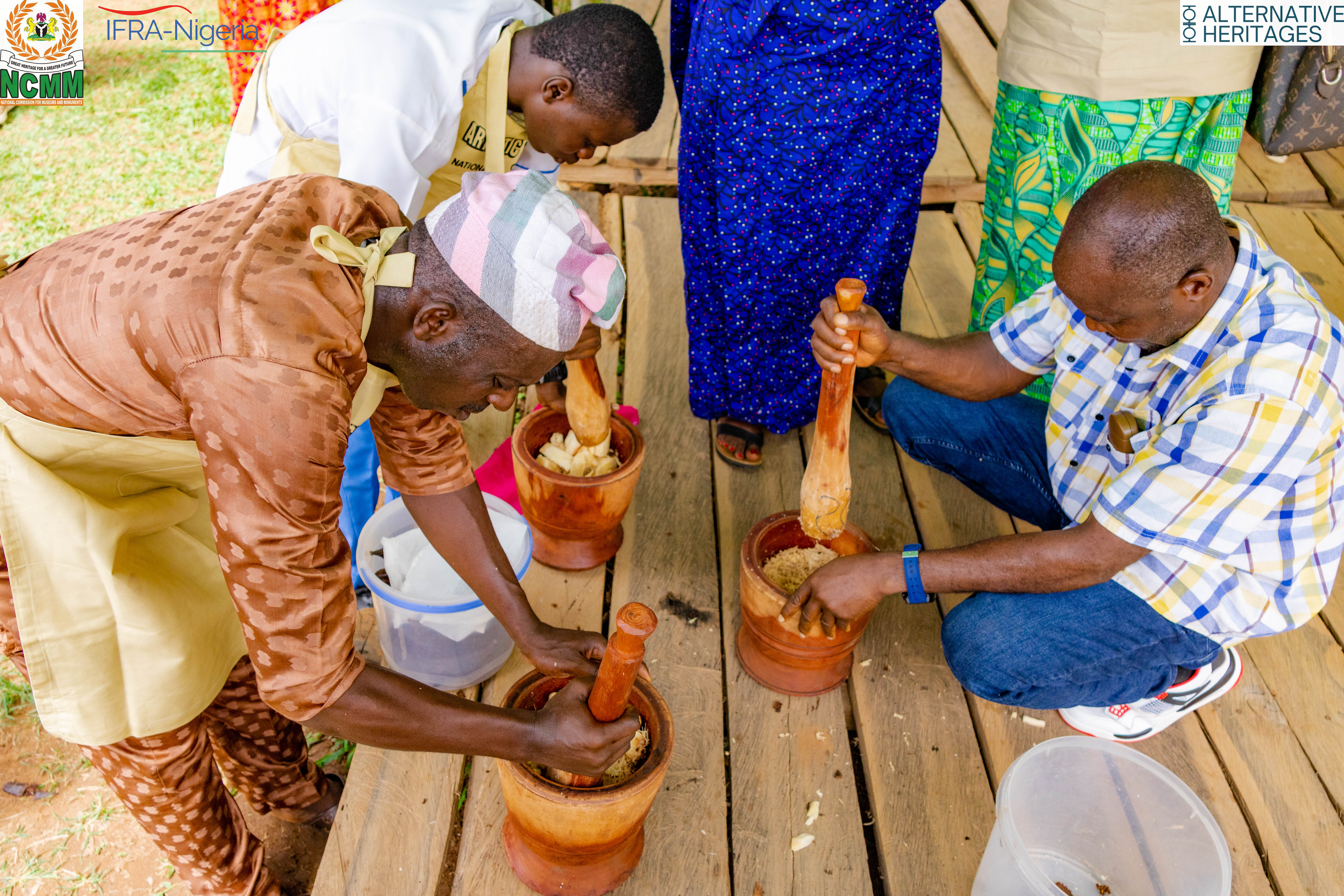
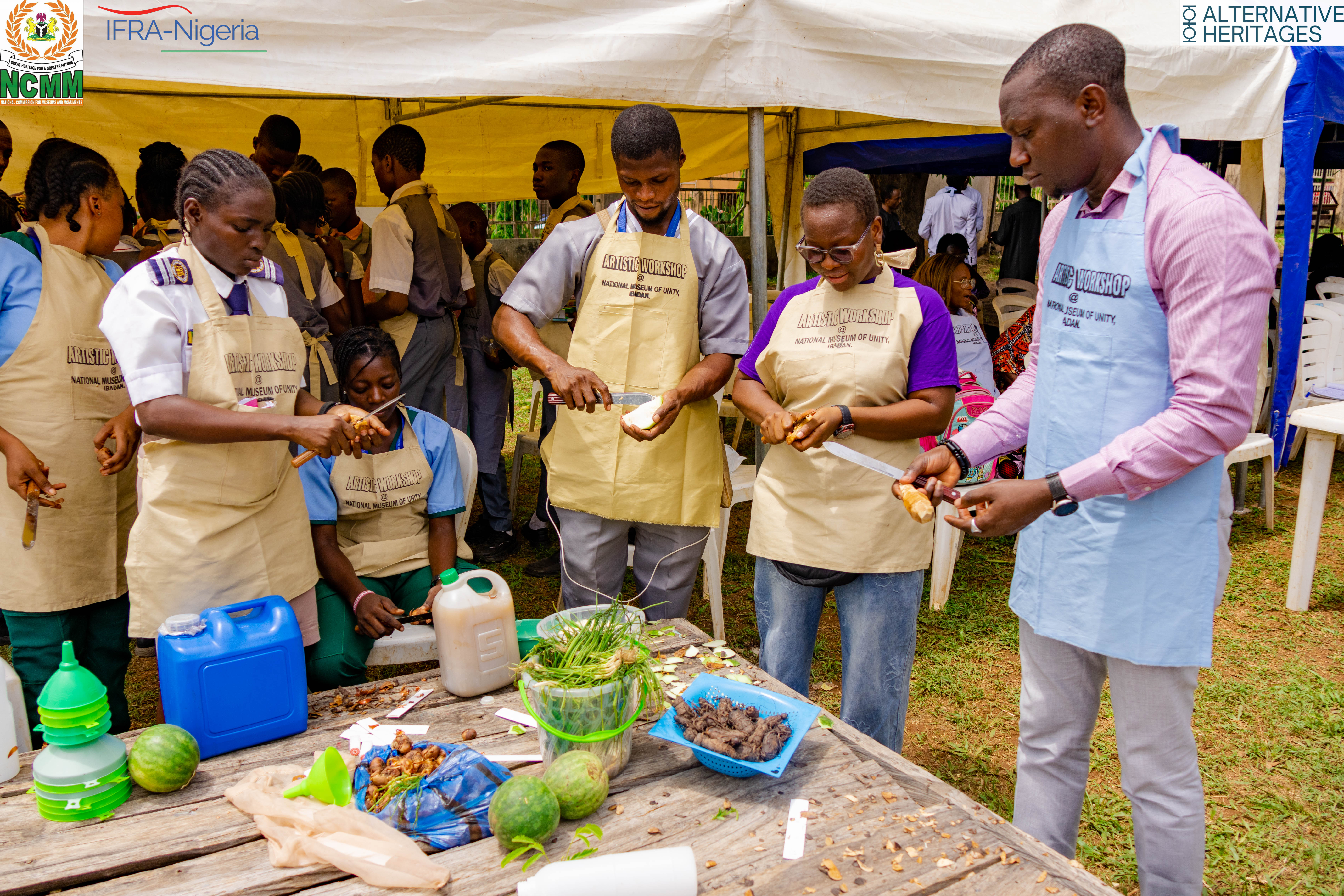
The event concluded with a hands-on workshop led by Mr Anthony Ogunleye, an herbalist and naturalist, who demonstrated herbal preparation techniques for detoxification, seizure support, concussion relief, asthma management, and eye care. Participants actively engaged in practical demonstrations, preparing detoxification mixtures for children using sugarcane and tetrapleura tetraptera, eye remedies with miracle leaf, bitter kola, honey, and general detoxification preparations from baak, bitter melon, African crocus, and spring onions.
Overall, the programme provided an intellectually stimulating and practical learning experience, deepening participants’ appreciation of indigenous medicine as a vital component of Nigerian heritage. Participants were encouraged to view traditional medicine not merely as an inherited practice but as an evolving knowledge system capable of addressing contemporary healthcare challenges. Through lectures, guided tours, discussions, and hands-on activities, attendees gained valuable insights into the relationship between heritage, health, and scientific advancement.