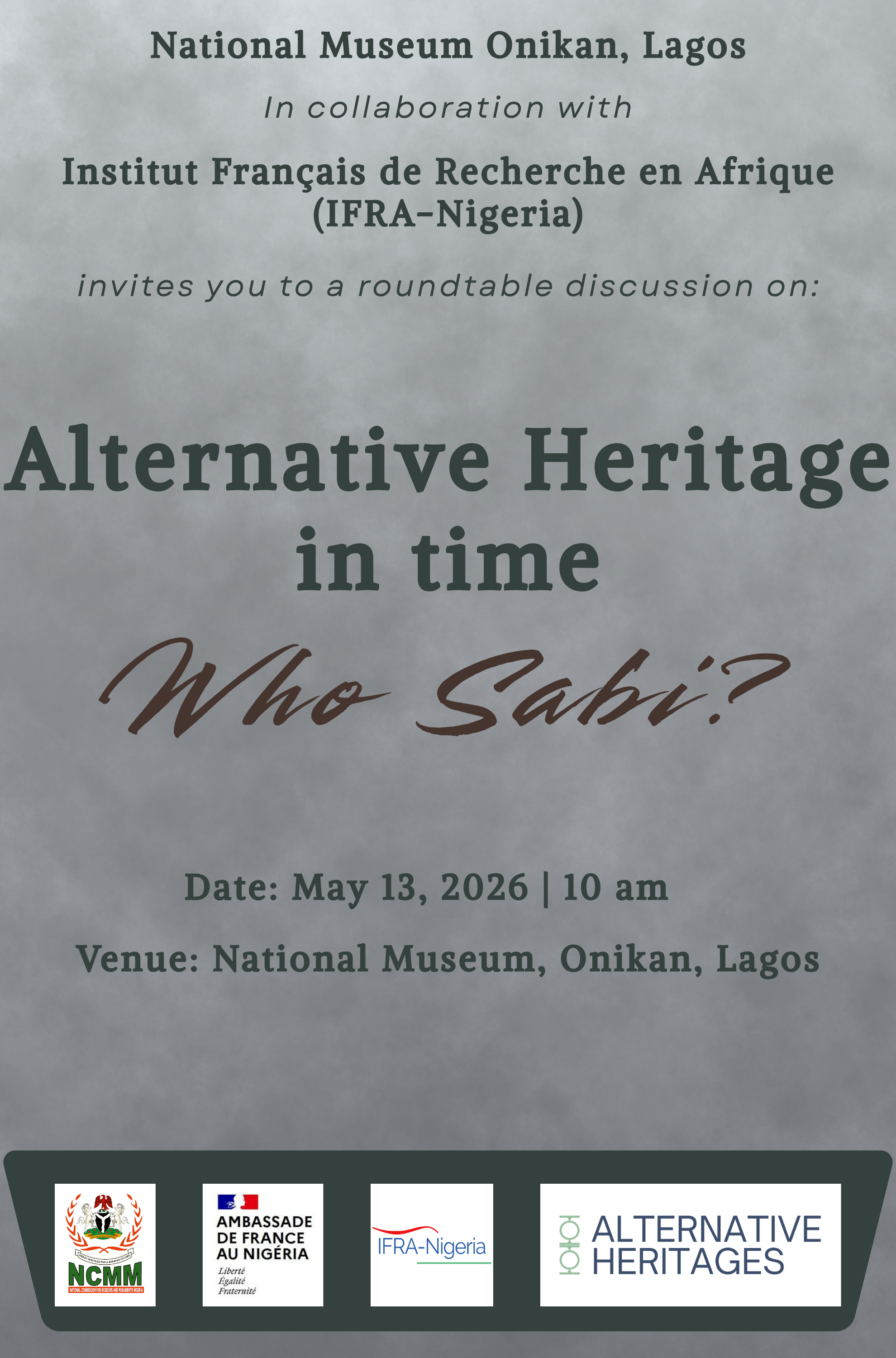
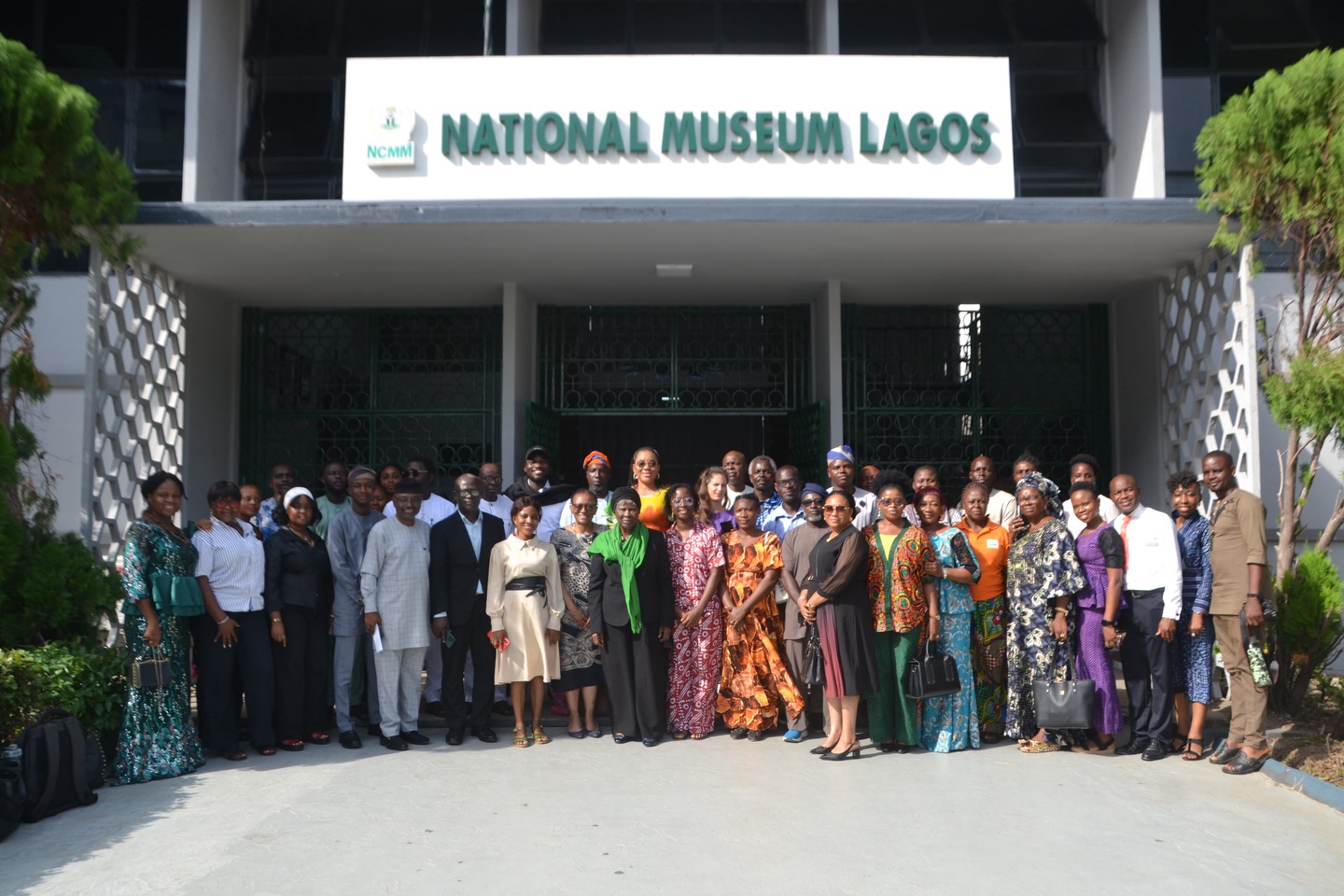
On 13 May, the National Museum of Lagos and IFRA-Nigeria organised the colloquium "Alternative Heritage in Time: Who Sabi?" who concluded our two-year partnership as part of the French Embassy Fund project "Nigerian Alternative Heritages." The four researchers who received a grant as part of the project presented their work in a session moderated by Dr Pauline Guinard, IFRA-Nigeria Director, and Dr Toluwalope Fajobi.
The papers presented were:
Ecological heritage and the Ikom monoliths: environmental sustainability through indigenous heritage practices in Cross River State, Nigeria by Glory Chika Kanu
Reimagining Alternative Heritage: embodied memory and mental health narratives in Nigerian museum artworks by Bernard Ogini, Edeyan Omoweh, Daniella Baroywe and E. O. Robyn.
Unmapped Lagos: mapping alternative urban heritage by Sharon Nworgu and Kelechi A. Ujagbor.
Reconstructing women' scientific lineages in Nigeria heritage: an archive-led study from the National Museum Lagos by Edemawan Dorothy Ossai.
On 6 July, Adam Rodgers Johns, doctoral student in anthropology and Swahili teacher at SOAS University, presented his work “Mapping the impact of regeneration and gentrification on the Yoruba-led religious spaces in south-east London” in our last methodological seminar of the academic year.
His research focuses on the Yoruba community in south-east London, specifically the Peckham area. Often referred to as “Little Lagos,” given the high number of residents from the Nigerian diaspora, it’s also the neighbourhood where Adam Rodgers Johns grew up.
As part of the Nigerian Alternative Heritages project, a French Embassy Fund programme, IFRA-Nigeria began a collaboration with the Centre for Contemporary Art Lagos (CCA) at the beginning of 2026. Its main goal was to digitize, make accessible and valorise the CCA archives.
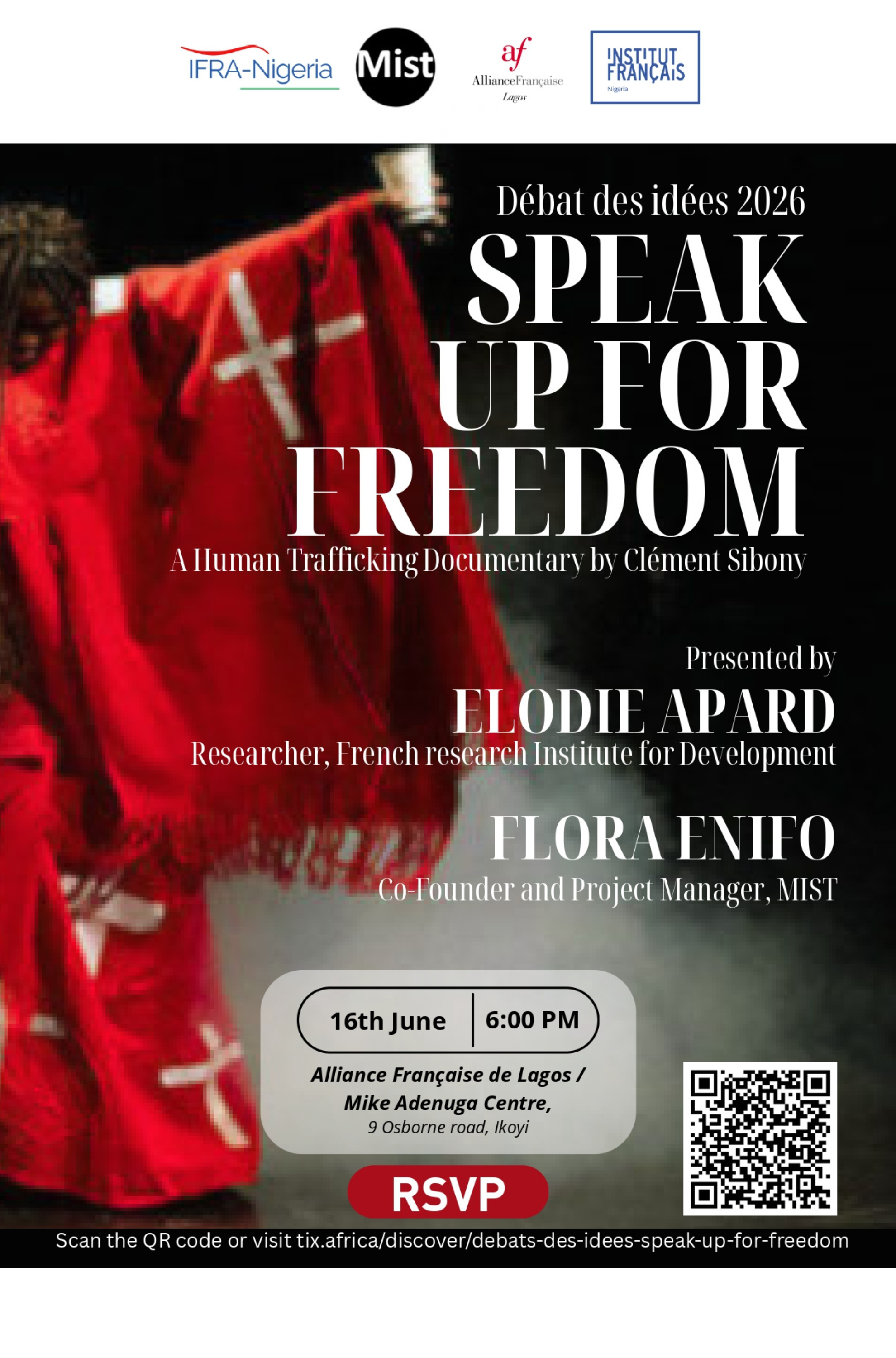
On 1 June and 16 June, the Alliance Française of Port Harcourt and Lagos respectively, organised with IFRA-Nigeria and the support of the Institut Français the screening of "Speak up for Freedom". This documentary movie by Clément Sibony follows Nigerian women who survived sexual trafficking in Europe, as they put together a play retelling their experiences.
This play was organised by MIST (Mission of Intervention and Sensitisation against Sexual Trafficking), a survivor-led association operating in France. Both screenings were followed by a discussion with Flora Enifo, MIST's co-Founder and Project Manager, and Dr Elodie Apard, Researcher at IRD, board member of MIST and head of the Life After Trafficking research project.
This event is part of our 2026 "Debate of Ideas" programme on the theme "Listen to Sensitive and Alternative Voices to Pave the Way." The goal of this screening: to look past the stigma, give back their voices to the women first concerned by this issue, and encourage a dialogue on the topic between civil society, academics, artists and more.
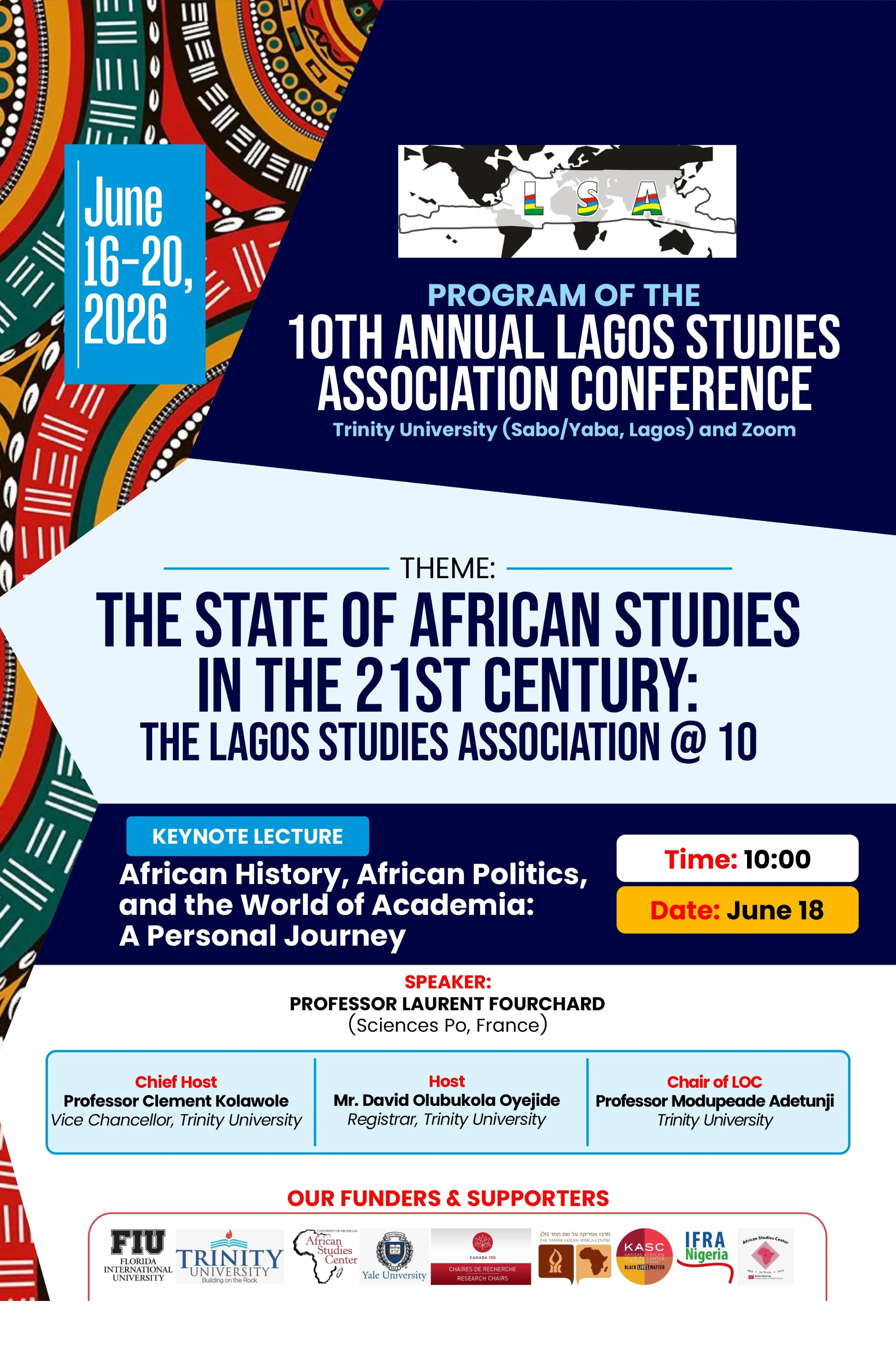
Between 16 and 20 June 2026, the IFRA-Nigeria team was present at the Lagos Studies Association (LSA) Conference. This 2026 edition marked the tenth anniversary of the Conference and its theme was "The state of African Studies in the 21st century". Once again this year IFRA-Nigeria supported the organisation of the conference itself, and offered several grants for participants in our own panels.
This year, IFRA-Nigeria organised four panels:
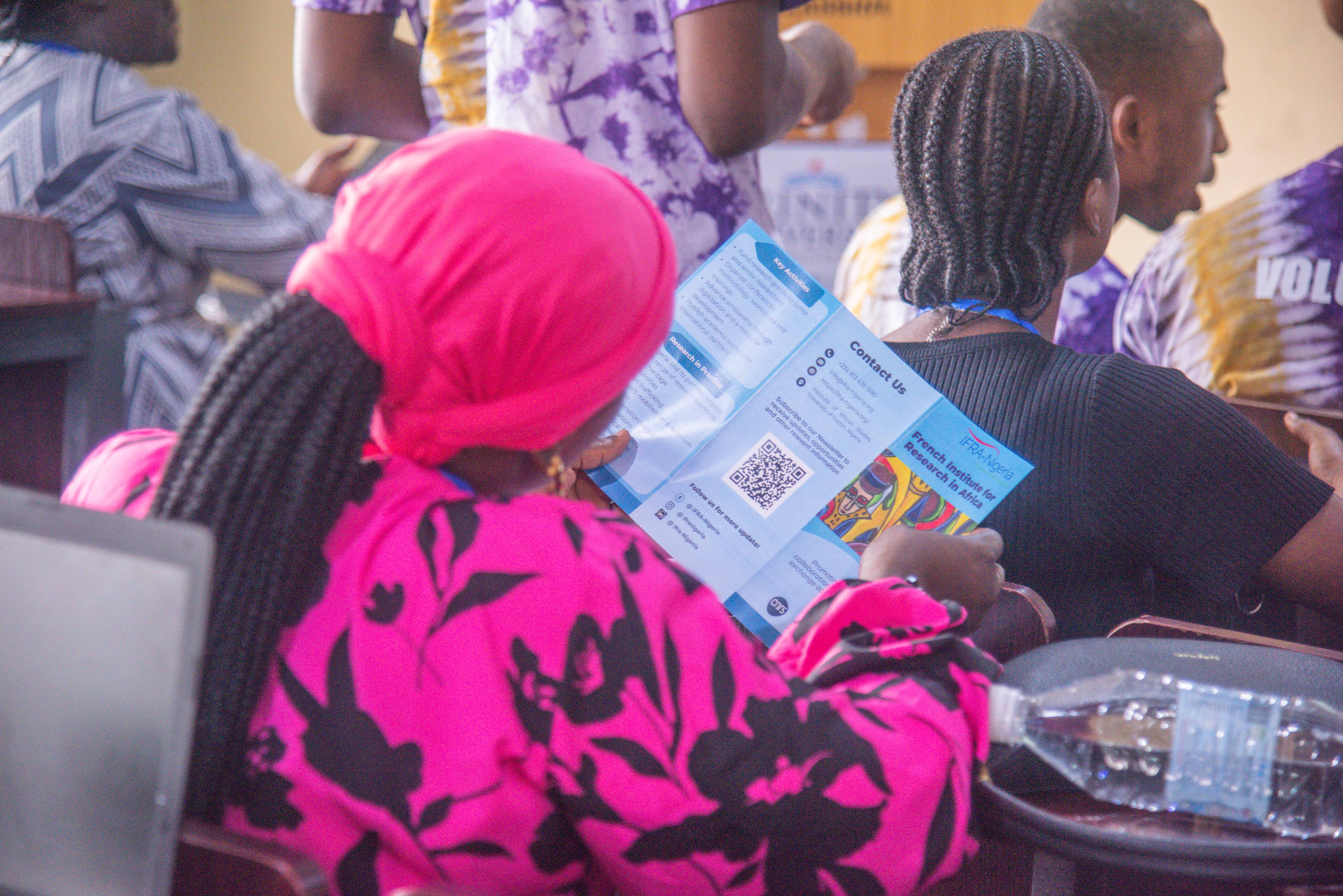
"Introducing the French Institute for Research in Africa", on 16 June, with Pauline Guinard, Marie Lureau, Delphine Manetta and Olushola Patrick Babalola.
"Exploring 'non-religion' in Africa", on 17 June, organised and chaired by Marie Lureau, with panelists Boluwatife Joseph Ogungbemi, Charles E. Ekpo and Yahuza Rabiu Garba.
"Caring Masculinities in Africa: Beyond Western-Centered Research and Approach" part 1 and part 2, on 20 June, chaired and organised by Delphine Manetta with panelists (part 1) Mofeyisara O. Omobowale, Oloruntomiwa I. Oyetunde, Olajide Ogunmakinju, Albert Oluwole Uzodimma Authority, Thompson Olakunle Olasupo. (part 2 ) Oluwasegun Ajetunmobi, Janet Ogundairo, Oyebanke Wura Oyelaja and Solomon Adewole.
"Defining, Accessing and Performing Alternative Heritages", 20 June, organised by the coordinators of our Nigerian Alternative Heritages project Adéjọkẹ Rafiat Adétòrò, Joseph Ayodokun, Sa'eed Husaini, Femi Olanrewaju and Michael Ayomide Awoyemi. Sa'eed Husaini chaired the panel.
IFRA-Nigeria members also participated in several panels:
Delphine Manetta was a panelist in "Academic Journal Publishing", on 16 June, where she represented the journal Sources: Materials & Fieldwork in African Studies.
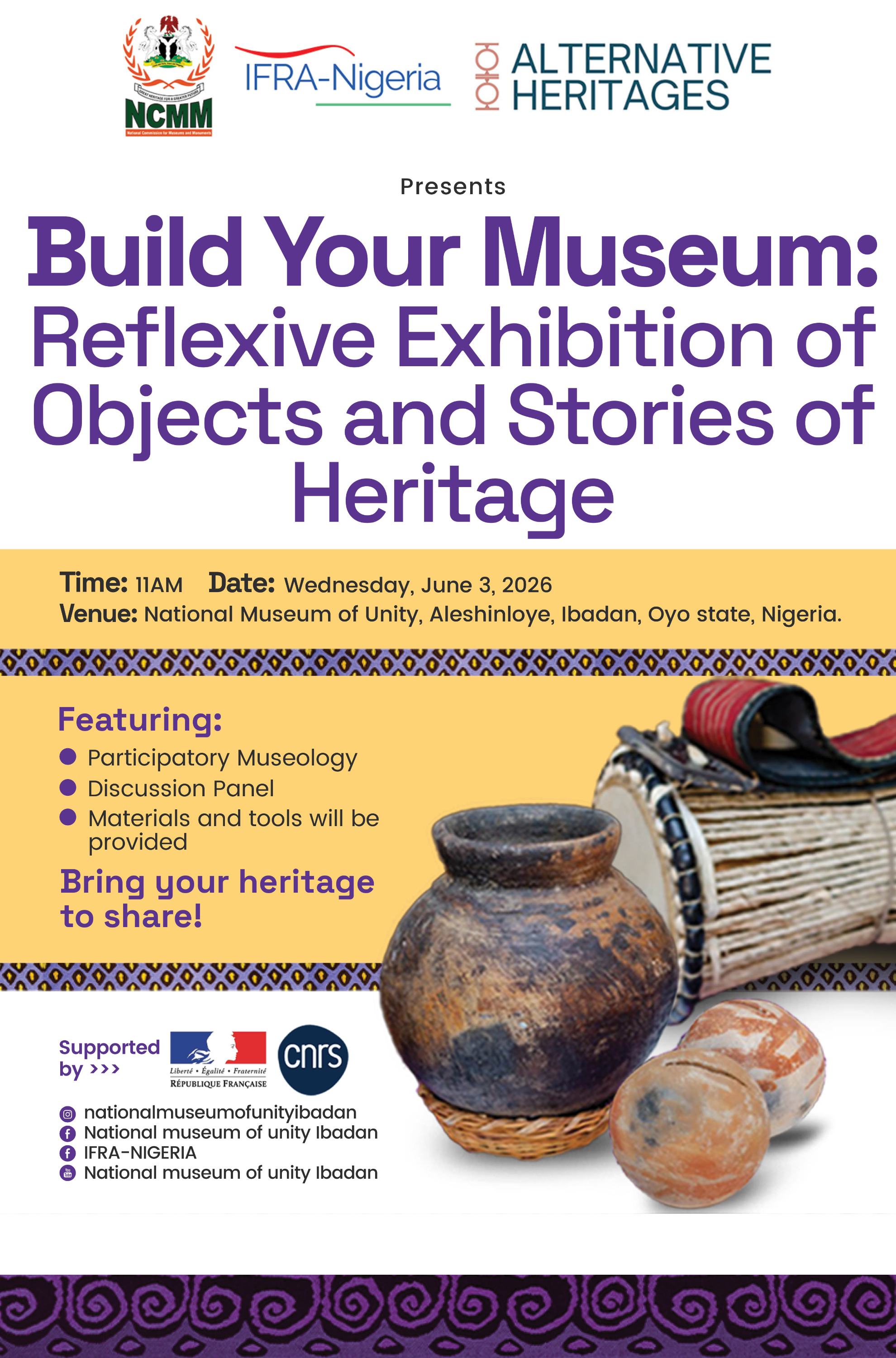
On June 3, 2026, IFRA-Nigeria, with the National Museum of Unity, Ibadan, hosted a pop-up exhibition to close the two-year French Embassy-financed Nigerian Alternative Heritages project partnership between the two institutions. This project was made possible by the French Embassy Fund.
Conceived by Dr Delphine Manetta and Adéjọkẹ Rafiat Adétòrò, the programme was centred on the theme “Build Your Museum” and invited the public to reimagine heritage while challenging conventional norms that have long dictated our understanding of identity, culture, and belonging. The event was aimed at encouraging members of the public to actively participate in the narratives on heritage, as people were invited to contribute stories, objects, memories, and cultural experiences that shape their understanding of heritage and resonate with their own journey and community.
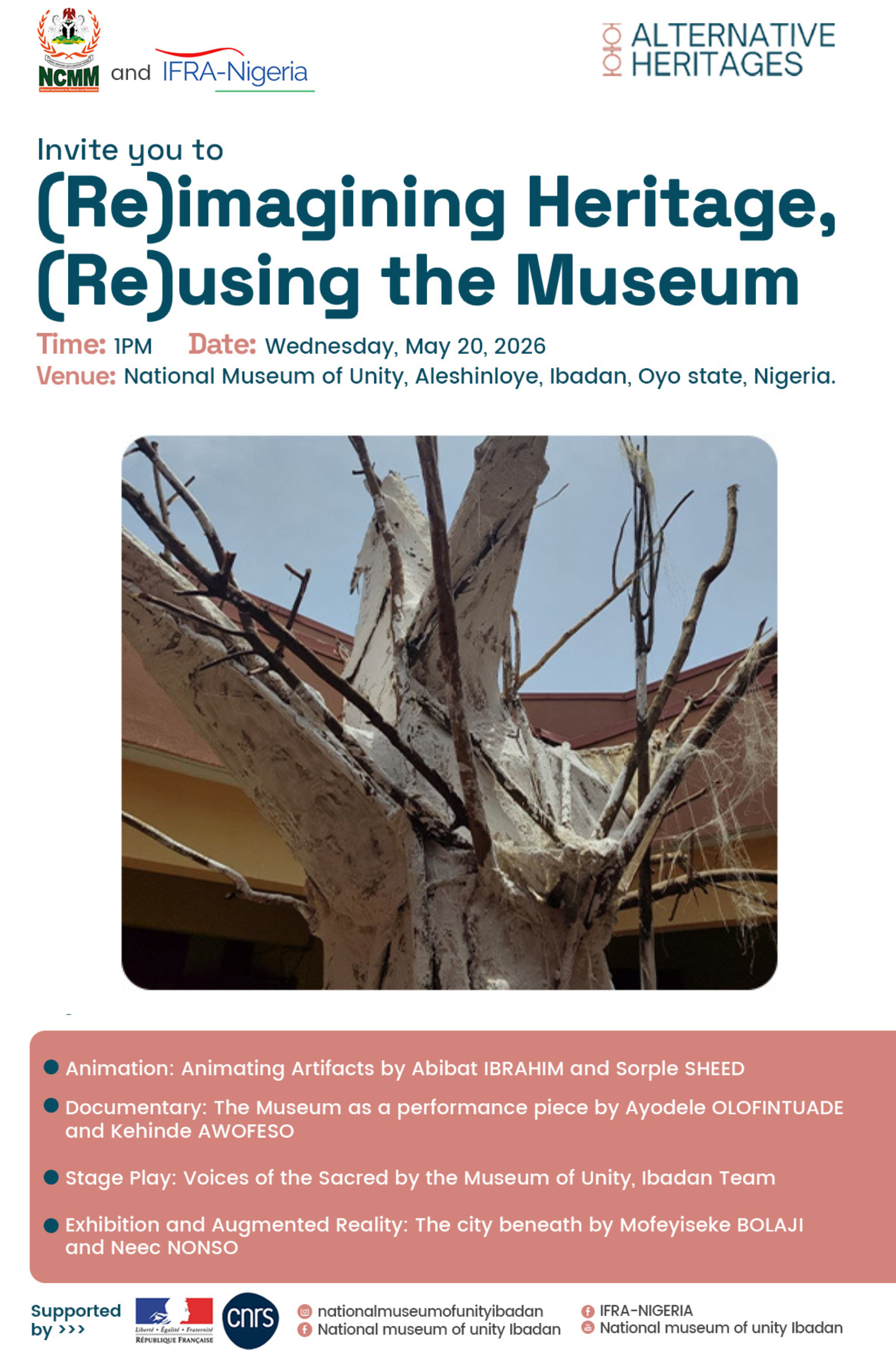
On 20 May 2026, IFRA-Nigeria, in partnership with the National Museum of Unity in Ibadan, hosted the public presentation of projects conducted as part of the research and artistic creation initiative ‘(Re)imagining Heritage, (Re)using the Museum’. The initiative aimed to explore innovative ways of engaging with heritage, culture, and museum spaces through research and artistic creativity. This event took place under the Nigerian Alternative Heritages project, made possible by the French Embassy Fund.
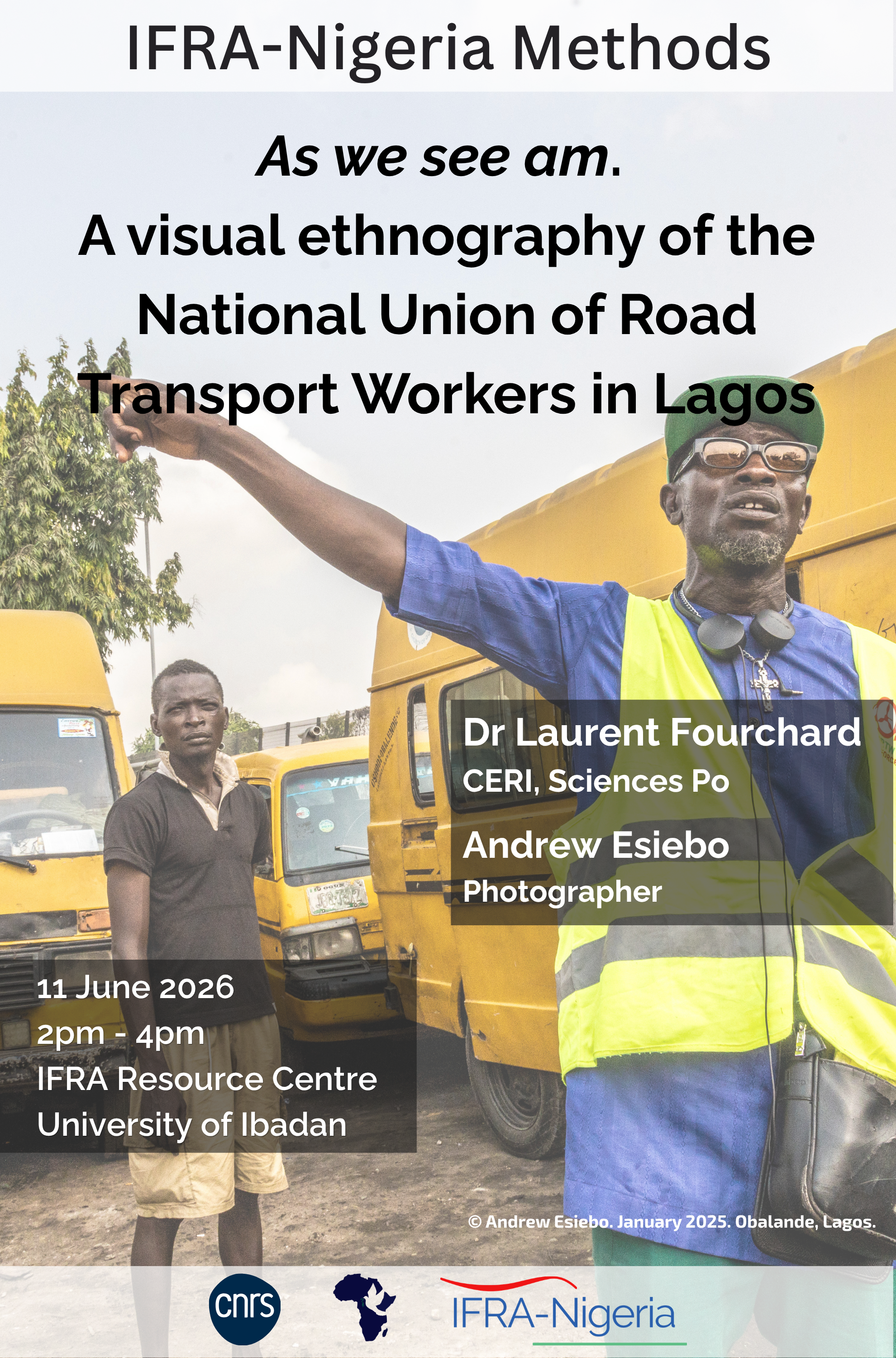
On 11 June 2026, Professor Laurent Fourchard (Sciences Po) and Andrew Esiebo, professional photographer and visual artist, presented their collaborative research in our June methodological seminar. In their presentation, entitled “As we see am. A visual ethnography of the National Union of Road Transport Workers (NURTW) in Lagos” they explored what it means to work with an artist as a researcher, including how to manage each different objectives and timelines.
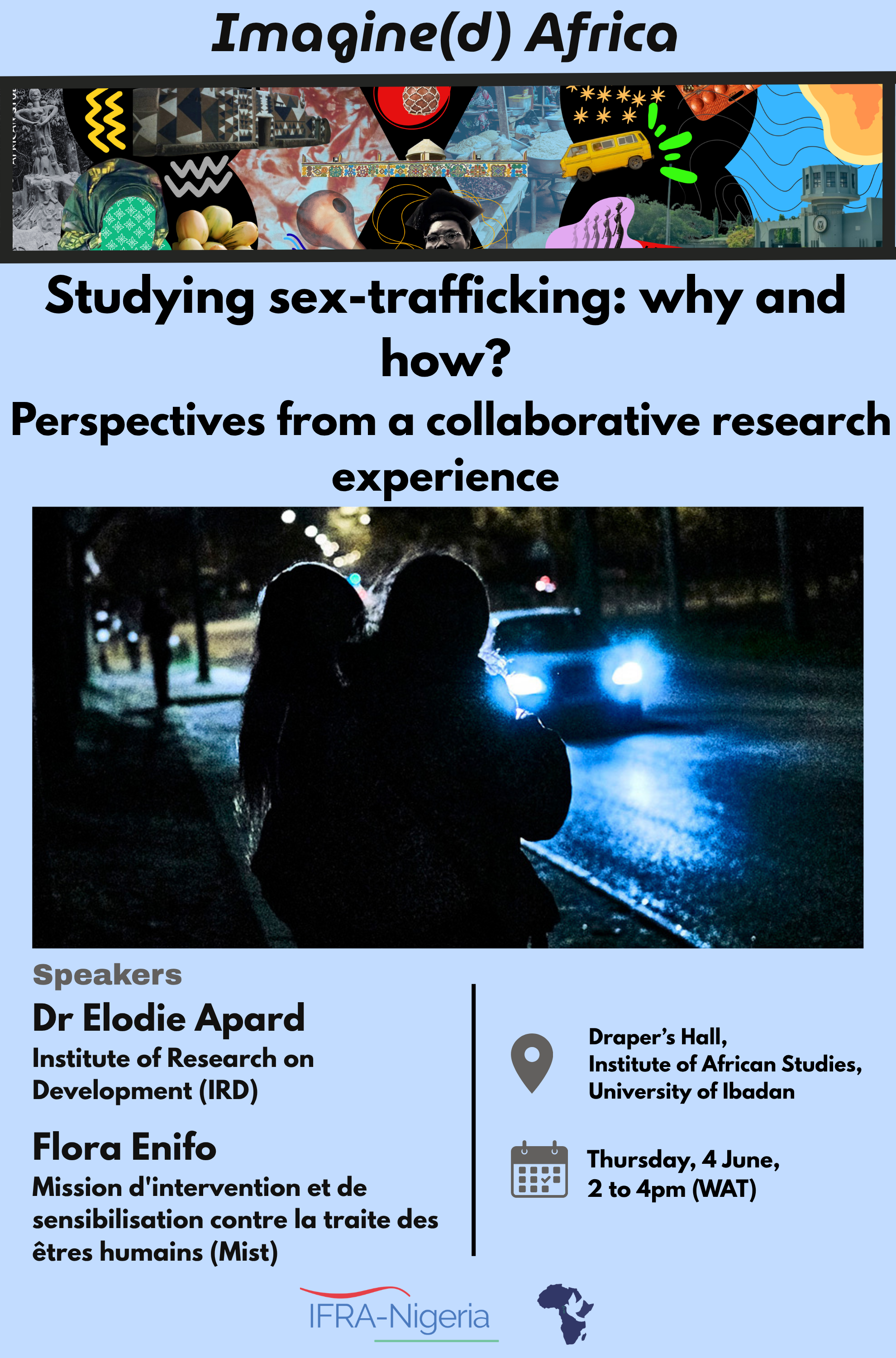
On 4 June 2026, the Institute of African Studies (IAS) of the University of Ibadan (UI) and IFRA-Nigeria, held the latest conference in the “Imagine(d) Africa” series. Their guests were Dr Elodie Apard, researcher at the Institut de Recherche sur le Développement and Unité de Recherche Migrations et Société, and Flora Enifo, project manager and co-founder of the Mission d’Intervention et de Sensibilisation contre la Traite des êtres humains (MIST). Together, they introduced their collaborative work at the crossroads of scientific research and social engagement in a presentation titled “Studying sex trafficking: why and how? Perspectives from a collaborative research experience.”
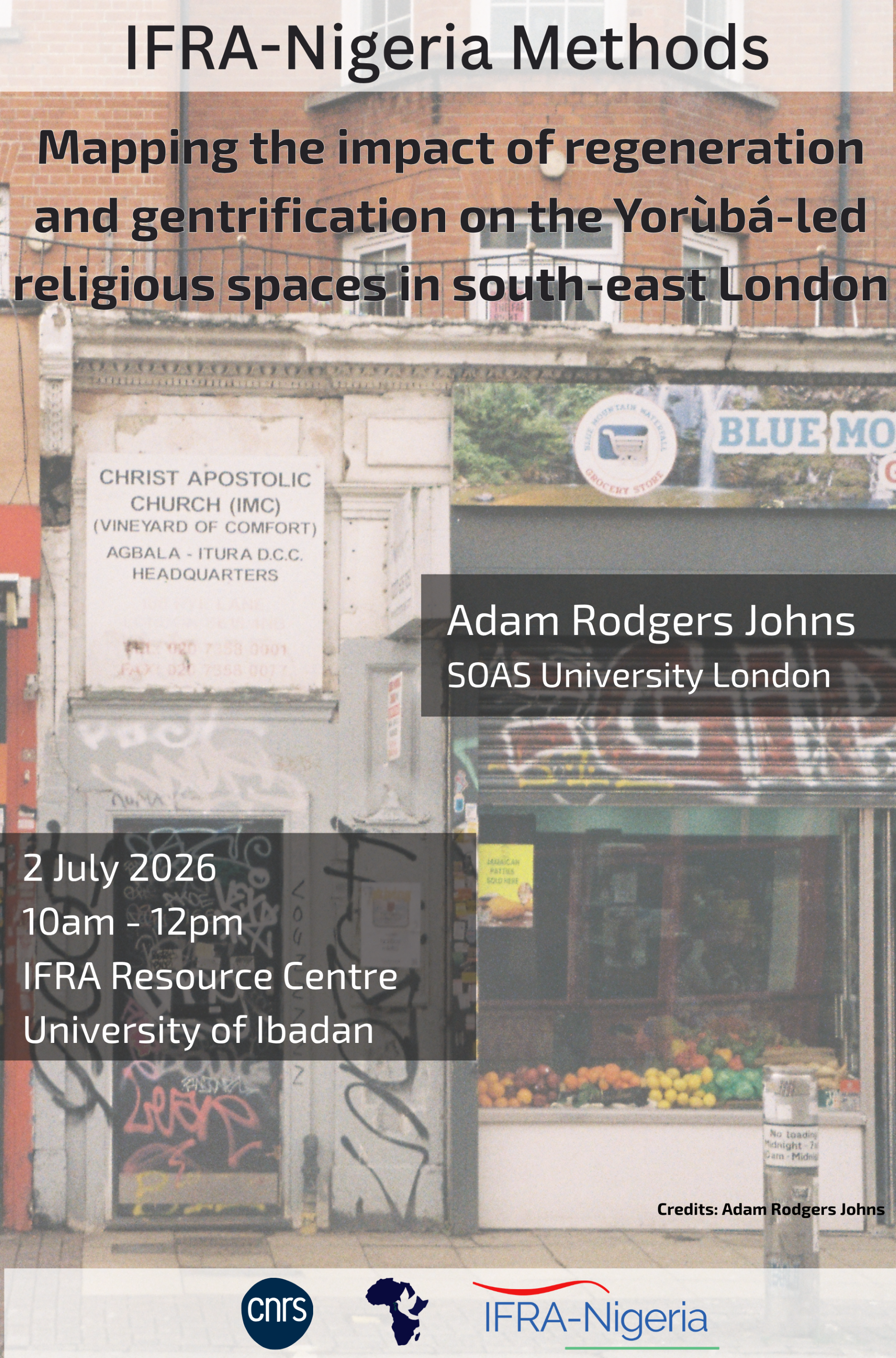
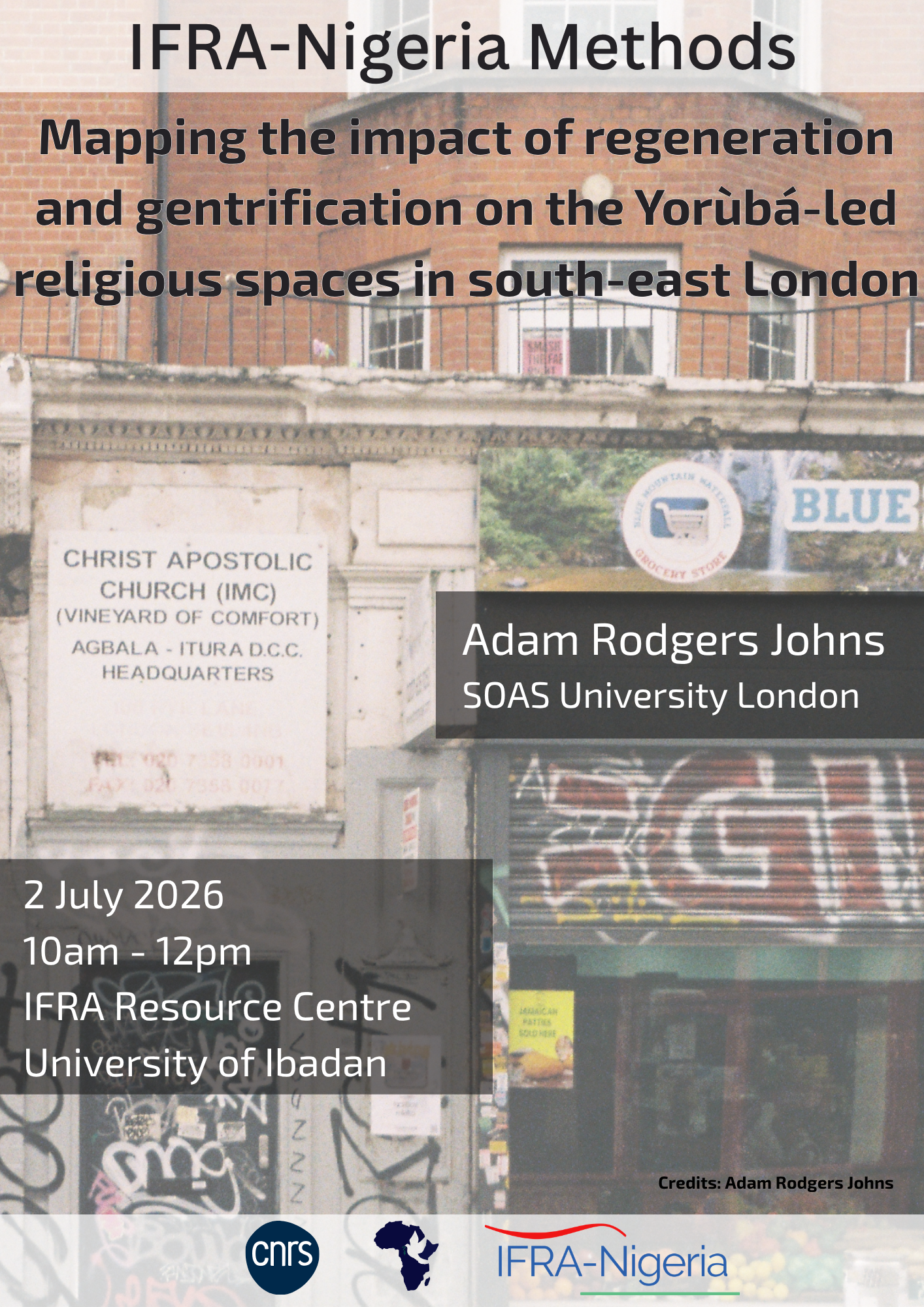
On 2 July 2026, Adam Rodgers Johns, doctoral student in Anthropology at SOAS London, will present his work on the Yorùbá-led religious spaces in south-east London in our next methodological seminar. The borough of Southwark in south London reportedly contains the highest concentration of African Christians anywhere in the world outside of Africa. The Nigerian diaspora is the largest migrant diaspora in south-east London and the most common ethnicity of Nigerians in London is Yoruba. Areas of south-east London such as Peckham and Woolwich, which have large numbers of Yoruba-led religious spaces, have seen a rise in popularity leading to urban regeneration and gentrification. This project maps the impact of these changes on Yoruba-led religious spaces in south-east London, i.e., churches and mosques with a majority Yoruba-language speaking congregation. Religion is a suitable lens to explore Yoruba diasporic place-making as it plays a key role in people’s daily lives. Existing scholarship suggests that gentrification leads to ethnic displacement, as gentrifiers tend to be whiter than the communities that are being gentrified. Therefore, this research adopts an interdisciplinary approach, combining insights from anthropology, religious studies, migration studies, urban studies and African studies to better understand the impact of gentrification on the Yoruba-led religious spaces.
The seminar offers three case studies showing how specific Yoruba-led religious spaces negotiate urban change in relation to the local council, community activists and residents. In doing so, it sheds light on questions of the visibility/invisibility and the displacement/reterritorialisation of African religious spaces in the London diaspora. The focus will be on two regional headquarters of the Christ Apostolic Church (CAC) and one branch of the Cherubim and Seraphim (C&S) Church, and will be followed by a discussion of the ‘revival’ of these ‘Aladura’ churches in the south-east London Yoruba diaspora.
Practical information:
Date and time: 2 July 2026, 10am to 12pm
Location: IFRA-Nigeria Resource Centre, Institute of African Studies, University of Ibadan*
IFRA-Nigeria, MIST, the French Institute in Nigeria and the Alliance Française de Lagos invite you to an engaging evening of film and discussion on the critical issue of human trafficking.
The event will feature the screening of Speak Up for Freedom, a powerful documentary by Clément Sibony, followed by a discussion with:
Elodie Apard – Researcher, French Research Institute for Sustainable Development (IRD)
Flora Enifo – Co-founder and Project Manager, MIST
This event offers an opportunity to reflect on the realities of human trafficking, hear expert perspectives and engage in meaningful dialogue on this pressing issue.
On 23 July 2026, Géo-Cités (CRIA), IFRA-Nigeria and the University of Ibadan will organise a workshop on "Sensitive and minority archives: select, digitize and archiving." The workshop is part of the ongoing research project (in consolidation phase) “Archiving and Digitizing African Futures: Minority Memories and Heritage,” which uses archival materials to study the memory and heritage of groups in Africa that are marginalized, stigmatized, dissident, or underrepresented, as well as their visions of the future. The “archival turn,” which originated in the English-speaking world, questions the notion of archives produced in colonial contexts. African researchers have reinterpreted colonial archives from an Afrocentric perspective, considering, for example, oral traditions, performance, and gestural expression as “archives” within the framework of a living, fluid, and relational archival approach (Adeduntan A., Omitola O., 2023). Some co-produced projects aim to return these archives to marginalized groups: examples include digital archive projects highlighting forms of emancipation such as the “Archives of Nigerian Left” in Nigeria or, in South Africa, the “GALA Queer Archives,” as well as the digital community archive project “A People’s Guide to Archives and Democracy.”
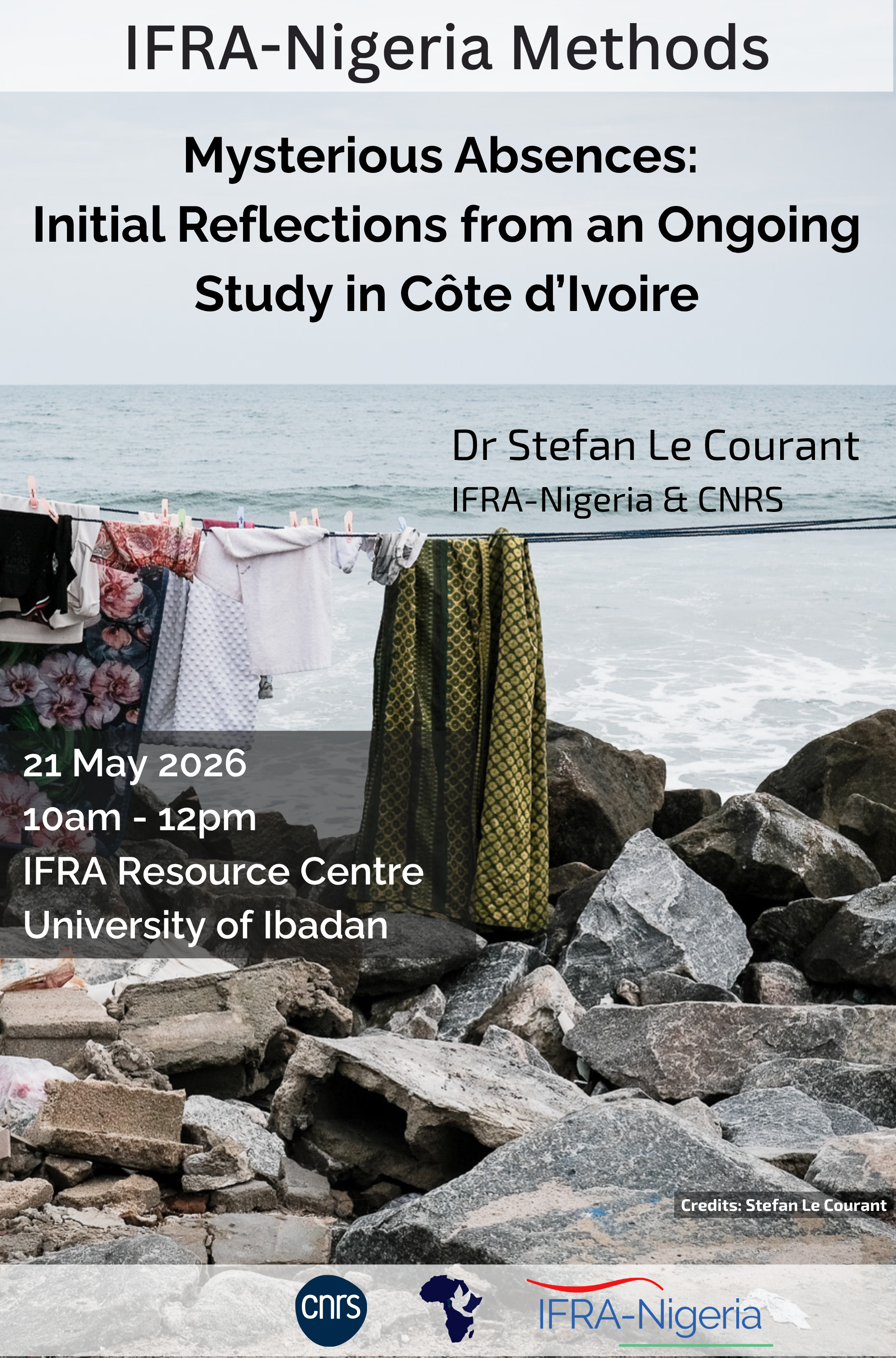
On 21 May 2026, Dr Stefan Le Courant (IFRA-Nigeria and CNRS) held a methodological seminar on the topic “Mysterious absences: initial reflections from an ongoing study in Ivory Coast”, where he went over his current fieldwork. Though his work touches on migration, he takes an original approach by not focusing on the movement of population aspect. For example, previously in France, he studied migrants forced to hide from authorities because they are illegally present in the country. What interested him was the question of building identity when you have to hide who you are.
His new project, which takes place in Côte d’Ivoire and Nigeria, focuses on the people who disappeared, usually while attempting to migrate to North Africa or Europe. Specifically, he interrogates what is the impact of their absence, how the people left behind manage this in their daily life.
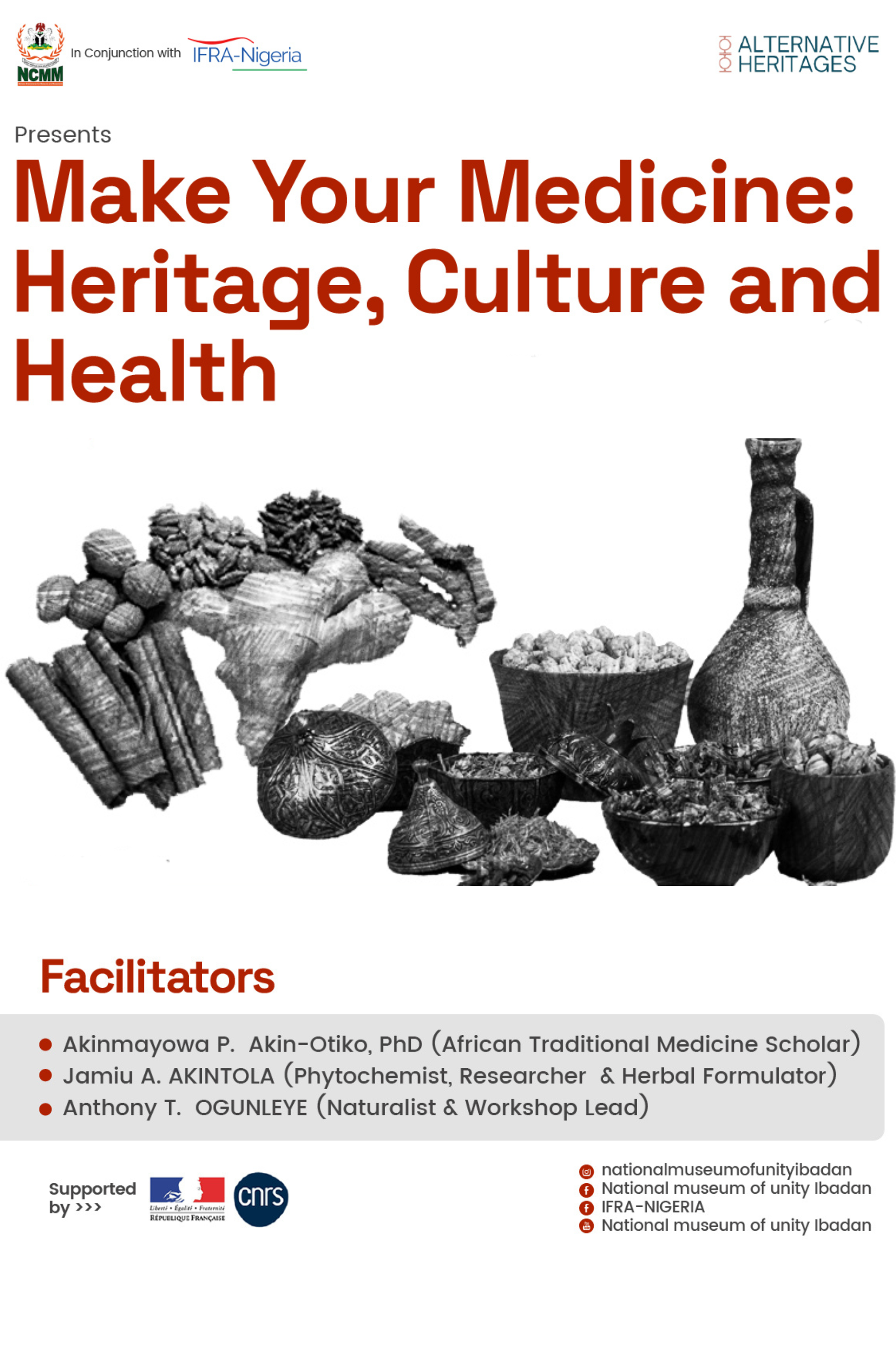
On Wednesday, 6 May 2026, IFRA-Nigeria, in collaboration with the National Museum of Unity in Ibadan, hosted a guest lecture and practical workshop under the theme “Make Your Medicine: Heritage, Culture, and Health.” The event sought to foster public engagement with traditional medical knowledge, healing practices, and the interplay between culture, heritage, and health. The programme was part of the Nigerian Alternative Heritages Project, supported by the French Embassy Fund.

![[CLOSED] Chargé.e de mission (chercheur.e)](/images/2026/07/Deputy_Director_Job_Intro_call.png)
 On 2 July 2026, Adam Rodgers Johns, doctoral student in Anthropology at SOAS London, will present his work on the
 ![[CLOSED] Call for applications - Workshop "Sensitive and minority archives"](/images/2026/07/W_Sensitive%20and%20Minority_Intro%20call.png)