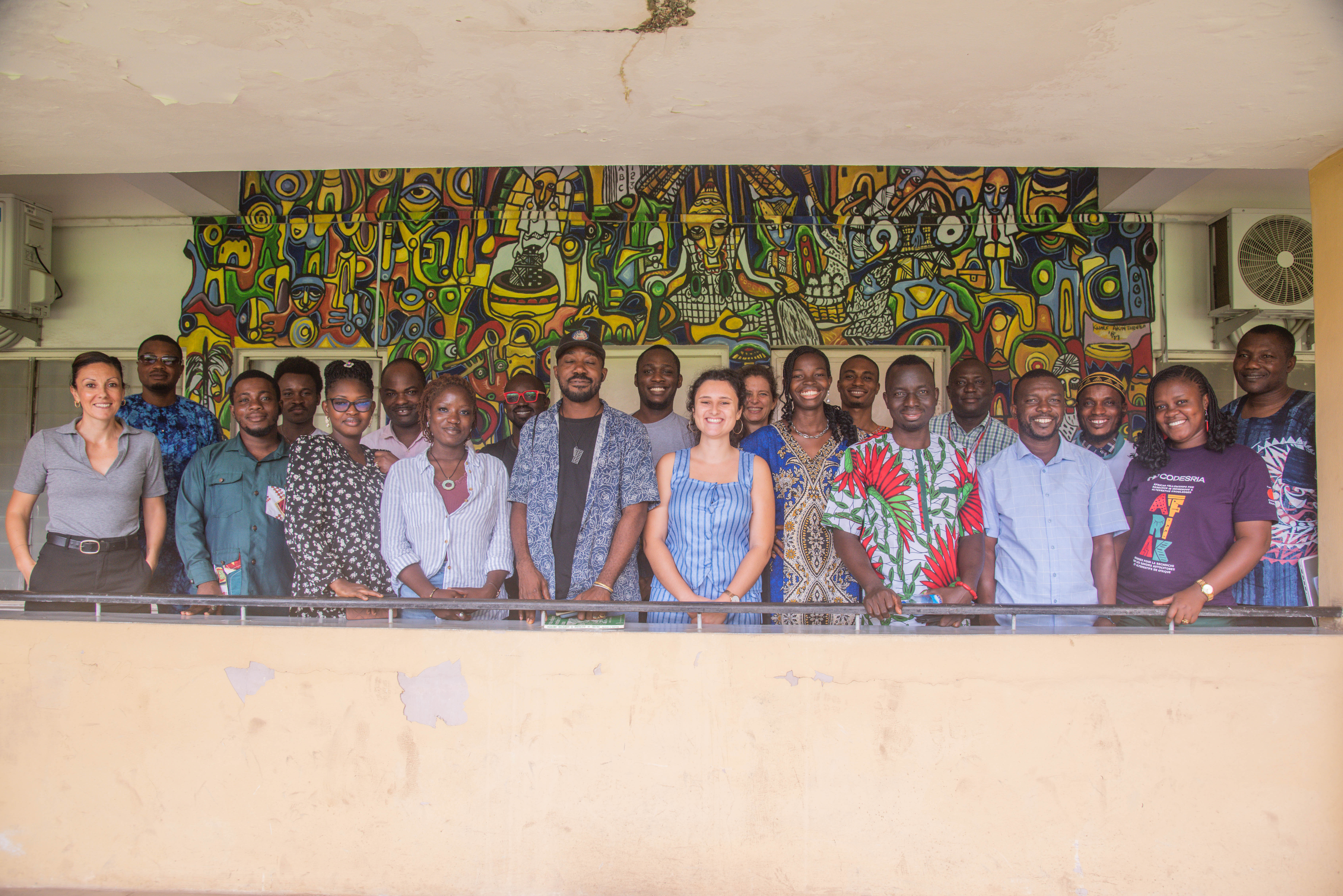
On 17 September, Marie Lureau, Research Project Manager at IFRA-Nigeria, presented her work on “Non-religion in Nigeria: exploring (un)belief” in our September methodological seminar.
This particular seminar was meant to be exploratory - as the research project is still at its beginning - as well as highly interactive to discuss with the audience their perception of what non-religion can be in Nigeria.
Marie Lureau began her seminar by highlighting Nigeria’s perception, both nationally and internationally, as a highly religious country, a perception backed by statistics that indicate a quasi-absence of people without faith. Despite this, she noticed that atheism was a common topic of discussions in media, online and among individuals. Moreover, figures like the writer Wole Soyinka illustrate that leaving religion is not a new phenomenon in Nigeria. Moreover, secular studies, while quite developed in the Western world, are nearly completely absent from the Nigerian continent, which is what convinced her to begin this research project.
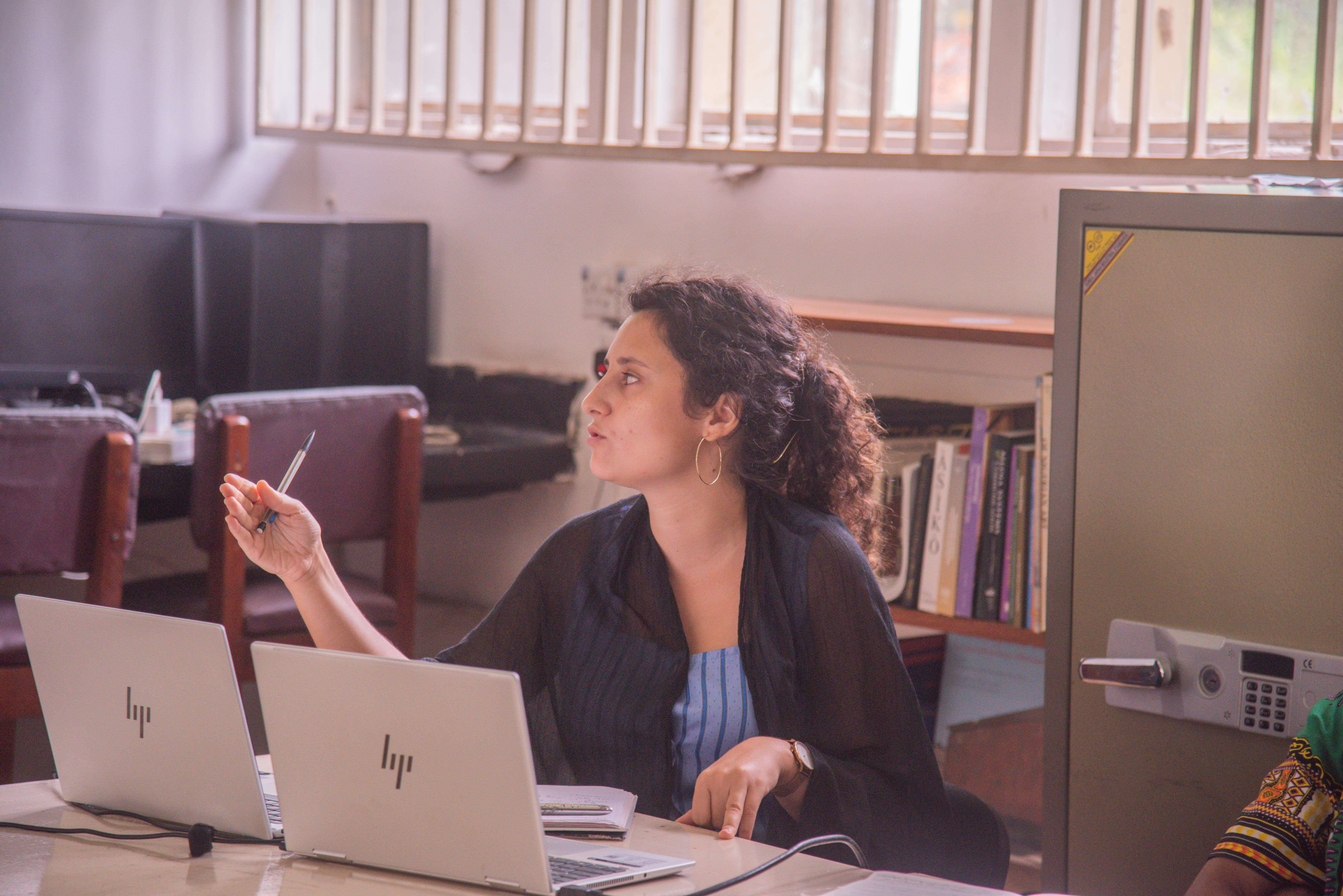
She started by defining a few key terms:
- Secularisation refers to the historical process in which religion withdraws from different social spheres and which can be accompanied, but not necessarily, by less religious beliefs and practices in the society. This is often associated with the “secularization thesis” that marked the first days of sociology, which posited that this was an inevitable result of modernisation. This idea has since then been largely contested.
- Secularism refers to a political principle that says that religion and religious considerations must stay away from State matters. There is more research on this topic in Nigeria.
- Secularity (secularity studies) is more of an analytical tool to define situations where religious and secular spheres are socially differentiated in society.
This last concept is the most relevant to this particular research, as it is neutral. Importantly, most academics use “secularities” to indicate the plurality of interpretations of this distinction, which was imposed by Western societies in the course of colonialism, and adapted to different parts of the world based on the existing culture and social structures.
Next, she explored the process of constructing the topic, stating the difficulty of framing it. She took the example of the word “atheist”, which proved insufficient as most interviewees refused to define themselves as such, nor did it accurately describe what their relation to (un)belief was. Simply choosing who to study and what term to choose to define them became a major struggle in the research.
She decided to focus on the intersection between activism and non-religion, looking at two types of organisations: some explicitly advocating for a more secular Nigeria (often called humanist, rationalist or atheist), and other radical left organisations fighting for a variety of social causes. Through studying activism, she posits that non-religion can be a way to express a broader set of social grievances.
The choice of activism also has a practical root, as it is a way to narrow the field of study of what can be an elusive topic. Moreover, as a significant amount of social stigma exists around this, activist circles are ones where people tend to claim their non-religion more publicly and are therefore easier to find.
The second aspect of her research is historical. To provide context to this sociology of activism, she plans to go back about 70 years, on the eve of independence, to look at the development of such movements. The idea here is to begin an intellectual history of those ideas in Nigeria, and to shed light on the fact that this is not a new phenomenon. It will also help understand the formation of the concept in the Nigerian context, both with existing intellectual traditions in Nigeria and through the international flow of ideas.
Marie Lureau then noted a few limitations of her work, including restricting the field to the South West and Federal Capital Territory areas of the country, and to urban settings. It therefore can’t be thought to be representative of the entirety of Nigeria. This is especially the case as the precolonial societies and cultures of Nigeria were very different in the different regions of the country, therefore producing various forms of secularities. Finally, all interviews conducted so far have been with former Christians.
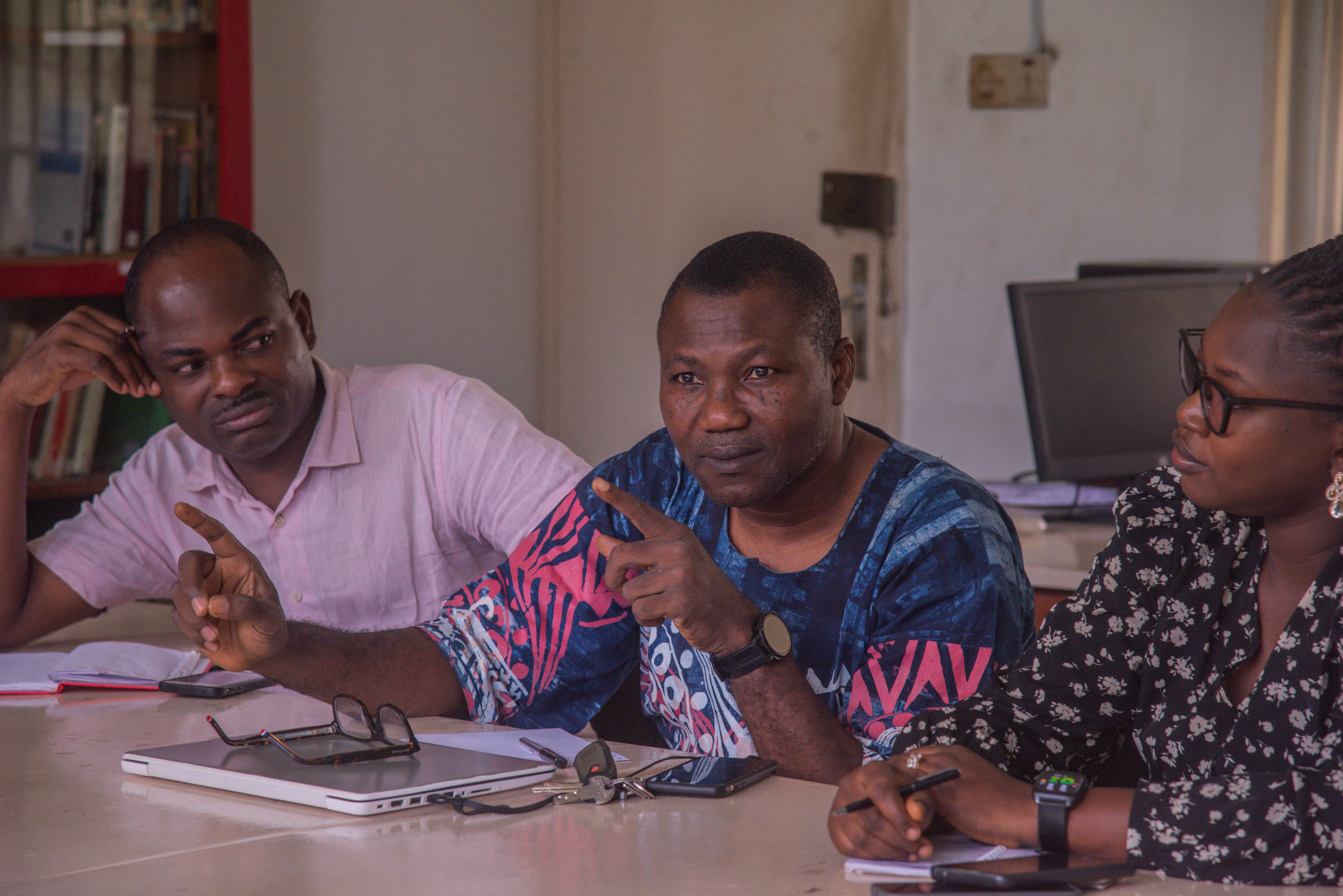
In the next section, Marie Lureau offered initial observations and opened the resulting question to the audience for discussion.
First, she interrogated the origin of the break with religion, saying she noticed two main stated causes by the interviewees. First, a form of emotional break with the Church, following a familial difficulty in which it failed to intervene. Second, all interviewees considered themselves intellectually curious, and credit this for their ability to have a critical view on religion.
Second, she noted that despite being non-religious, most interviewees still practice religion in certain contexts, especially with their family. Similarly, the persons interviewed not only have very different perspectives on the question of belief, but also define themselves by a variety of terms. Whereas some would call themselves “atheists” and entirely reject the possible existence of God, many rather emphasize that they are unsure, and leave the door open to different possible forms of religious beliefs, calling themselves “irreligious” or refusing any specific labels. This opens the question of defining non-religion. Can it be based on practice when this is actually still present in most cases, though to a lesser degree? Can it be based on belief when that also varies? And finally, which term is best to bring together those phenomena?
Third, she questioned the relations of the interviewees with various religions. Most of them are highly critical of Christianity and Islam, blaming them for a perceived hypocrisy and overly conservative values. They also characterised them, Christianity in particular, as colonial imports to Nigeria, and therefore “foreign”.
None of those critics were levelled against Ìṣẹ̀ṣe. Their reactions ran from a mild interest to considering themselves practitioners. Generally, Ìṣẹ̀ṣe was perceived as both a less constrictive “religion” and a more “authentic” one. Some practitioners of Ìṣẹ̀ṣe do not actually consider it to be a religion, echoing academic debate questioning the term “religion” as being too Western-centric to properly encompass the reality of pre-colonial religions in most of the world. This difference in nature, she posited, may be why the relation with Ìṣẹ̀ṣe appears to be different.
For her fourth and final point, she noted that understanding the interpretation of secularism of the Nigerian state is important as it provides the background, and at times the constraints of the non-religious lives. She took the example of Mubarak Bala who was arrested in Kano in 2020, when he was president of the Humanist Association of Nigeria, following Facebook posts critical of Islam. After significant national and international pressure, he was eventually freed in 2024. The consequences of this case were particularly extreme, but they illustrate how the existence, especially openly, of non-religious people can present a challenge for the understanding of secularism and freedom of religion in Nigeria.
She concluded by explaining that non-religion proves to be more elusive than one might think and that defining it must be part of the research project itself. She ended her presentation by opening the question of positionality, noting that as an outsider from a more secular society, she can both at times have an easier access to non-religious people, but is in many ways removed from the reality of life in Nigeria. This is why such a seminar, punctuated by a lot of interactions with the audience is particularly important.