
 L’InSHS ouvre un appel à propositions de sujets de thèse pour l’attribution de quatre contrats doctoraux de 36 mois avec mobilité internationale, qui débuteront au 1er octobre 2023. L’appel est ouvert jusqu’au 7 avril 2023.
 La neuvième édition des cahiers de l'UMIFRE est sortie et elle est accessible gratuitemet en cliquant ici
Pour sa 9e édition, le Cahier des UMIFRE entend mettre en avant la manière dont les activités scientifiques des Unités Mixtes/Instituts français de recherche à l’étranger (UMIFRE) contribuent à éclairer la réflexion sur des thèmes centraux de l’actualité internationale.
 The fifth issue of Sources just came out and is accessible here.
As Sources welcomes new editors-in-chief (see editorial), this fifth issue builds bridges between past and future publications. The interview conducted by Florent Piton with Rwandan historians on the question of using local sources to write the history of the genocide of the Tutsi, initially published in French, is here translated into Kinyarwanda. Together with Maëline Le Lay's article on the uses of the transcript of a round-table discussion on post-genocide theatre in Rwanda, they form a mini-dossier questioning the historical and artistic sources through which to approach genocidal violence.
 (French version below)
This call is adressed to Masters Students - Doctoral Students - Post-Doctoral Students - Researchers
IFRA-Nigeria - French Institute for Research in Africa located within the Institute of African Studies, University of Ibadan (UMIFRE 24 /CNRS and MEAE) has a regional vocation that extends over ten West African countries: Nigeria, Benin, Burkina Faso, Cameroon, Gambia, Ghana, Liberia, Niger, Chad and Togo. It promotes and supports research in the humanities and social sciences in Nigeria and in the other aforementioned countries.
 As part of both its programmes on Digital Humanities and on Nigerian religious dynamics, IFRA-Nigeria has launched a research project on the religious architectural heritage of Ibadan. Drawing from the fields of Digital Humanities, Architecture and the Socio-anthropology of religion, the objective is to map out, research and analyse the rich history and diverse aesthetics of all religious buildings in the capital of Oyo State. A kick-start workshop gathering academics and professionals with a specific interest in the project took place in October in order to sum-up the existing research and literature on the topic and map out key future topics of research and engagement.
 IFRA-Nigeria, in the context of an FSPI (Fond de Solidarité pour les Projets Innovants) project funded by the French ministry of Foreign Affairs, collaborates with the archives and library unit of the National Museum Onikan Lagos to train the museum staff to digitisation techniques which are essential to preserve the museum’s archives and make them freely available online for everyone to consult and study.
 As part of both its programmes on Digital Humanities and on Nigerian religious dynamics, IFRA-Nigeria has launched a research project on the religious architectural heritage of Ibadan. Drawing from the fields of Digital Humanities, Architecture and the Socio-anthropology of religion, the objective is to map out, research and analyse the rich history and diverse aesthetics of all religious buildings in the capital of Oyo State.
 Le GIS Études africaines en France (CNRS, UAR 2999) organise en 2023 son Prix de thèse pour deux lauréat.es. La somme de 2500 € sera accordée à chaque lauréat.e pour l’appui à la publication de sa thèse, chez ENS Editions.
Sont éligibles des travaux soutenus en français et en France, entre le 1er janvier 2022 et le 31 décembre 2022, dans toutes les disciplines des sciences humaines et sociales et des lettres (anthropologie, géographie, histoire, langues et littérature, science politique, sociologie, archéologie…).
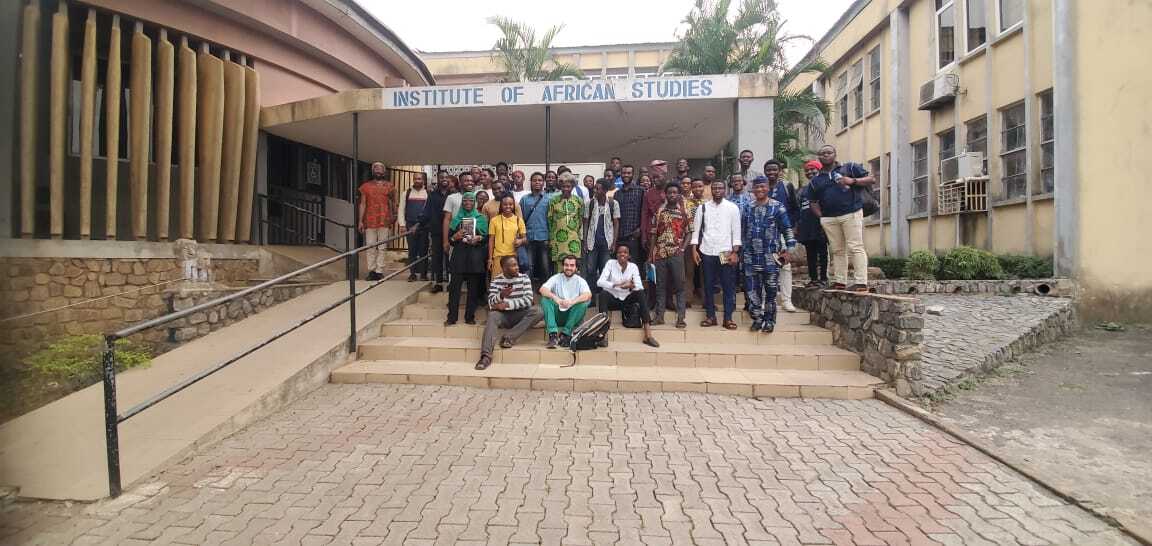 On the 16th of February, IFRA-Nigeria and the Thursday-Film Series organised a joint event gathering 60 people. Introductions were made by Dr. Olutayo, Dr. Olorunyomi and Dr. Morovich. The event included a book launch where Dr. Sola Olorunyomi presented his newly reprinted book: Afrobeat – Fela and the imagined continent. Two panelists, Ms Adeyosola Adeniran and Mr Leye Komofale discussed its content. Numerous topics were discussed such as the relations between Afrobeat and pop culture, the relations between Fela and the state, and the relations between Fela and women as well as Fela’s identity politics.
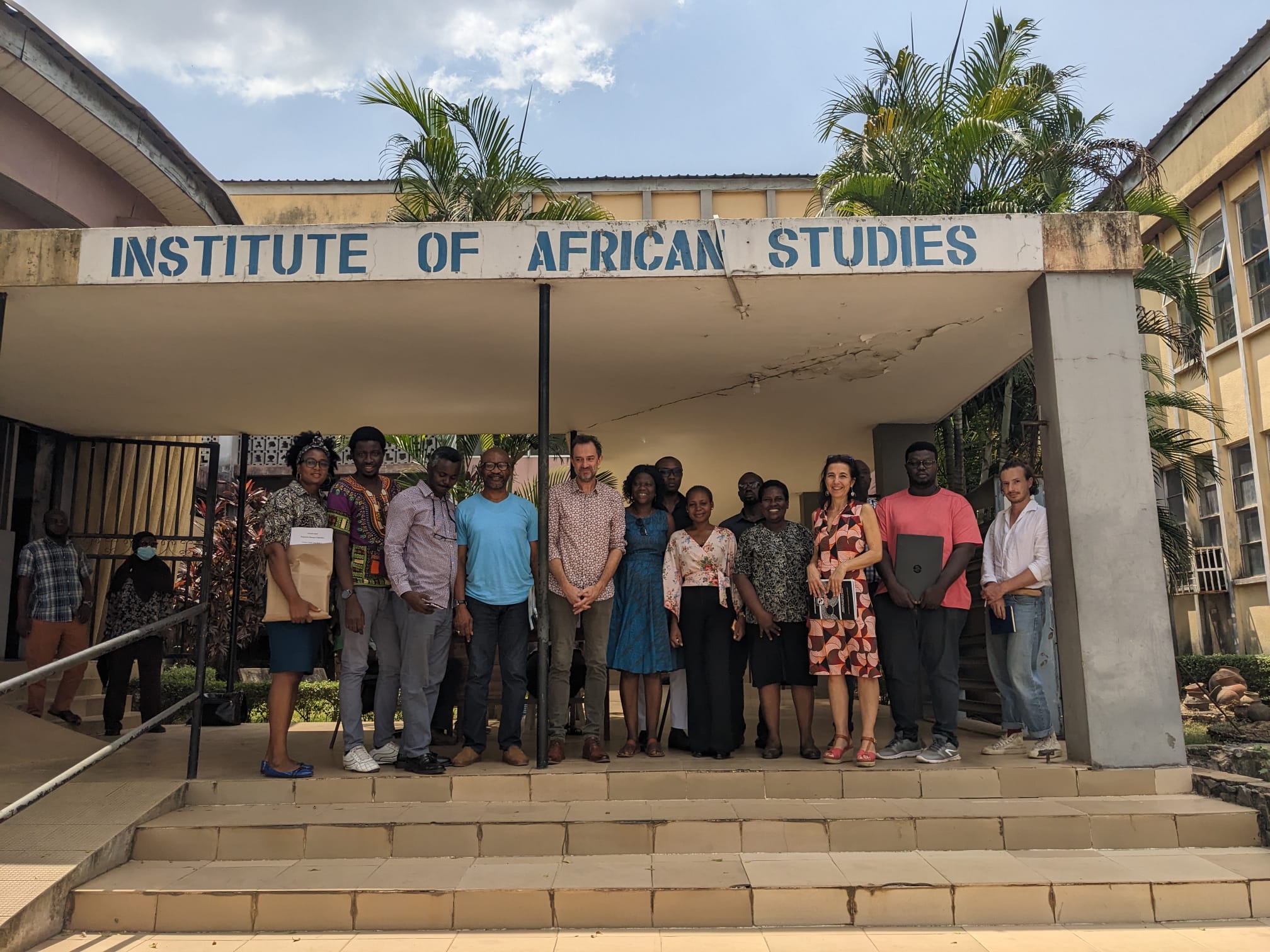 On the 6th of February 2023, Laurent Fouchard, Research Professor at the Centre for International Studies (CERI) and at the Urban School of Sciences Po Paris, gave a conference at the Institute of African Studies of the University of Ibadan. He presented his current research on the political relations between the State and the National Union of Road Transport Workers in Nigeria (Lagos and Ibadan particularly) since 1978. Laurent Fourchard method involves the combination of historical and ethnographic approaches.
 Can you explain to us what your current project in Nigeria is and what brings you to Ibadan?
I have been working on the NURTW for six years mainly because some of the colleagues here at the Institute of African Studies (Isaac Olawale Albert) started to work on this topic. I thought the subject was fascinating because the Union has a peculiar role: rather than protecting the rights of the Union members or drivers its primary role is to regulate transports in most of Nigeria and take dues over the drivers. My main focus is on Lagos and Ibadan, I am right now conducting my third fieldwork on this project.
As part of both its programmes on Digital Humanities and on Nigerian religious dynamics, IFRA-Nigeria has launched a research project on the religious architectural heritage of Ibadan. Drawing from the fields of Digital Humanities, Architecture and the Socio-anthropology of religion, the objective is to map out, research and analyse the rich history and diverse aesthetics of all religious buildings in the capital of Oyo State. A kick-start workshop gathering academics and professionals with a specific interest in the project took place in October in order to sum-up the existing research and literature on the topic and map out key future topics of research and engagement.
 NigeriaWatch, IFRA, and the Institute of African Studies have teamed to conduct a 5- days training (13-17 March 2023) workshop on the methodological challenges of violence studies in Nigeria.
Examples include: Writing a paper on conflicts with Vitus Ukoji Nwankwo (Nigeria Watch Coordinator) and Dr. Victor Chinedu Eze (Nigeria Watch Information retrieval Specialist); and Dr. Marc-Antoine Pérouse de Montclos' Five Golden Rules to Study Conflicts presentation (Scientific Director).
Participants (20 max.) will get a deeper understanding of Nigeria's security concerns as well as new methodological skills, such as how to generate statistics, interpret data, and write articles.
 Le 23 janvier 2023 aura lieu une journée d’étude sur le thème des patrimonialisations populaires et postcoloniales « minoritaires » en France et à l’étranger. Cet évènement est le fruit d'un partenariat entre différents laboratoires et instituts de recherche : l'AMUP (Architecture, Morphologie / Morphogenèse Urbaine et Projet), le SAGE (Sociétés, Acteurs, Gouvernement en Europe), l'IFRA-Nigeria, et le réseau ‘lieu’. La journée d’étude se déroulera en présentiel à l’Université de Strasbourg mais sera accessible en direct pour tous via Zoom. Le lien pour y accéder est disponible ici.
 In the context of a project financed by the French Ministry of Foreign affairs through the Fonds de solidarité pour les projets innovants (FSPI), IFRA provided digital technologies and teaching to young Nigerians for them to learn how to protect, promote, and diffuse knowledge about Nigerian intangible heritages in Benin City. IFRA is particularly interested in the historical and anthropological variations that characterise intangible heritages and this project centrally aims at shedding light on the evolution that traditional practices have gone through to adapt to a changing environment. Consequently, IFRA commissioned the Institute for Benin Studies to create a digital archive cataloguing the intangible heritage of the Benin people while concomitantly training young Nigerians to use different tools and techniques to create and preserve auditive and visual contents