
Between 14 and 15 January, the members of the Gender, Law and Political Activism in West Africa (GLOW) project met at the Institute of African Studies (IAS) for its final seminar. The GLOW project emphasizes multidisciplinarity to overcome methodological barriers in the study of women's legal mobilisation for gender equality in West Africa throughout the XX and XXIst centuries. By examining this history, GLOW offers a new perspective on the region's political and social history, and provides new insights into the legal construction of social inequalities.
During this seminar, researchers from Burkina Faso, France, Ghana, Italy and Nigeria gathered to discuss the various topics they worked on throughout the duration of the project. Through this writing workshop, each received feedback from the other members of the GLOW projects, as well as from a few selected University of Ibadan students who attended the event. You'll find below short summaries of each discussed papers, which will all be published in an upcoming special issue of Feminist Africa.
Political engagement
● Olufunke Adeboye, The travails of Wuraola Esan in Colonial and Post-colonial Nigeria.
Prof. Olufunke Adeboye (Department of History of the University of Lagos) opened the seminar with a presentation of the life and career of Wuraola Esan, the first female senator in Nigeria. She distinguished herself through her work improving girls and women’s lives. As an activist, she was an integral part of several organisations, including the Women Improvement Society and the women’s wing of the Ibadan Progressive Union. She also funded the first private school for girls in the Western region, the Ibadan People’s Girls School. Politically, some of her major contributions as Senate member are the fights to see women adequately represented in official appointments and in taxation.
● Pascale Barthélémy, Appropriating the law: Gender and Suffrage in French Sudan (May-June 1951)
Prof. Pascale Barthélémy (director of studies at EHESS) presented her work on gender, motherhood and citizenship in French African colonies. A 1951 law allowed women over the age of 21, as well as younger women mothers of two children to stand for elections in the colonies. She argues that this moment is key in the creation of citizenship in French occupied Africa. Her focus is also on the gender dynamics in the following elections.
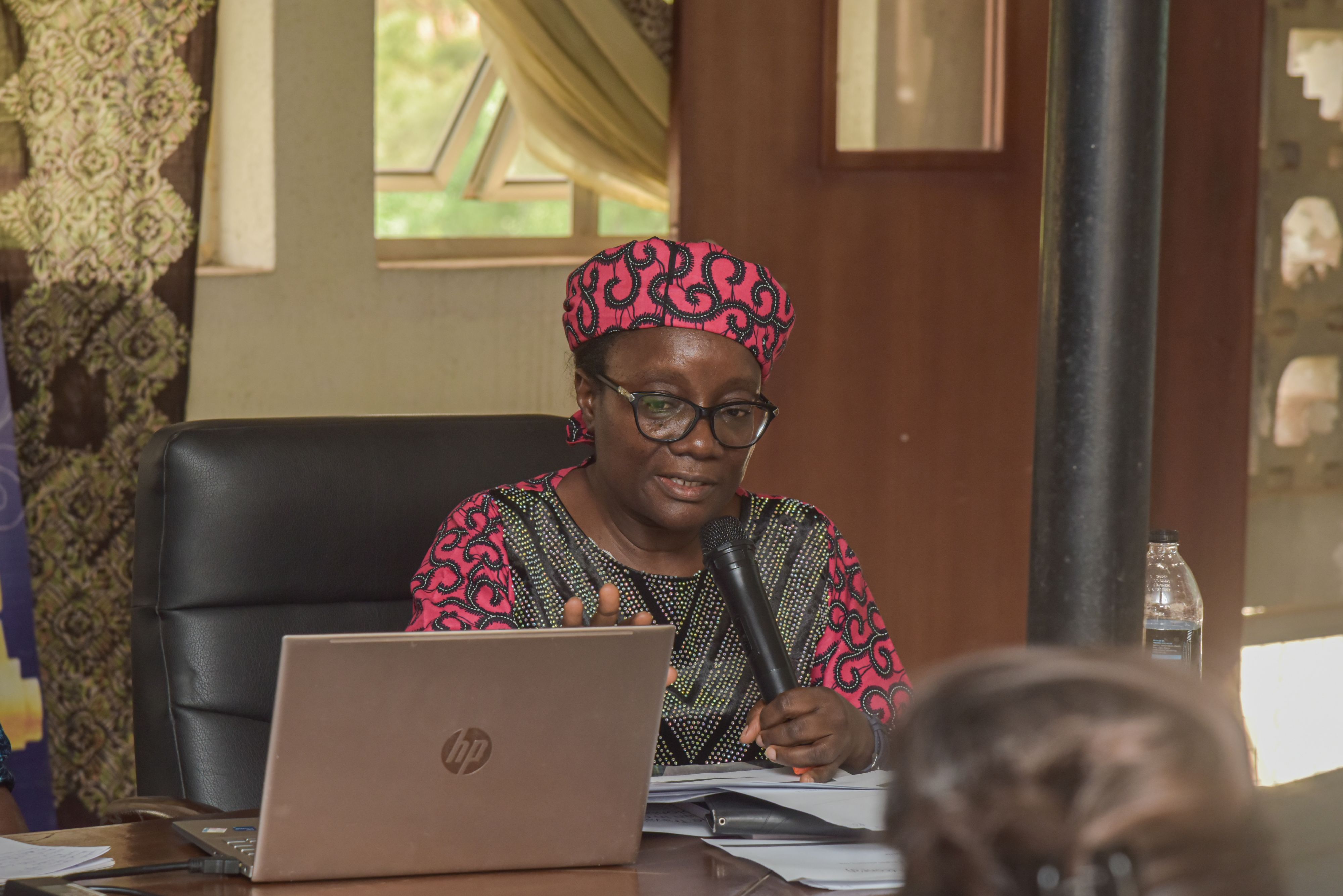
Prof. Olufunke Adeboye
Sexual and reproductive rights
● Marième N'Diaye, When lawyers take up the cause: the struggle for abortion In Senegal and the redefinition of the relationship between law, activism and politics
Dr Marième N’Diaye (researcher at CNRS and Les Afriques dans le Monde) explores in her paper the relation between activism and legal mobilization for abortion in Senegal. Her research dives into the effects of lawyers’ commitment to a cause, and on the public action related to said cause. Focusing first on the implication of women lawyers, she highlighted the evolution of their modes of action. Regarding the men who join the cause, she noted their adoption of a different posture: more as experts than activists.
Her research builds on the analysis of “case lawyering” to see how it may clash with other strategies of non-lawyer activists. She postures that case lawyering does not necessarily involve a depoliticization of the cause, as is often argued, but rather is adopted as a more pragmatical and incremental strategy.
● Drabo Saydou, Mobilization for women’s sexual and reproductive rights: the Maputo protocol and women’s activism in Burkina Faso.
Dr Drabo Saydou’s (post-doctoral researcher at IRD) paper focuses on the access to abortive drugs in Burkina Faso. Given the limitation on the available primary data, he chose to adopt the original method of digital ethnography. Thanks to this methodology, he uncovered four main strategies used in those networks to spread information on the drug, the law, and facilitate access.
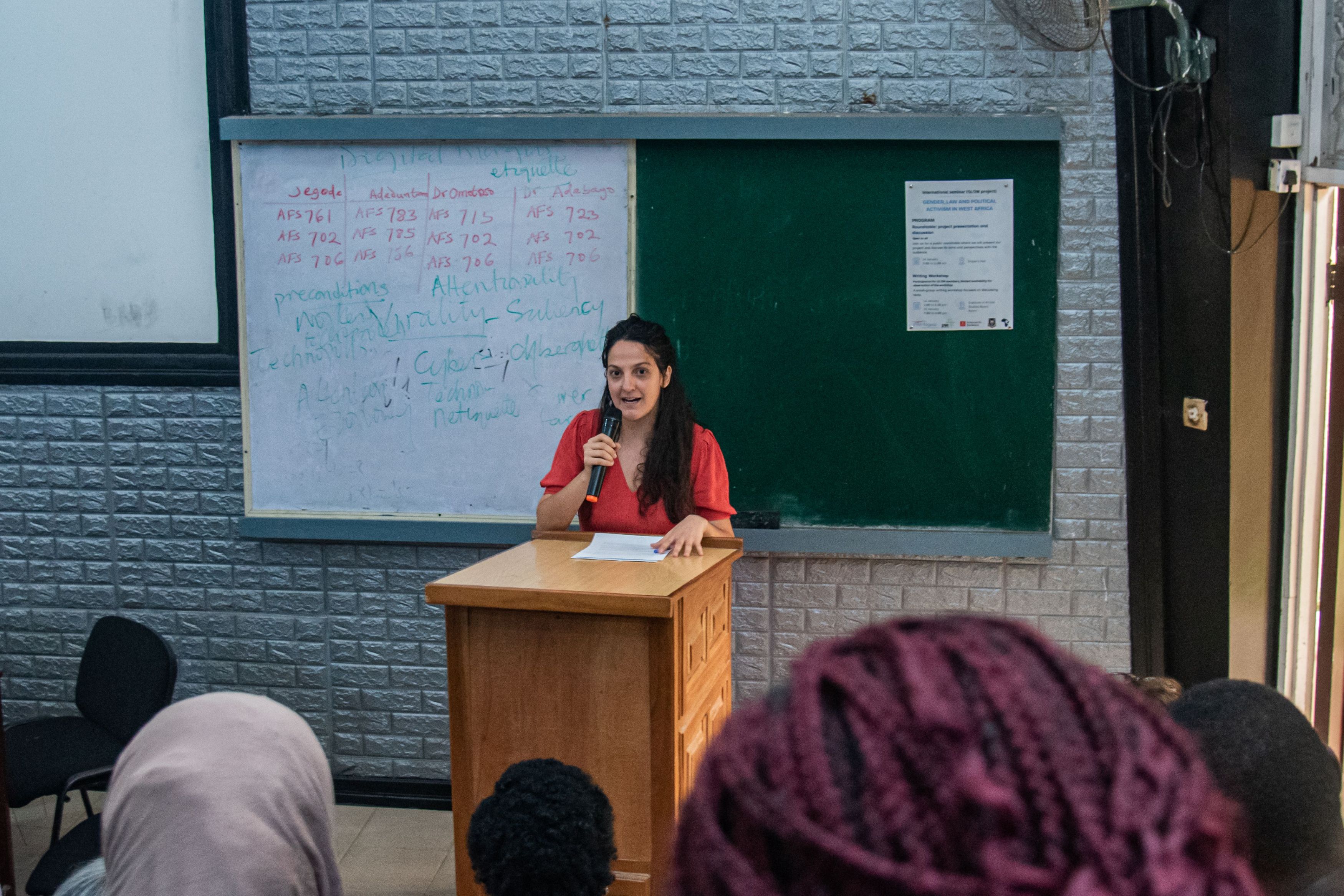
Dr Sara Panata
Legislative Activism
● Adedeji Adebayo, Addressing gender-based violence: a legislative policymaking example from Lagos State, Nigeria
Dr Adedeji Adebayo (lecturer at the Department of Peace and Security Studies in the University of Ibadan) introduced his article, which focuses on the legislative push to fight gender-based violence in Nigeria after the return to democratic governance. In particular, the paper analyses the activities of Adefunmilayo Tejuoso, who would go on to become the longest-serving lawmaker in Nigeria. Throughout her time in office, she worked to outlaw virginity tests imposed in schools, and to strengthen laws against domestic violence. Adedeji Adebayo presented not only the female lawmakers’ actions but also included an analysis of male lawmakers’ reactions to these legislations.
● Charmaine Pereira, Towards the enactment of Nigeria’s violence against persons (prohibition) Act, 2015: the discursive space of law-making
Dr Charmaine Pereira’s article explored the mobilisation of the Legislative Advocacy Coalition on Violence Against Women in favor of a law forbidding any form of violence against women, from 1999 to its adoption in 2015. She emphasized the importance of shedding light on recent history, as it is quickly forgotten by those who did not take part in it. The long road to the law’s adoption was marked with opposition from different sides, and, as a result, the final bill differed from its original formulation. Charmaine Pereira’s interest also lies in the different arenas that are influential in law-making, including how and by whom knowledge is created.
● Professor Seunfunmi Olutayo, Beni Lar and the Rebirth of Feminist Nationalist Politics in Nigeria National Assembly
Prof. Olutayo (Institute of African Studies University of Ibadan) presented the interview of Beni Lar she conducted with Hon. Tolulope Sadipe. She introduced Beni Lar, one the longest serving Honourable member of the House of Representatives in the Nigerian National Assembly, who reflects on her career as a lawyer and her advocacy for women and out of school children in the interview.
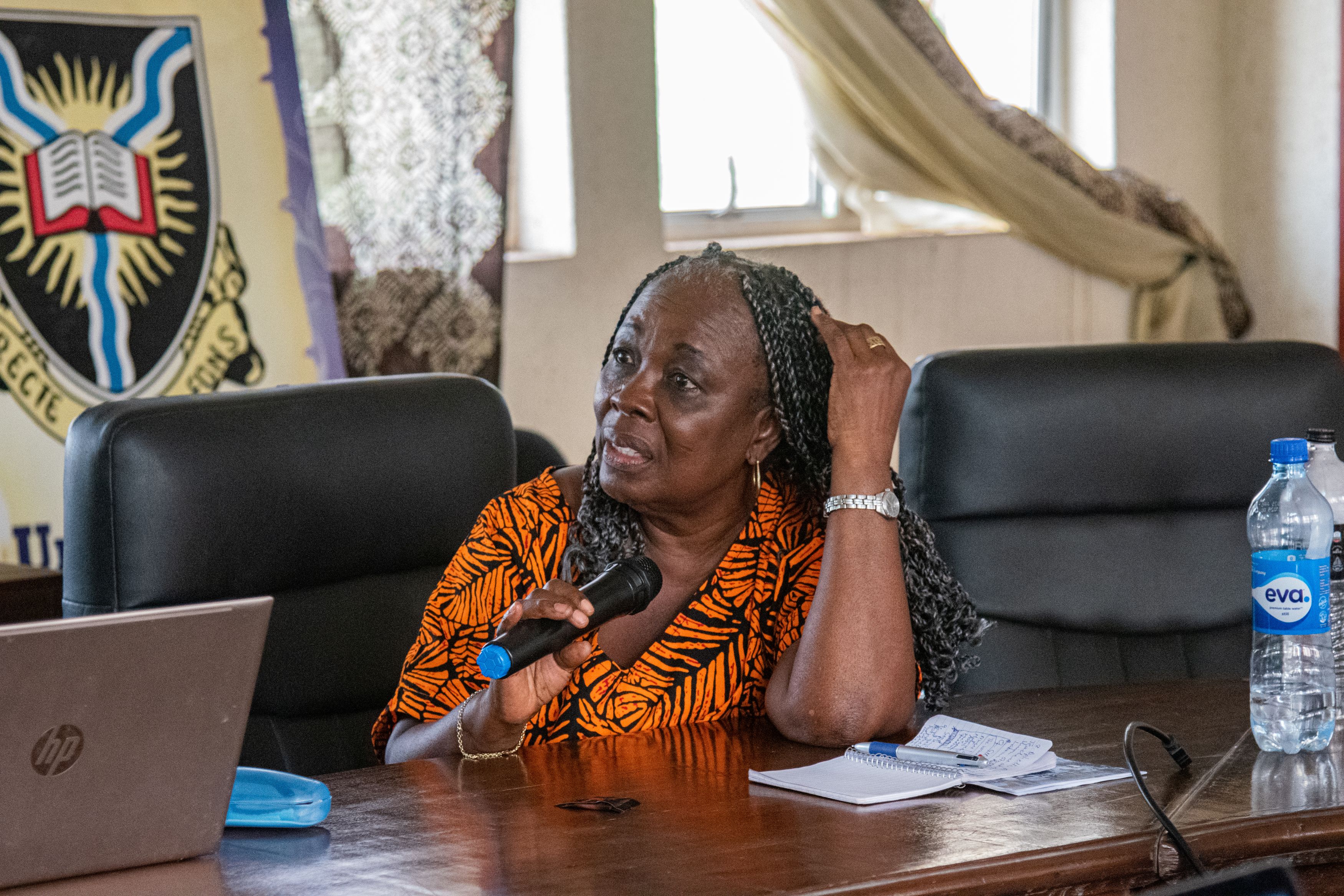
Prof. Emerita Takyiwaa Manuh
Labour
● Ophélie Rilllon, Women teachers at the margins. Trade-union struggles and gendered labour rights in Burkina Faso.
Dr Ophélie Rillon (CNRS researcher at IMAF) presented her work on women’s activism in Burkina Faso’s National Union of Teachers. In it, she raises the question of whether women workers’ rights are a women or a worker’s issue. The intersectional framework of Crenshaw is essential to her understanding of this struggle. Indeed, these women can find themselves marginalized in women’s organisations focusing on family law, just as they are in syndicalist organizations who consider workers through a masculine lens. Her research highlights the strategies put in place by those women syndicalists, including pushing for legal reforms benefiting women beyond the education sector.
● Maysa Espindola Souza, Labour and gender inequities under Portuguese colonial rule: Indigenous women in Portuguese Guinea (1917-1935)
Dr Maysa Espindola Souza (post-doctoral researcher at the University of Geneva) introduced her paper which expands on her PhD dissertation. It examines how women from Portuguese Guinea fought for their labor rights in courts. Through her study of court cases, she illuminates how women were perceived in the colonial justice system of Guinea, and how their labor was rendered invisible.
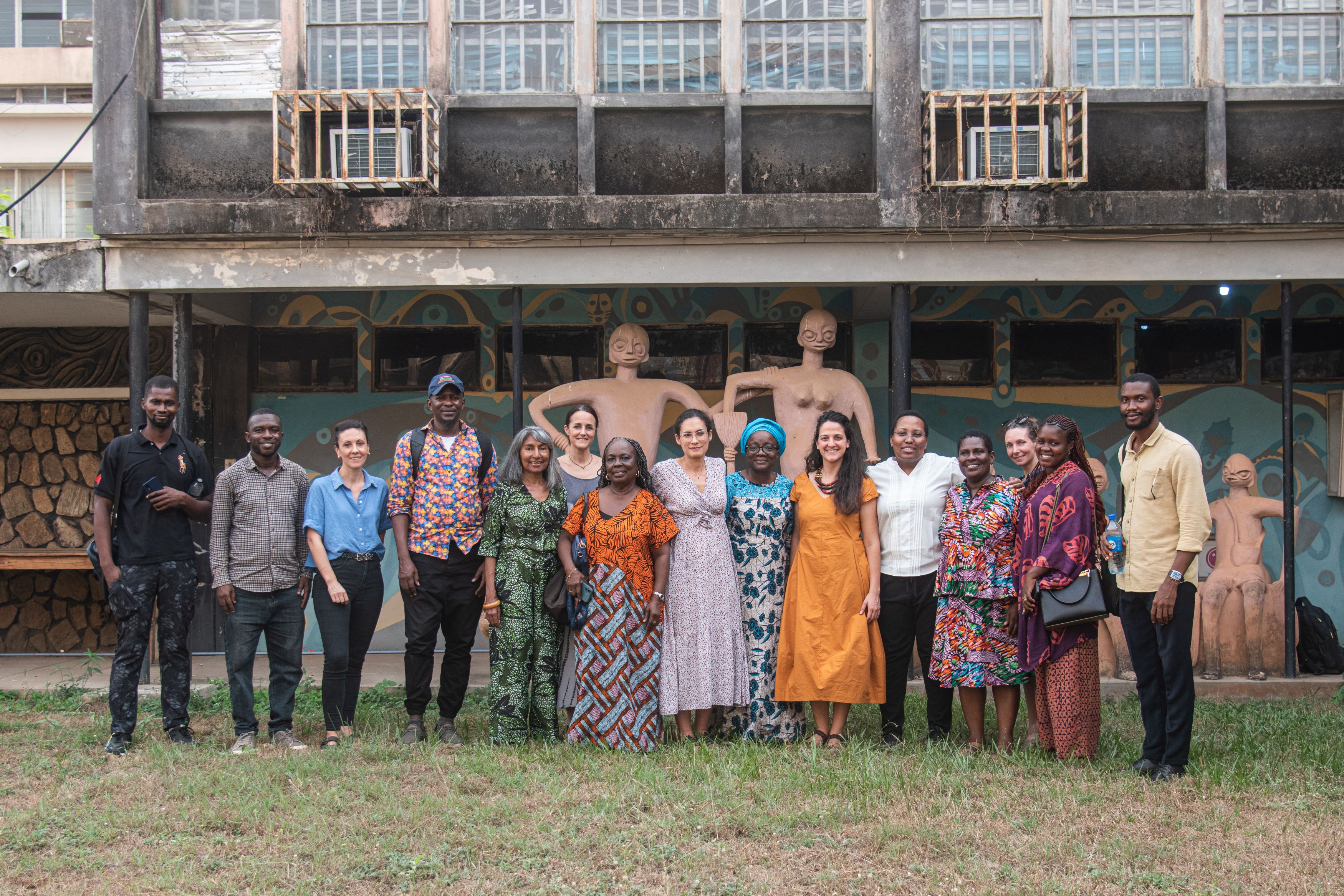
From left to right: Paul Omoniyi, Dr Adedeji Adebayo, Dr Delphine Manetta, Dr Drabo Saydou, Dr Charmaine Pereira, Prof. Pascale Barthélémy, Professor Emerita Takyiwaa Manuh, Dr Marième N'Diaye, Prof. Olufunke Adeboye, Dr Sara Panata, Dr Maysa Espindola Souza, Prof. Seunfunmi Olutayo, Dr Ophélie Rillon, Abibat Ibrahim, Osinachi Ezema