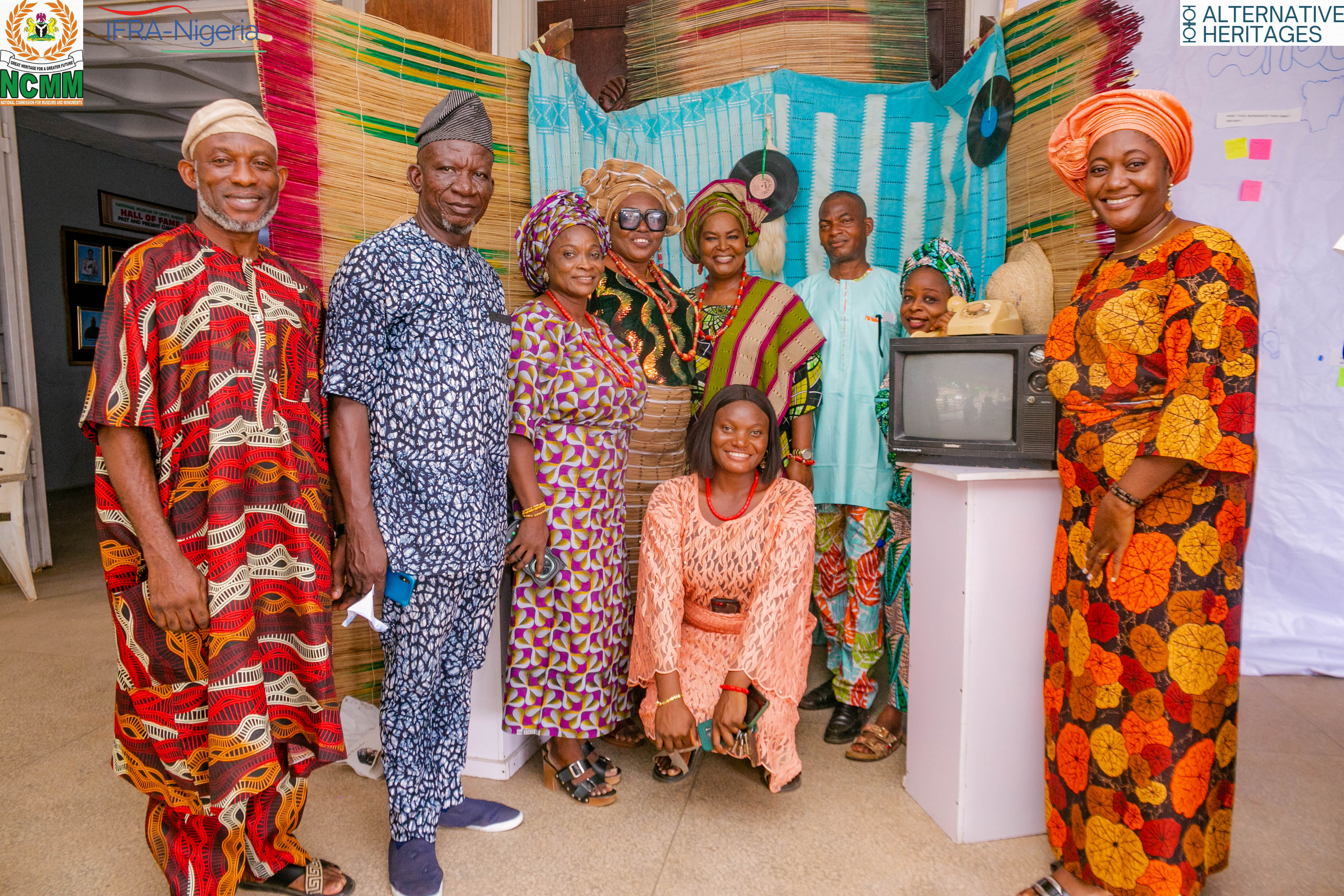
On June 3, 2026, IFRA-Nigeria, with the National Museum of Unity, Ibadan, hosted a pop-up exhibition to close the two-year French Embassy-financed Nigerian Alternative Heritages project partnership between the two institutions. This project was made possible by the French Embassy Fund.
Conceived by Dr Delphine Manetta and Adéjọkẹ Rafiat Adétòrò, the programme was centred on the theme “Build Your Museum” and invited the public to reimagine heritage while challenging conventional norms that have long dictated our understanding of identity, culture, and belonging. The event was aimed at encouraging members of the public to actively participate in the narratives on heritage, as people were invited to contribute stories, objects, memories, and cultural experiences that shape their understanding of heritage and resonate with their own journey and community.
You can watch some highlights of the event on IFRA-Nigeria's YouTube channel: https://youtu.be/5ZnXzWa7MD8
The programme explored alternative ways of understanding museums by positioning visitors not as audiences but as contributors whose experiences, possessions, and memories are valuable components of cultural heritage. Ms Owadimbola Adedolapo, a visual artist and Adéjọkẹ Rafiat Adétòrò facilitated and anchored this event. Similarly, the team at the National Museum of Unity, Ibadan, also facilitated the exhibition of objects produced from the artistic workshops organised as part of the Nigerian Alternative Heritages project at the Museum since November 2024. Graduate students of the Visual Unit, Institute of African Studies, University of Ibadan, also supported the pop-up exhibition set-up.
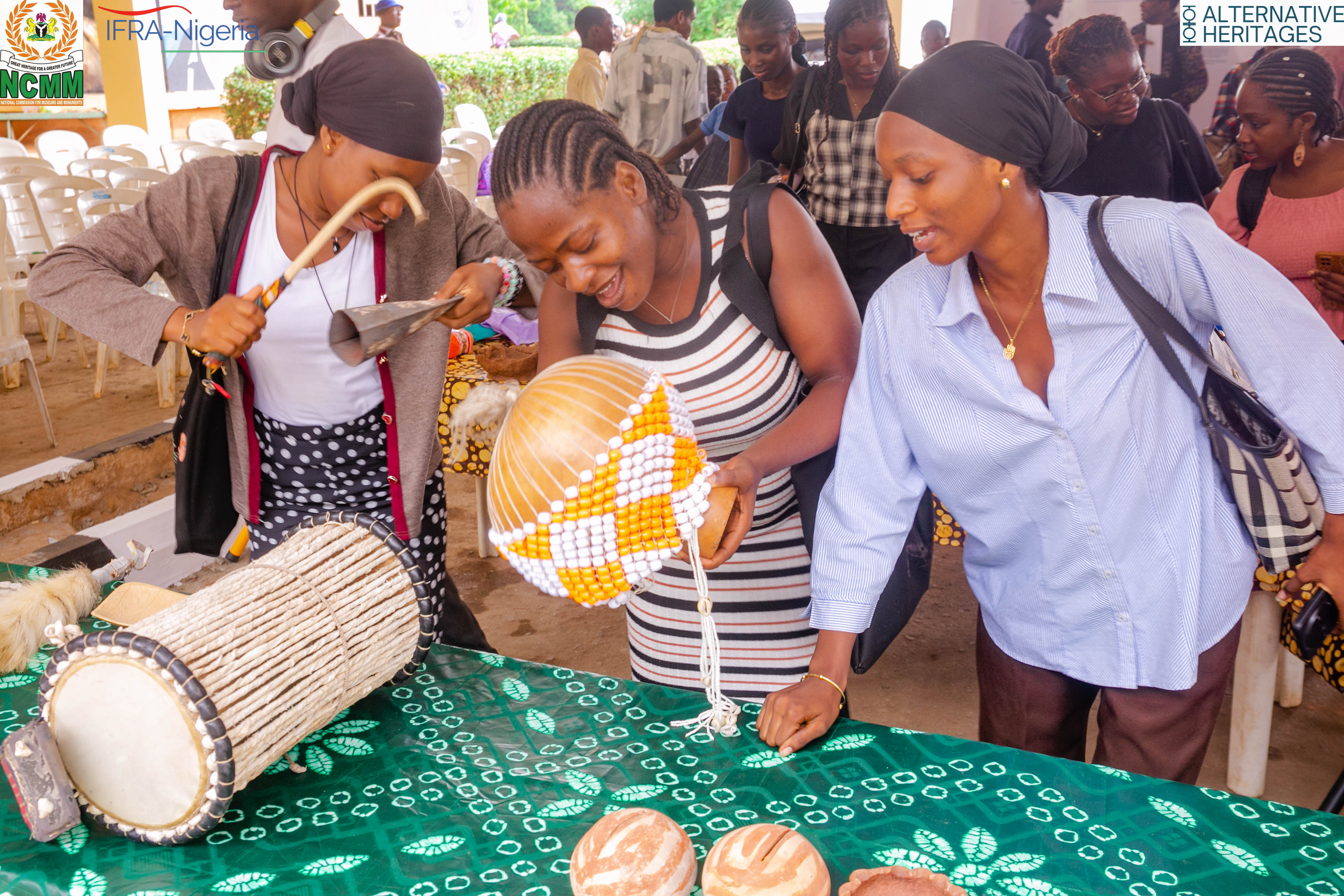
The event commenced with a tour of the museum’s gallery and later an immersion session during which participants explored the exhibition space and interacted with the various objects, artworks, and stories displayed as part of the programme. The session introduced participants to diverse interpretations of heritage and encouraged them to reflect on the relationship between the objects and stories on display and everyday life. Through the exhibition, participants were able to engage with objects that represented cultural traditions, personal histories, indigenous knowledge and practices, as well as contemporary experiences.
The reflexive exhibition demonstrated that heritage extends beyond conventional museum artefacts and includes objects that continue to play active roles in cultural and community life. Among the objects displayed were calabash, aso ofi, Ide Ifa, Irukere, iroke ifa, and Ukara cloth, all of which reflected the cultural knowledge, craftsmanship, and traditions associated with their communities of origin. Also exhibited was Sáágo, a traditional cistern used for storing palm wine, particularly during annual Odun Ifa celebrations. Participants shared stories on this object, as this particular object is also known as Udikò in the Ondo dialect and continues to hold cultural significance within traditional religious and communal practices.
The exhibition also featured artistic representations that explored heritage through visual expression. Among these were oil canvas works that engaged with cultural narratives and themes associated with Oronshen, a rhinoceros made with traditional fabric, a clan totem of the Langi people of Northern Uganda. Other objects on display include photography titled "Freedom through Light," a portrait of a woman with blown afro hair, as well as a photo story titled CORE & COURSE: Cultural Echoes in Motion, which tells stories connected to the Aso-Oke. There were life stories on panegyrics as well as interreligious marriage and interactions. These objects and stories encouraged participants to reflect on the relationship between art, memory, storytelling, and heritage preservation. Similarly, through these objects and artistic works, the exhibition demonstrated that heritage can be expressed through material culture, spirituality, artistic creativity, indigenous knowledge, and lived experience.
Another major component of the program was the Story Circle session, where participants shared narratives connected to heritage objects, cultural traditions, and personal experiences. This session provided an opportunity for contributors to explain the meanings, histories, and significance attached to the objects they brought or discussed. Several stories were shared, including those regarding Egun Ladungbo of Ipetumodu, Ogun’ojalu Shrine in Ogbomosho, and Fila (headdress), among others. Participants explained the cultural, spiritual, and historical significance of these stories and reflected on their continued relevance within society. The discussions highlighted themes of identity, ancestry, spirituality, memory, and cultural continuity.
The Story Circle further demonstrated the importance of oral traditions in preserving cultural knowledge. Through storytelling, participants were able to transmit historical information, personal experiences, and indigenous knowledge systems that may not be immediately visible through the objects alone. The session reinforced the idea that stories are essential to understanding and interpreting heritage.
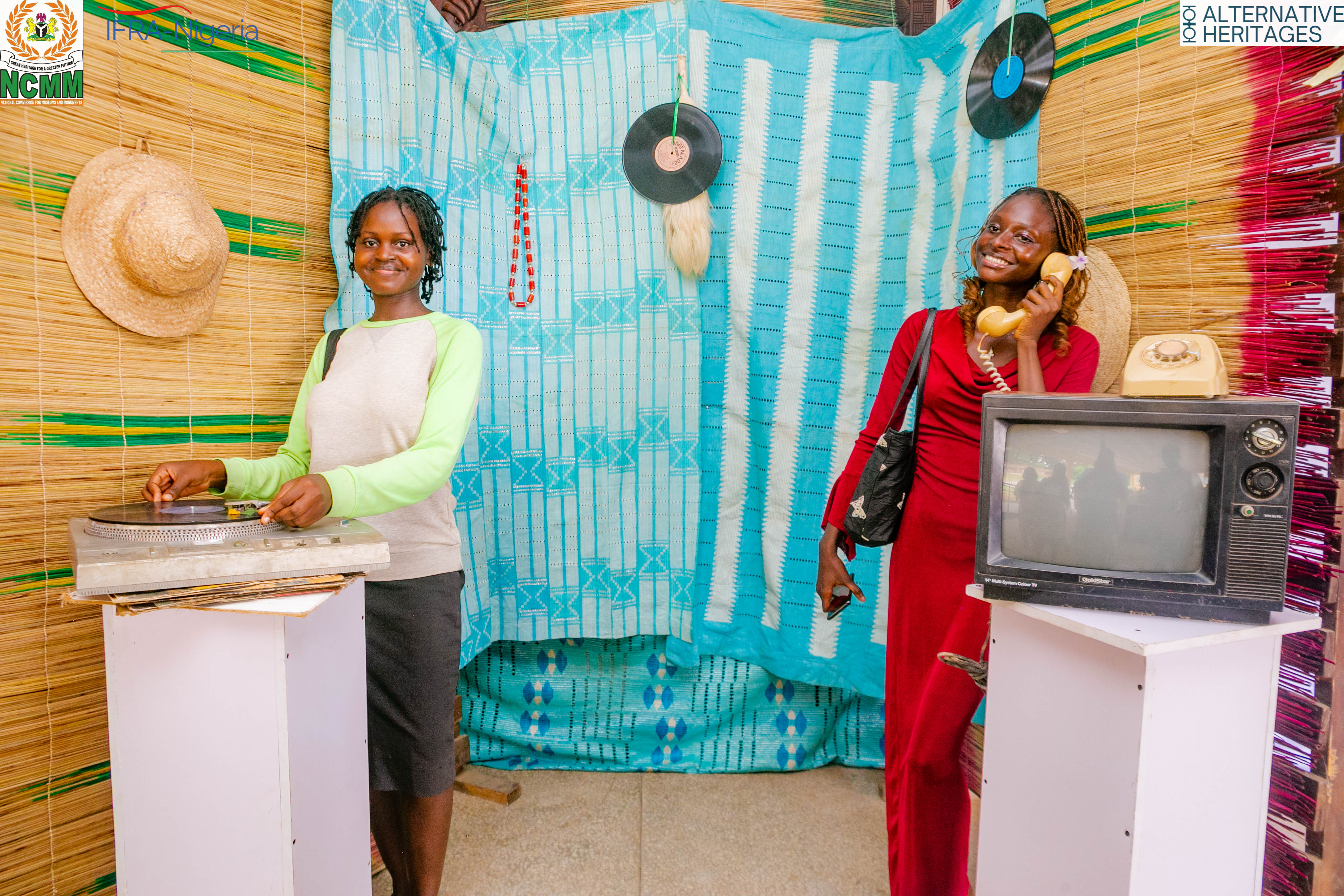
In addition to the heritage photobooth, which featured a 1980s and traditional item-themed station, the Interactive Wall was a key highlight of the event, which invited participants to share their perspectives on history, heritage, and personal significance. Responses revealed deep connections to cultural narratives, collective memory, and the role of objects and traditions in shaping identity.
This section of the exhibition included a series of thought-provoking questions designed to inspire reflection and creativity. Participants were encouraged to explore themes such as the stories that inspire them, their visions for a museum, and what they consider to be valuable objects. Additionally, they were asked to delve into the significance of food as a part of cultural heritage and contemplate what they value most in life culturally. To express their thoughts, in addition to writing on the wall, they were also invited to provide visual answers through drawing, allowing for a rich blend of artistic interpretation and personal insight.
Participants reflected on their connections to historical and cultural narratives, drawing inspiration from figures and events that exemplify resilience and communal values. The story of Balogun Ibikunle and the Ijaye War presented a powerful testament to courage, leadership, and resistance against adversity. Additionally, Moremi's legacy as a symbol of heroism and communal responsibility within Yoruba history was frequently cited. These narratives of inspiration extended naturally into discussions about institutional representation. When asked what they would like to see in a museum, participants expressed a strong desire for deeper engagement with the histories of slavery and the trans-Atlantic slave trade. They called for exhibitions, artifacts, and narratives that document the experiences of enslaved Africans, emphasising the importance of recognising and honouring these pivotal histories, particularly those surrounding themes of displacement, resistance, and survival.
This focus on cultural memory manifested equally in participants' identification of objects of personal and cultural significance. Ere Ibeji, deeply intertwined with Yoruba beliefs, held particular importance for some. In contrast, others described personal items such as laptops as extensions of themselves, storing precious memories, academic work, and personal records. The conversation naturally shifted to food as a representation of history, with dishes like Ikokore, Amala and Abula, Banga Soup and Starch Flour, and Pounded Yam brought to the forefront. Participants explained that these foods embody traditions passed down through generations, serving as markers of identity and heritage. Responses further highlighted the intimate connection between food, memory, family, and belonging, particularly when discussing dishes like Eko, Adun, Ofunlogu and Ikokore.
Collectively, these reflections revealed how heritage and identity are deeply intertwined with personal experiences, memories, and relationships. The interactive wall showcased how both traditional and contemporary objects serve as meaningful repositories of collective memory, offering valuable insights into community engagement with history, culture, and memory preservation. The activity emphasised the profound significance of storytelling and the traditions that ultimately shape identity.
The programme highlighted that cultural heritage encompasses much more than just physical artefacts found in museums. Participants shared diverse connections to heritage, encompassing stories, food traditions, spirituality, memories, artistic expressions, and family histories. This underscored the various ways that cultural heritage can be preserved and passed down through generations. Furthermore, the initiative successfully fostered an inclusive environment for public engagement in discussions about heritage and museum practices. Through activities like the exhibition, Story Circle sessions, and Interactive Wall, attendees were invited to share their insights on what should be commemorated and represented in museum spaces. In sum, the programme illustrated the significance of participatory museology. It showcased how museums can function as vibrant spaces where communities play a crucial role in interpreting, preserving, and sharing their cultural heritage.